Building a First-Gen SVT Lightning the Hard Way (Because There Was No Other Way)
Anyone who’s ever built a performance vehicle knows it takes dedication. Time. Money. Patience. And usually a fair amount of busted knuckles. But here’s the part most people don’t talk about: the vehicle you choose determines just how hard that journey is going to be.
If you own a Mustang, you’ve got it pretty good. That’s not a knock—it’s reality. The aftermarket support is massive. Need a supercharger? Pick one of a dozen. Headers? Exhaust? Hoods? Intake setups? You can build an entire car with nothing but catalog parts.
Now try doing that with a first-generation SVT Lightning.
That’s where things get interesting.
Owners of vehicles like Crown Victorias, Marauders, Fairmonts, and especially the 1993–1995 Lightning live in a different world. These trucks were never embraced by the aftermarket the way the Mustang was, which means performance parts are scarce, compromises are common, and custom fabrication becomes part of daily life.
Alex Bernal knows this better than most.
“I’ve loved owning a first-generation Lightning because they’re pretty rare,” Bernal explains. “But being rare also means I’ve spent countless hours fabricating parts. The aftermarket just isn’t there like it is for Mustangs.”
If you want to understand why these trucks are so special—and why they’re such a challenge to build—it’s worth diving into the history of the 1993–1995 SVT Lightning, which we cover in depth here:
1993-1995 Ford SVT Lightning F-150 – Blue Oval Trucks
Bernal’s truck is a perfect real-world example of what happens when someone refuses to accept limitations.
Born Blue, Built Different
Bernal didn’t stumble into Ford ownership—he was born into it.
“I’ve owned a ’69 Mach 1, a ’67 Fastback, and an ’85 GT,” he says. “But the first time a friend took me for a ride in a first-gen Lightning, I knew I had to have one.”
Ironically, the Lightning wasn’t bought as a toy. It was a tool.
Back in 1999, Bernal was working construction part-time and needed a truck. Since then, this Lightning has hauled everything from building materials to countless dump runs and Home Depot loads.
“In fact, I just took a load to the dump last week,” he laughs. “You should’ve seen the looks on their faces.”
That daily-driver, workhorse mentality shaped the build from the start.
From Stock to Stroked (and Then Some)
Like most projects, the Lightning started stock—and didn’t stay that way for long.
Power first came in the form of a 418ci Windsor stroker, backed by a small roller cam and AFR 185 heads. The relatively mild top end wasn’t an accident.
“I chose the smaller heads and cam for emissions reasons,” Bernal explains.
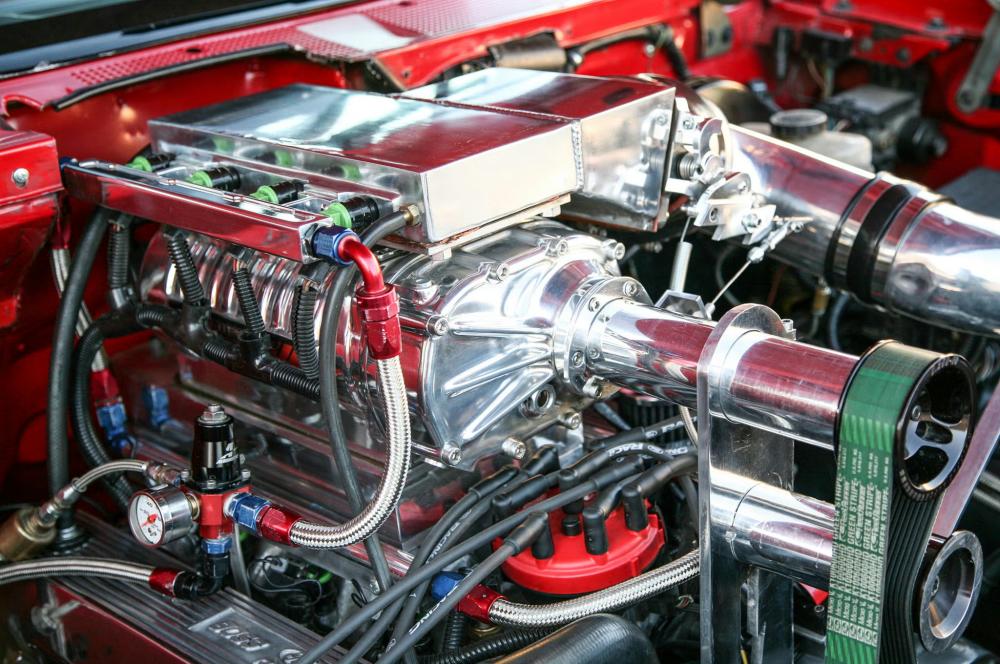
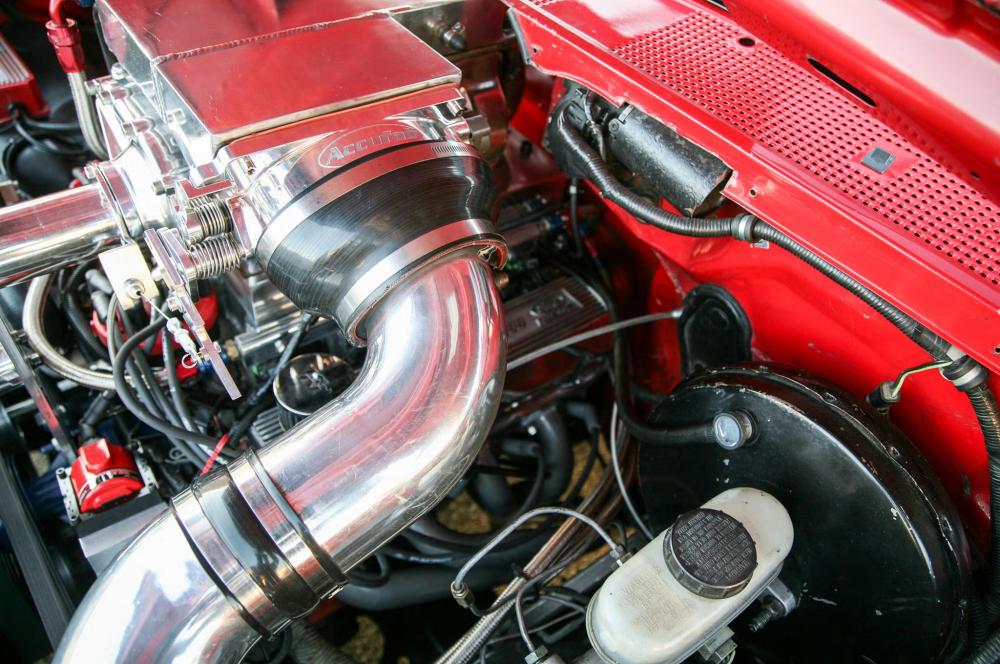
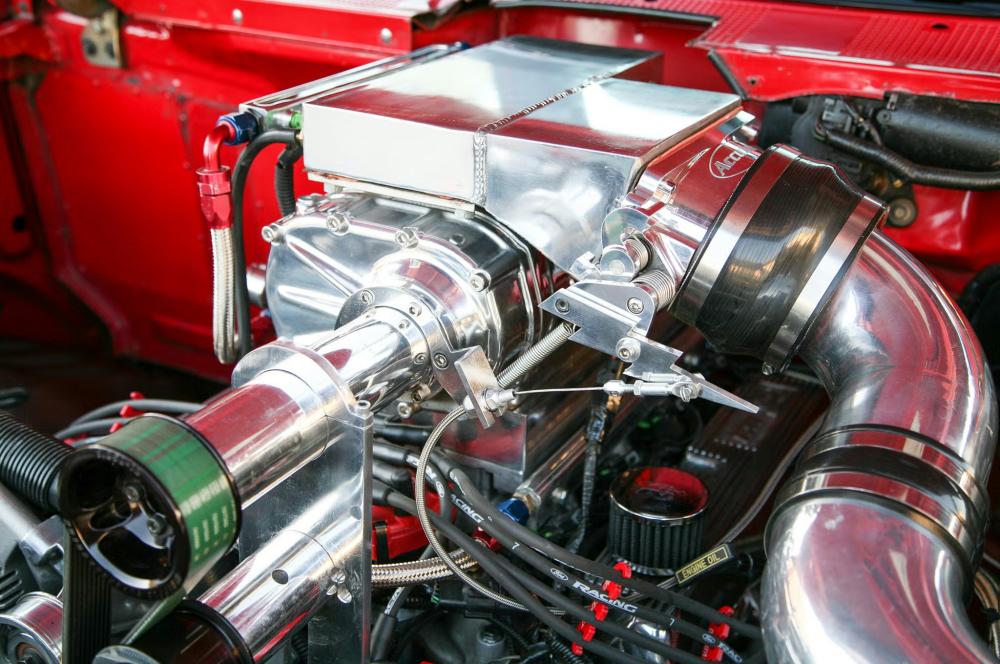
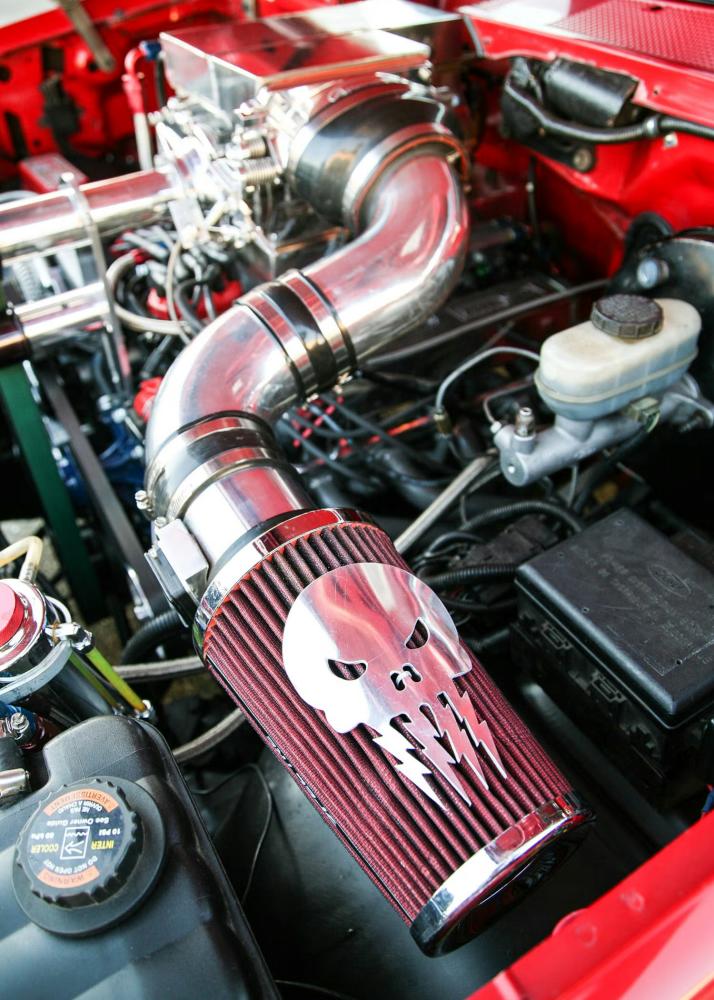
To keep intake air temperatures under control, he modified a GT40 lower intake to accept a Velocity Turbo Systems air-to-water intercooler, paired with a Terminator Cobra–style front-mounted heat exchanger. On top of that, fuel was sprayed through the blower itself—a trick recommended by the engineers at BDS—to further tame IATs.
The upper intake plenum was completely custom.
“I designed it to accept an extra set of four 42-pound injectors and an Accufab GT500 throttle body,” he says.
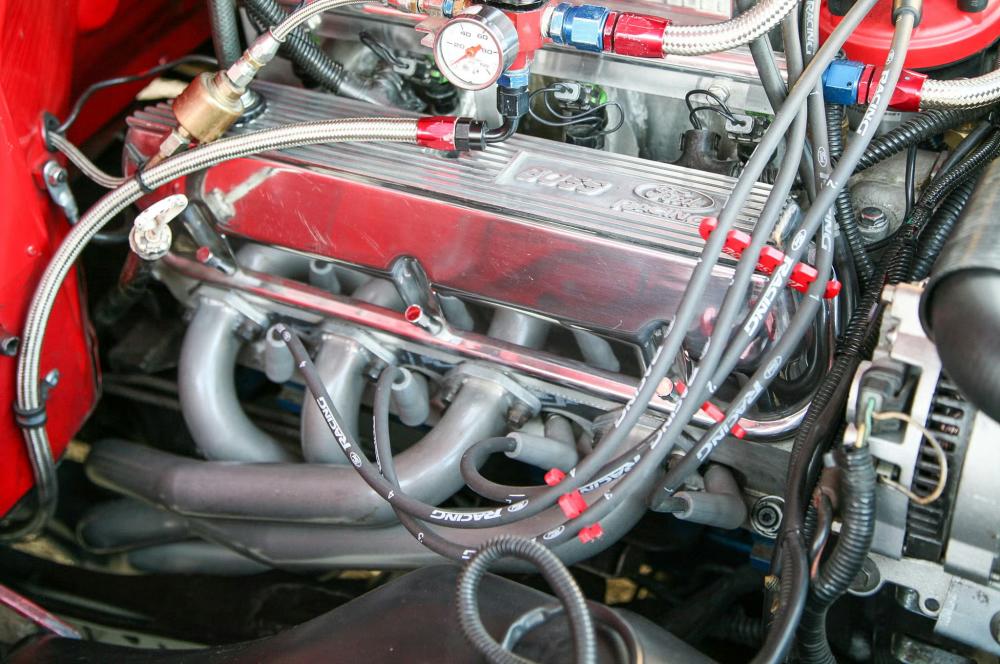
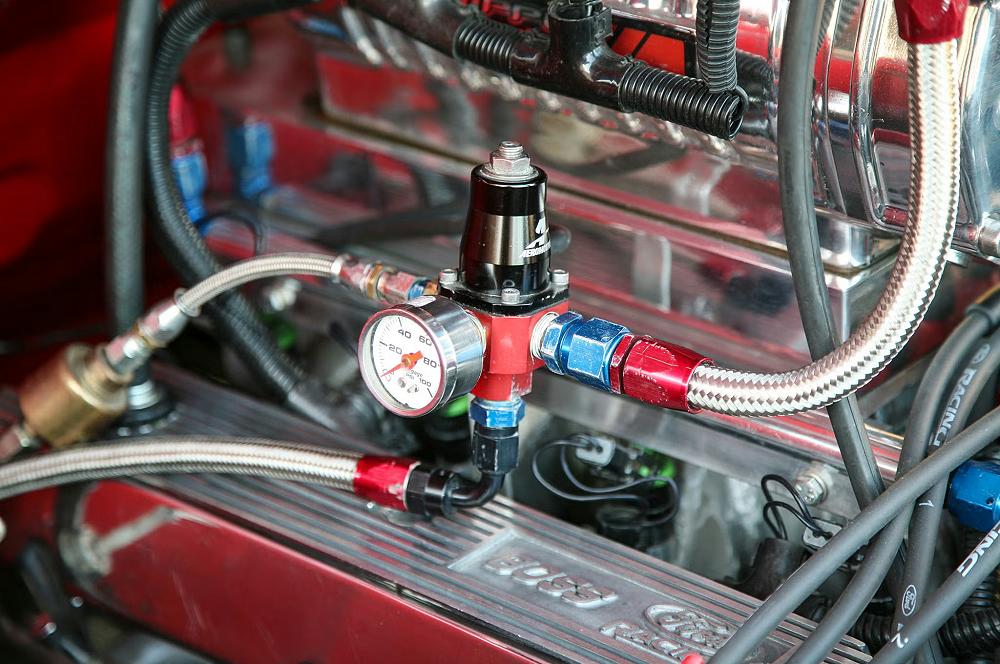
Engine management duties were handled by a Ford Racing AKCO computer and MAF, with the secondary injectors wired to fire on alternating events. Fuel delivery came from a rear-mounted Bronco tank, an Aeromotive 340 pump, regulator, and stainless braided AN lines. Spark duties were handled by MSD components throughout.
The combo worked well—until a dyno tuning error ended the party.
When Things Break, You Go Bigger
The blown engine sidelined the truck for months. But idle time doesn’t stay idle for long.
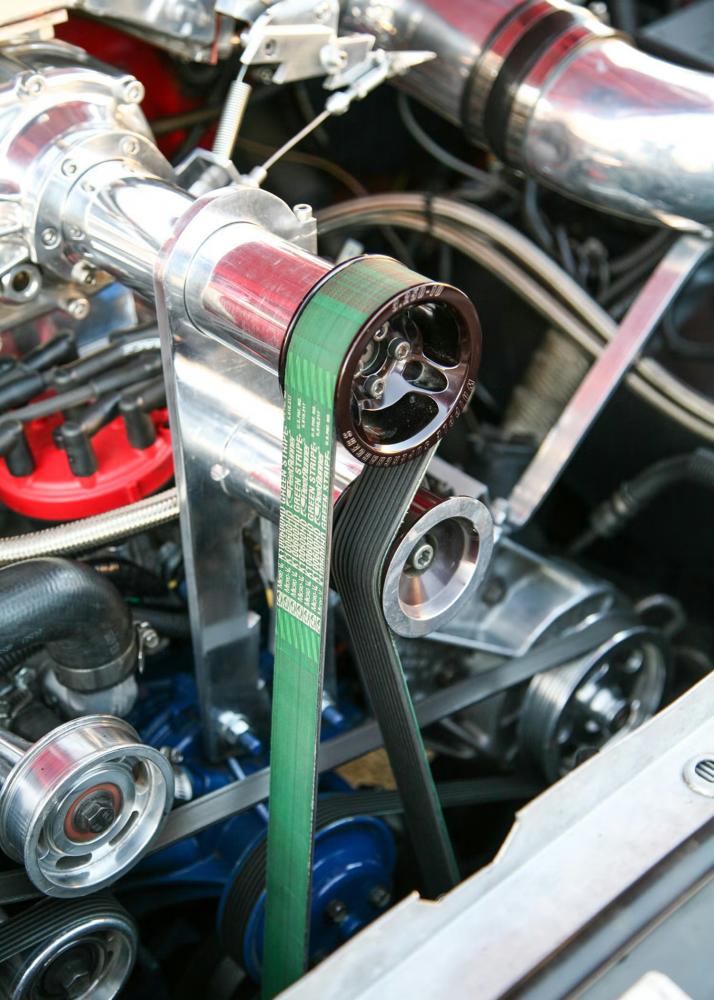
“I fixed the 418, but during the downtime I decided to sell everything and step up to a bigger blower,” Bernal says.
That led to a smaller 351W topped with a larger supercharger, followed shortly by a 427ci Windsor that reused the AFR 185 heads and mild cam.
The result? 500 horsepower and 584 lb-ft of torque at the wheels.
Internally, the stock block stroker relied on a K1 forged crank, Scat rods, and Probe 9.5:1 pistons. When valvetrain issues struck again, Bernal leaned into it.
AFR 205 Renegade heads replaced the 185s. A more aggressive Lunati cam went in, along with Scorpion roller rockers and a custom-modified Edelbrock AirGap intake—still hiding Bernal’s homebuilt intercooler.
Exhaust was upgraded with 1¾-inch MAC long-tube headers originally meant for a Mustang, feeding a custom 3-inch true dual system with Flowmaster two-chamber mufflers.
The first dyno pull with the new setup ran out of fuel at 4,500 rpm—and still laid down 561 horsepower and 666 lb-ft of torque at the wheels.
That’s the kind of torque that shreds tires and tests transmissions.
Stopping, Handling, and Keeping It Subtle
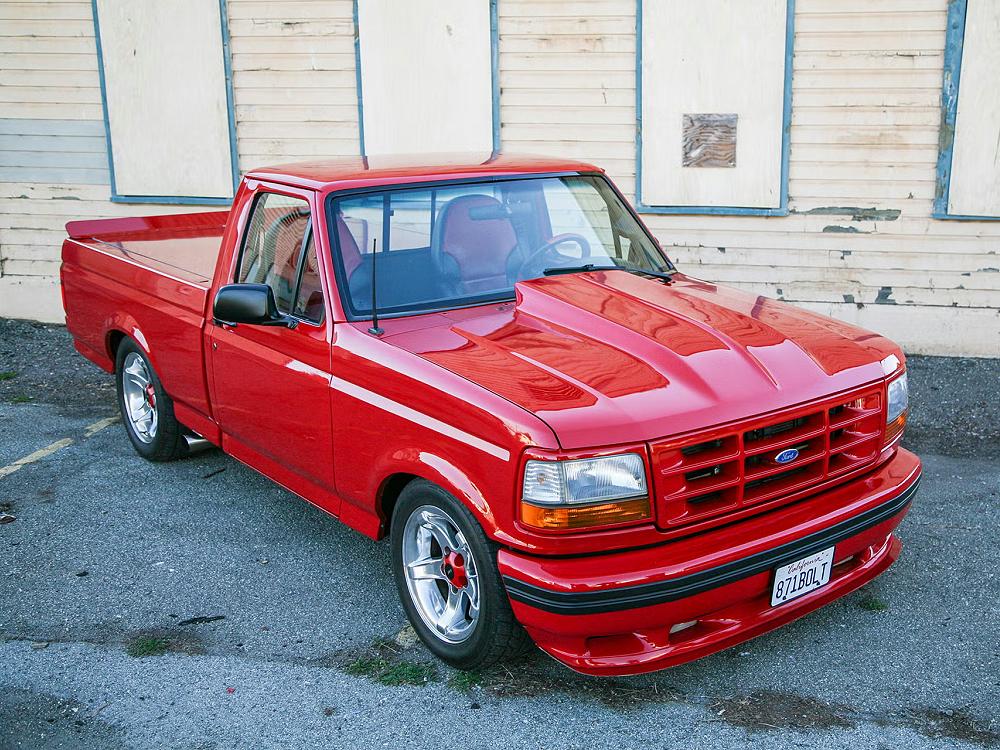
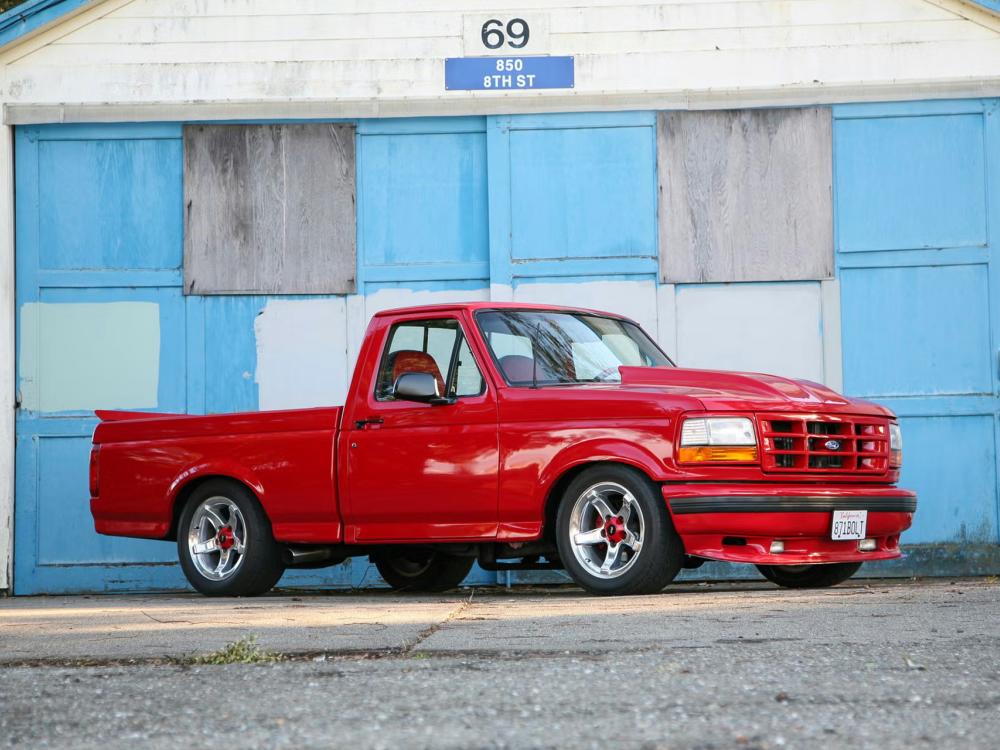
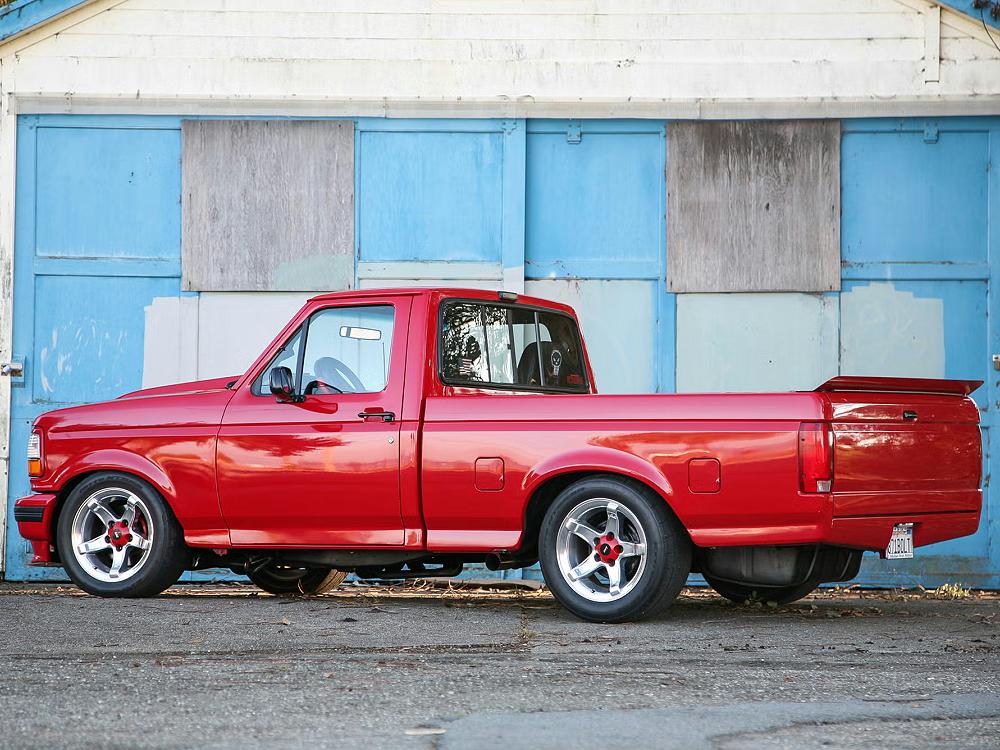
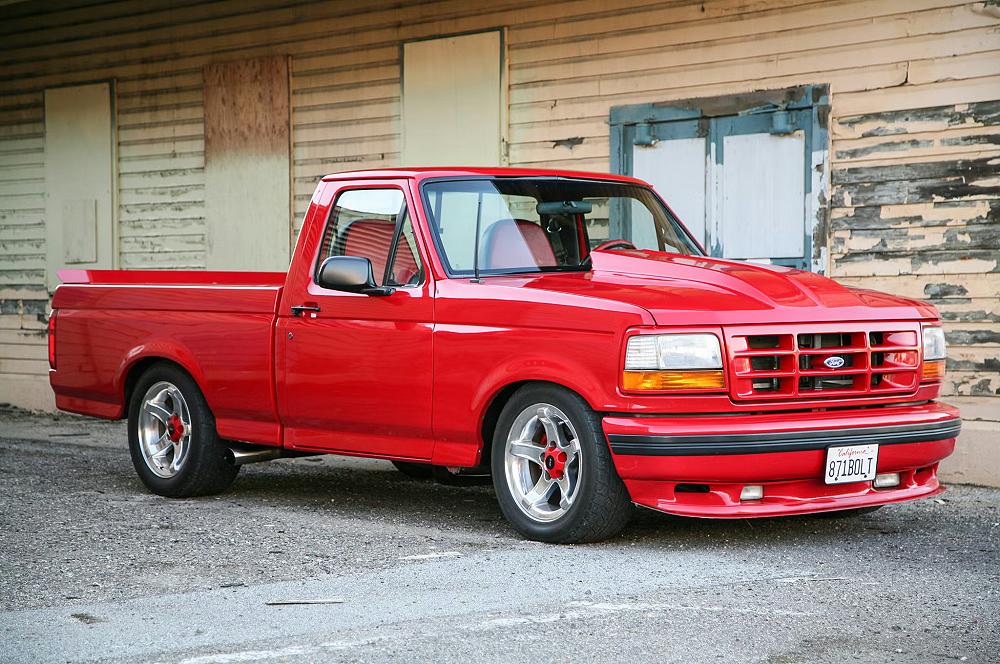
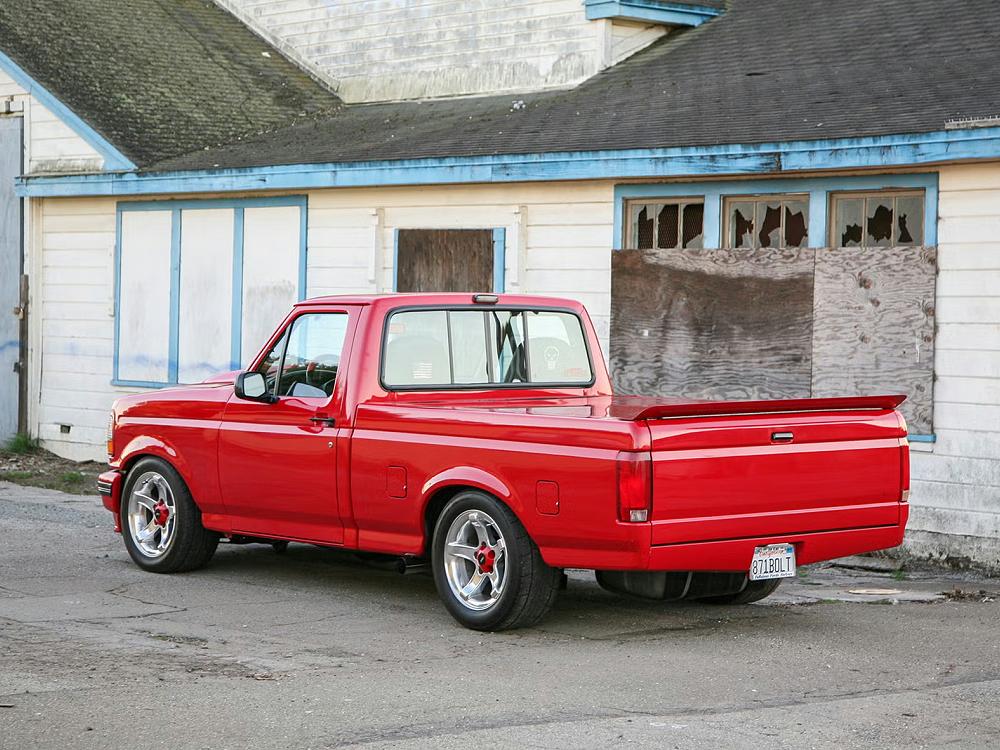
Early second-generation Lightning wheels wrapped in Nitto NT555 front and NT555R rear tires put the power down. Braking duties were upgraded using 2005 Ford E-150 van components, including dual-piston calipers and larger rotors.
“The brake upgrade made a huge difference,” Bernal says. “And it’s all OEM Ford parts that bolted right on.”
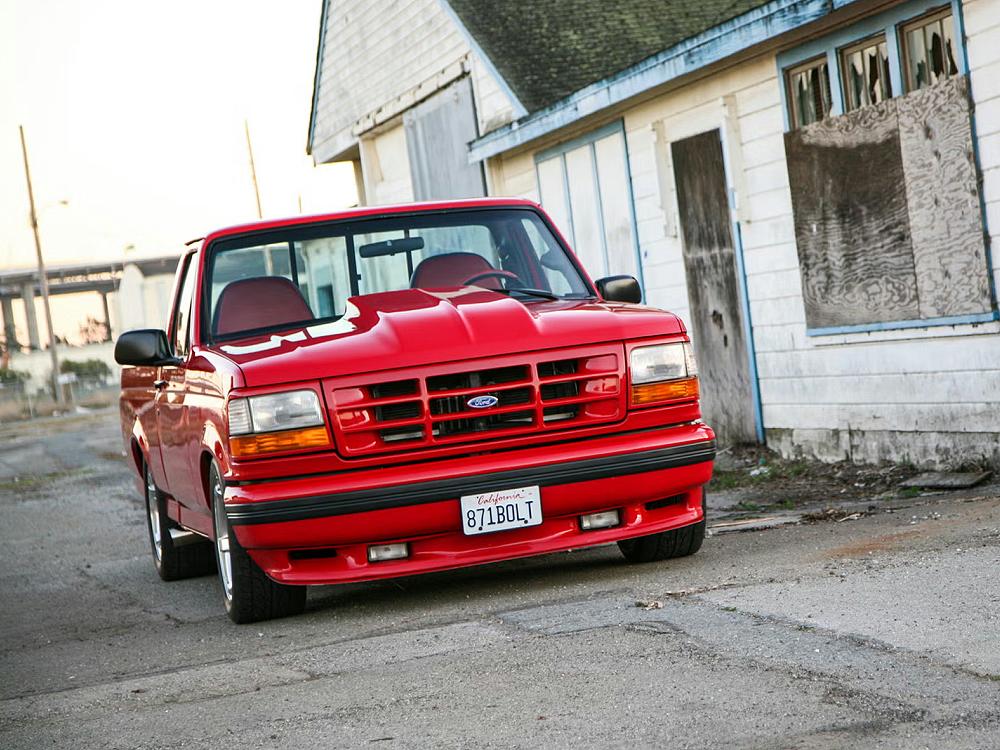
Visually, restraint was the goal.
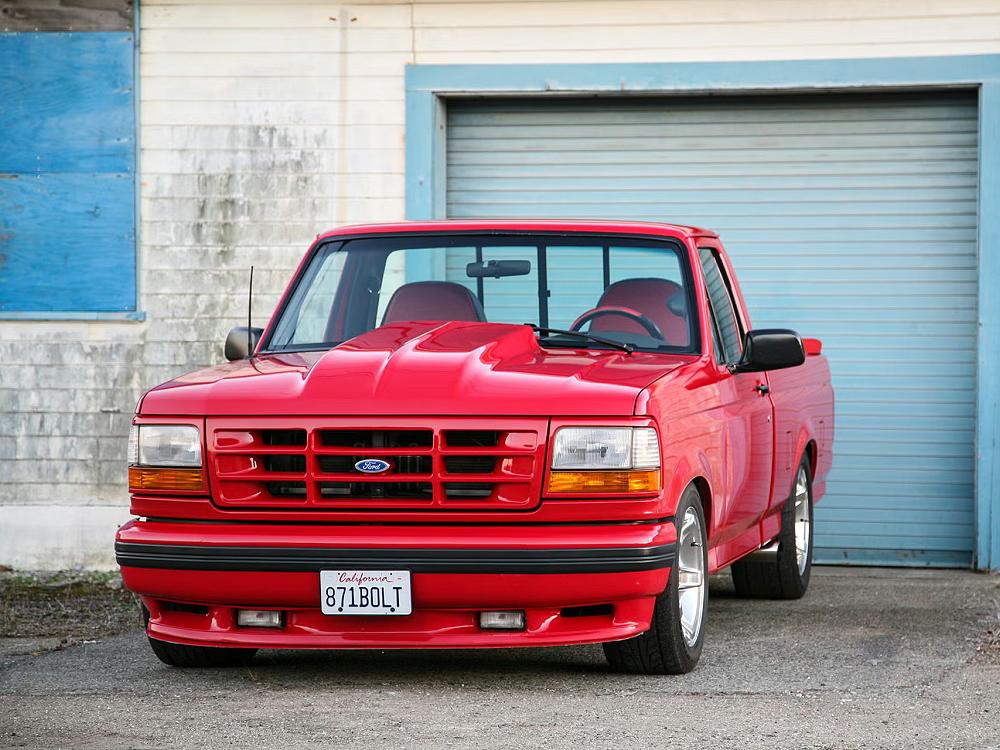
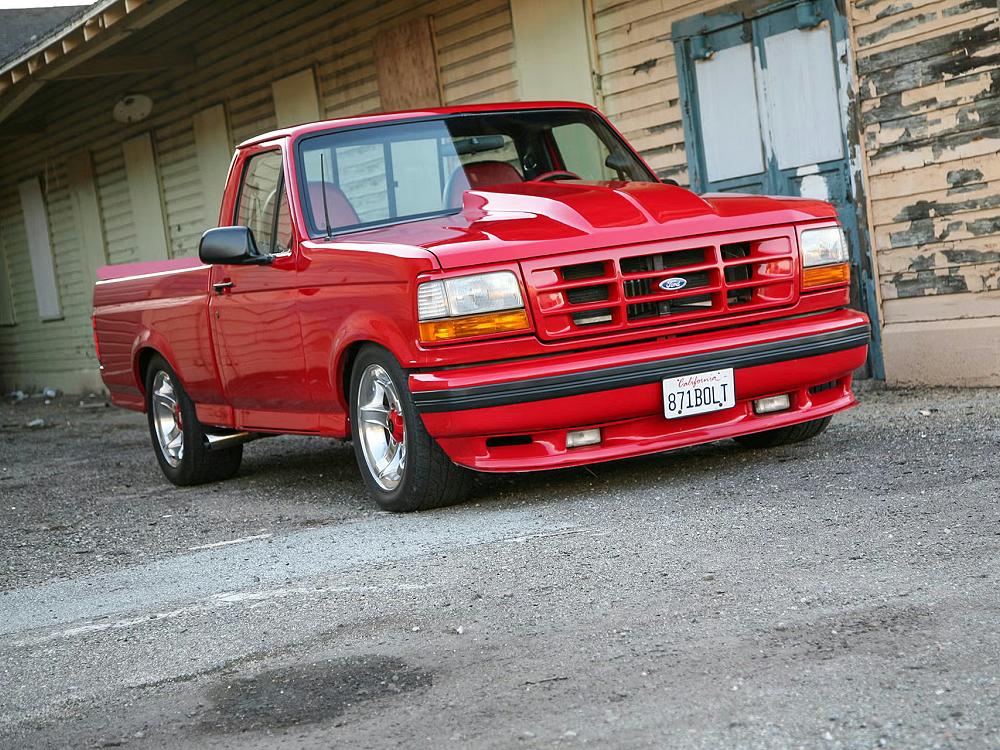
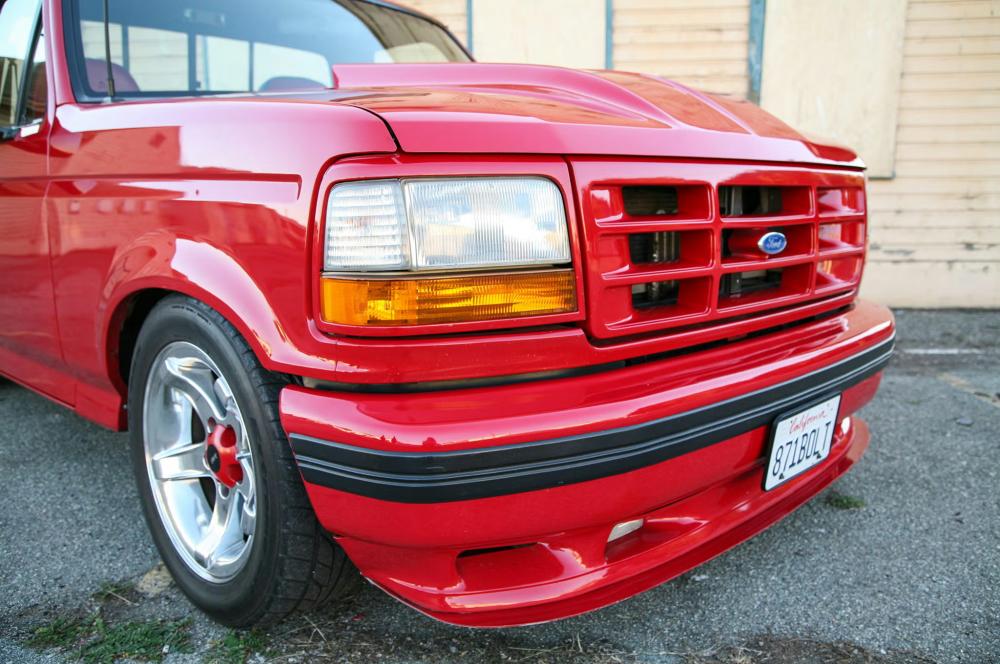
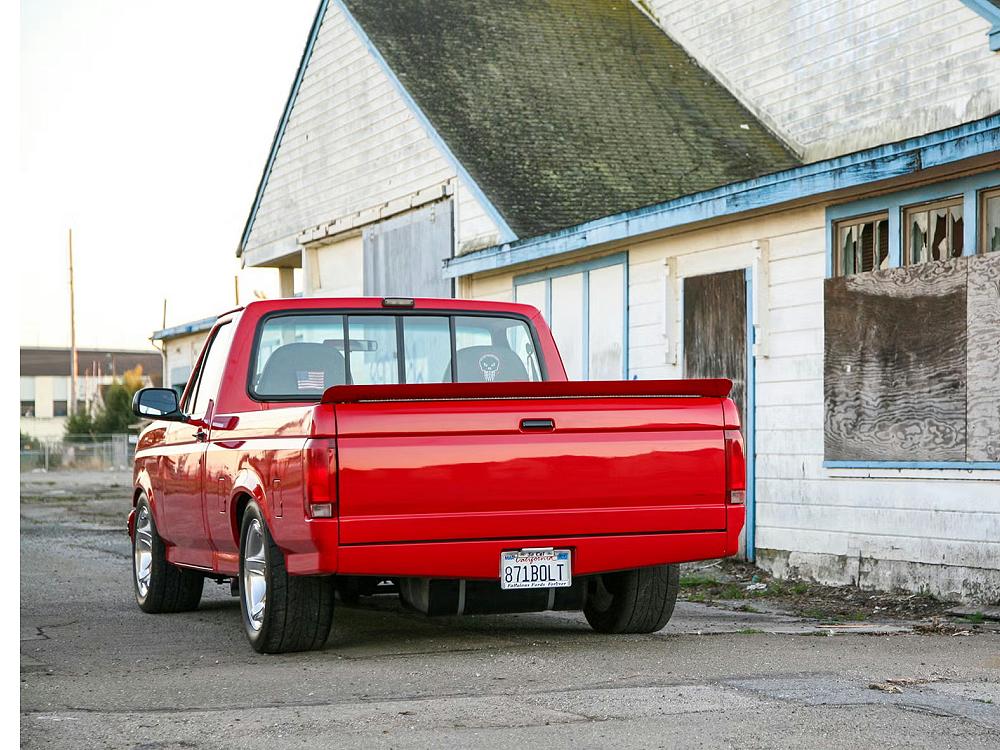
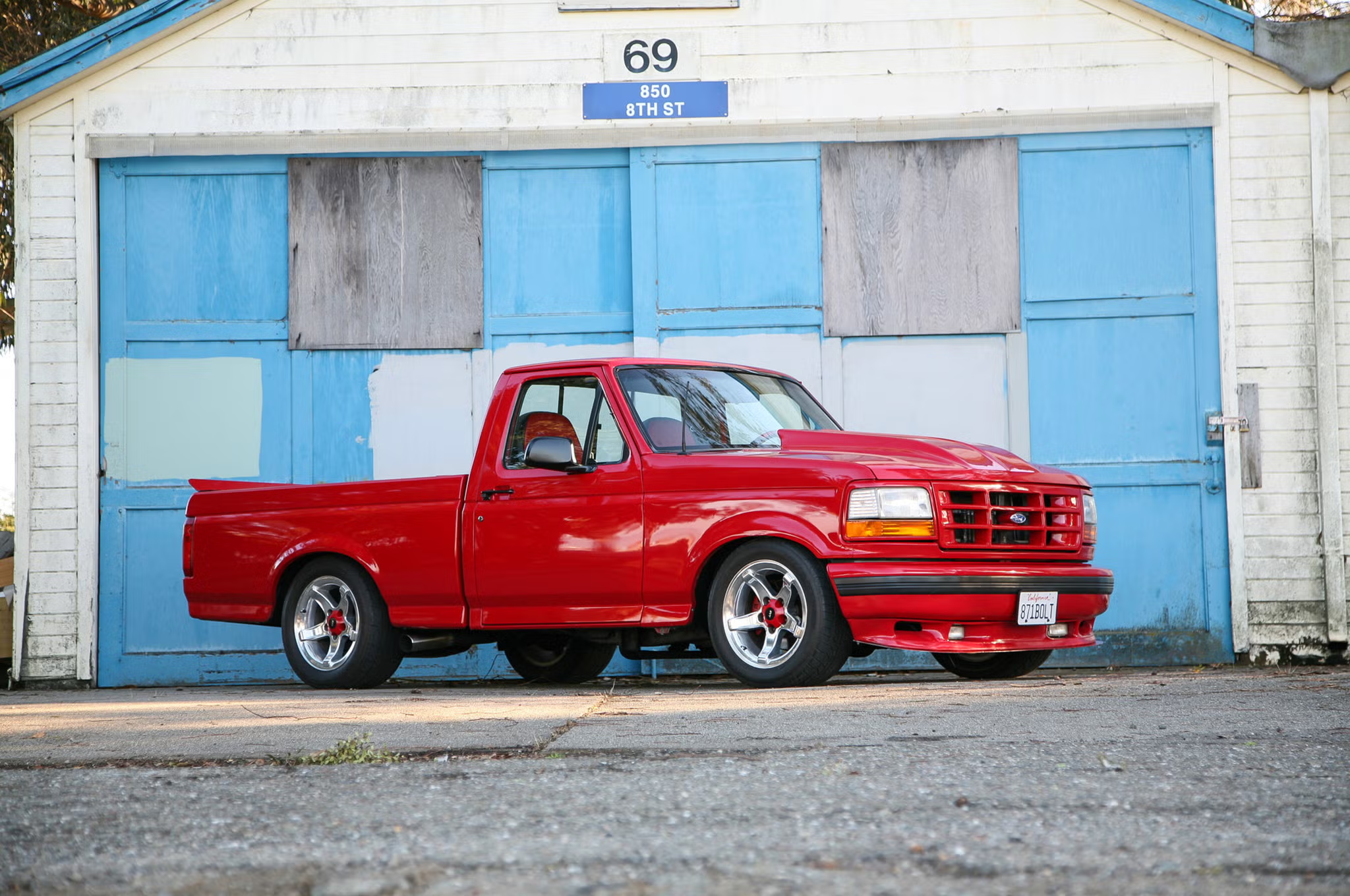
A custom cowl induction hood was integrated into the factory sheetmetal. A homebuilt front splitter adds function without flash, while a custom aluminum tonneau cover with an integrated spoiler and roll pan cleans up the rear.
A JDM suspension system with shocks, drop beams, rear hangers, and shackles gives the Lightning its aggressive stance.
Not Perfect. Just Perfectly His.
“It’s got dings, dents, and imperfections,” Bernal admits. “But it’s unique, and I drive it. It’s got over 218,000 miles on it.”
This Lightning isn’t the fastest or cleanest example on the planet—but you won’t see another one like it. Built largely at home, with custom solutions born from necessity rather than convenience, it represents everything that makes first-generation SVT Lightnings special.
Bernal would like to thank his brother for endless support, along with Gotelli Speed Shop, Meineke Muffler in Redwood City, Swanson Performance, and Dino Fry for engine and head work.
If you ask us, that’s pretty dang cool.
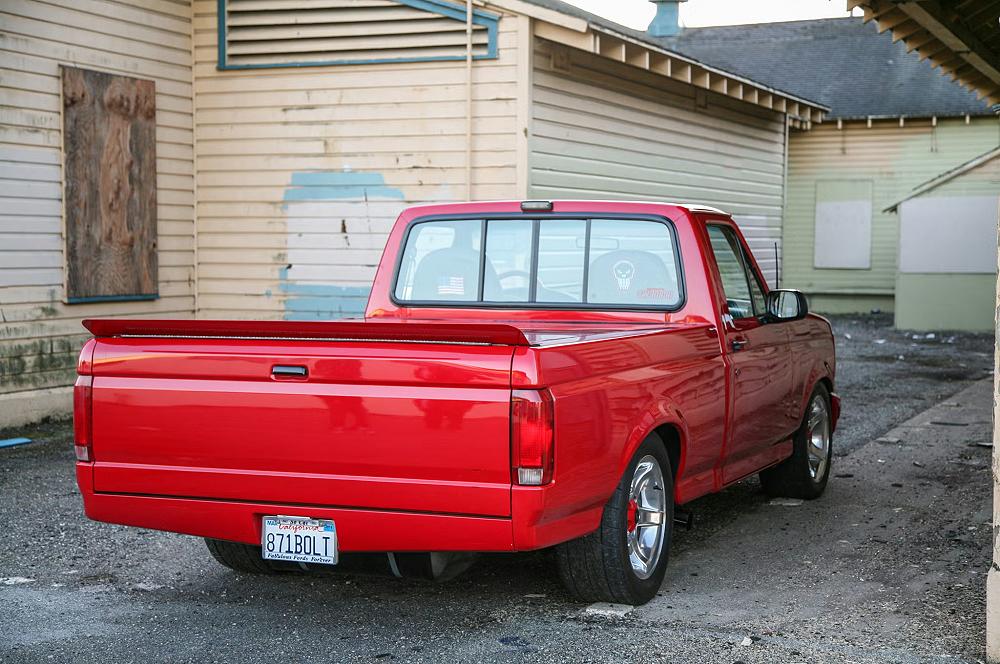
Photo Gallery
About The Author
Growing up, my father always believed that every family needed a truck—there’s just something about having a vehicle capable of hauling anything at a moment’s notice. That philosophy stuck with me, and it’s been the foundation of my lifelong passion for Ford trucks.
While I’m best known for my work with Ford Rangers, I’ve owned a wide variety of Ford trucks over the years—including F-150s, F-250s, F-350s, and even larger rigs like the Ford Excursion, Ford Expedition, and a 1982 Ford Econoline Sportsmobile camper van. I’ve used these vehicles for everything from family transportation to towing car trailers and campers, and each one has fueled my love for Ford’s versatility and durability.
I especially enjoy the styling of 1970s and 1980s Ford trucks—the bold designs, rugged presence, and classic charm are timeless. Sharing my passion for Ford trucks, vans, and SUVs with other enthusiasts online brings me a great deal of joy, and it’s why I created Blue Oval Trucks.
This website is dedicated to helping Ford truck enthusiasts explore, learn about, and celebrate these incredible vehicles. While I share my expertise and experiences here, Blue Oval Trucks is an independent enthusiast site and is not affiliated with Ford Motor Company.