
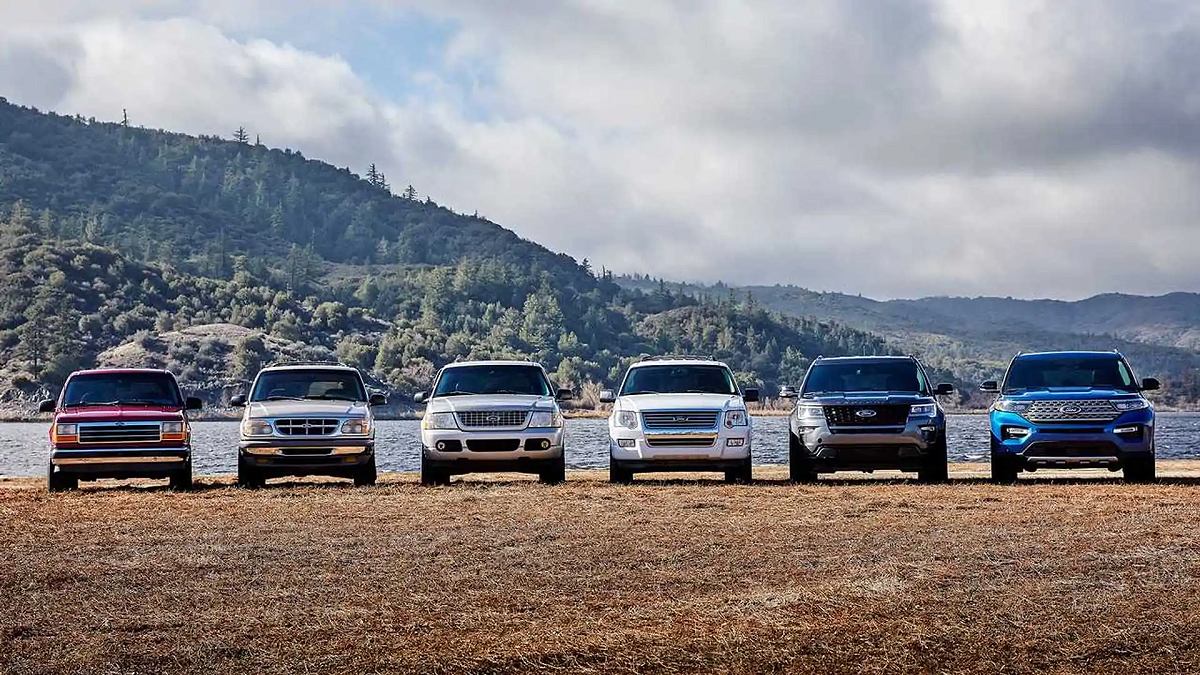
The Ford Explorer is one of the most iconic SUVs in American automotive history, helping define the modern family-oriented sport utility vehicle. But before it became a standalone SUV in 1991, “Explorer” was actually a limited-edition trim and appearance package offered by Ford from 1968 to 1986. Most commonly available on F-Series pickup trucks, the Explorer package also appeared on vehicles like the Bronco, Ranchero, and even early Ford Rangers. These special editions, often marketed as seasonal “Spring Specials,” focused on style and convenience rather than mechanical upgrades, featuring signature body-side stripes, Explorer nameplates, bold plaid or striped interior upholstery, exclusive “Grabber” colors, and bundled options like chrome trim, mag-style wheels, or power accessories.
When the Explorer SUV debuted, it inherited not only the name but also a similar approach to trim levels, starting with XL and XLT models. From its rugged, body-on-frame beginnings to its modern, technology-packed crossover iterations, the Explorer has continually evolved to meet the needs of American families.
In this complete history of the Ford Explorer, we break down every generation from 1991 to the present, highlighting engine options, design changes, major updates, and key milestones. Whether you’re a Ford enthusiast, a prospective buyer, or a researcher, this guide covers everything you need to know about this enduring SUV legend.
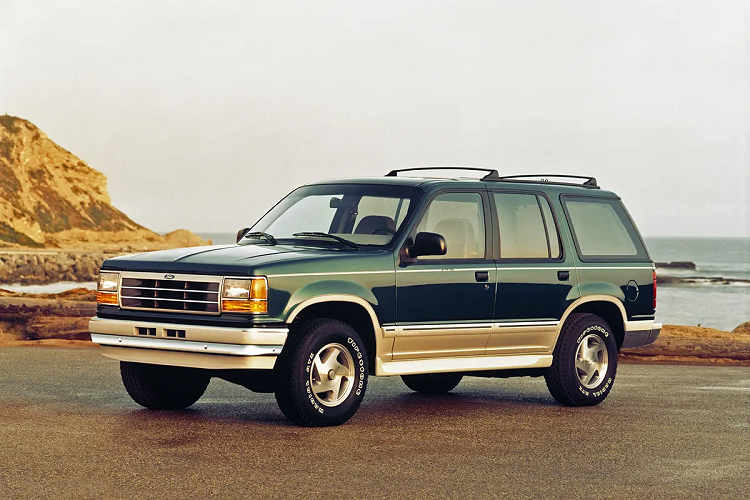
1991–1994 Ford Explorer: The Beginning
Noting the success its crosstown rivals were enjoying in the midsize SUV segment, Ford introduced the Explorer in March of 1990 as a 1991 model. Replacing the Bronco II in the lineup, the new Explorer was longer, wider, and far more refined—designed to blend rugged capability with improved on-road comfort in a family-friendly package.
That formula proved to be exactly what buyers were looking for. By the end of its first year on the market, the Explorer was selling in massive numbers, quickly establishing itself as a dominant force in the rapidly growing sport-utility vehicle segment.
Platform and Engineering
Like the Bronco II before it, the first-generation Explorer was based on the first-generation Ford Ranger pickup platform. It utilized a traditional body-on-frame design with rear-wheel-drive architecture, a setup that would define the Explorer for years to come.
Under the chassis, the Explorer featured:
- Twin I-Beam front suspension (2WD) or Twin Traction-Beam (4WD)
- Solid rear axle with leaf springs
- Recirculating-ball steering
While these components gave the Explorer true truck-like durability, Ford tuned the suspension for a softer, more comfortable ride. This shift made the Explorer far more appealing to families and daily drivers compared to the more utilitarian Bronco II.
Size, Utility, and Body Styles
At 174.5 inches long, the first-generation Explorer was still relatively compact by modern standards, but its increased size over the Bronco II made a significant difference in usability.
One of the most important changes was the introduction of a five-door model. While the Explorer continued to offer a three-door (two-door) version, the new five-door configuration provided true five-passenger seating and greatly improved practicality.
Additional improvements included relocating the spare tire from a rear swing-out carrier to an underbody mount, making cargo access easier and more convenient.
The two body styles differed in both size and purpose:
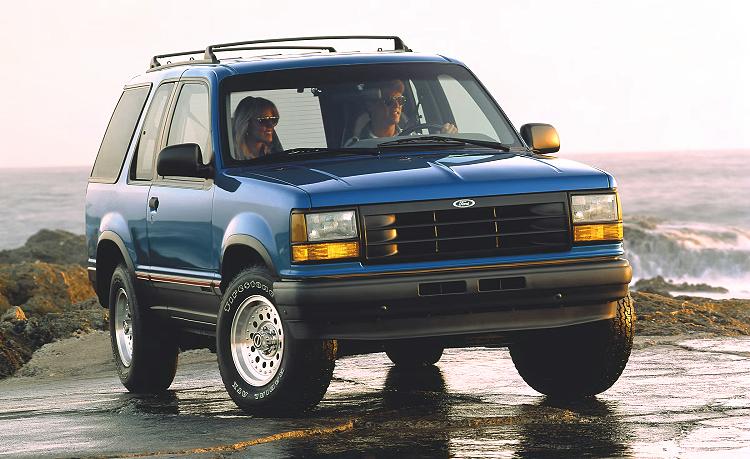
- Three-door (Sport): Rode on a 102.1-inch wheelbase and offered better maneuverability
- Five-door: Featured a wheelbase roughly 10 inches longer, resulting in improved ride quality and increased interior space
Although the two-door remained available, the five-door quickly became the more popular choice among buyers.
Styling and Design
The Explorer’s design was simple and functional, reflecting its dual-purpose nature. It featured a boxy, upright shape with clean lines and minimal ornamentation.
Key styling elements included:
- A three-slat front grille
- Rectangular headlights
- Straight, angular body panels
Its overall look shared similarities with the larger Bronco, reinforcing its rugged image while maintaining a more refined and approachable appearance.
Engine and Performance
All 1991–1994 Explorers were powered by a 4.0-liter OHV V6, often referred to as the “Cologne” engine.
- 1991–1992: 155 horsepower and 220 lb-ft of torque
- 1993–1994: 160 horsepower and 220 lb-ft of torque
While not particularly powerful, the engine delivered dependable performance and strong low-end torque, making it well-suited for both daily driving and light off-road use.
Transmissions and Drivetrain
The Explorer offered two transmission options:
- Standard 5-speed manual (Mazda-sourced)
- Optional 4-speed automatic
Rear-wheel drive was standard, but buyers could opt for part-time four-wheel drive systems. These systems were designed for ease of use while still providing genuine off-road capability.
Available 4WD configurations included:
- Electronically controlled transfer case with push-button activation
- Optional manual transfer case with manual-locking hubs
Both systems included low-range gearing for off-road situations.
Trim Levels (1991–1994)
XL
- Base model with black grille, steel wheels, and basic features
XLT
- Added brightwork, alloy wheels, and additional comfort features
Sport (Three-Door Only)
- Black grille and lower bodywork
- Alloy wheels
- Replaced XLT in the two-door lineup
Eddie Bauer
Positioned as the premium trim from the start, in partnership with the outdoor brand Eddie Bauer.
- Two-tone paint
- Premium interior materials (cloth or leather)
- Full power options
Limited (Introduced in 1993)
- Monochromatic paint scheme
- Unique wheels and trim
- Additional upscale features
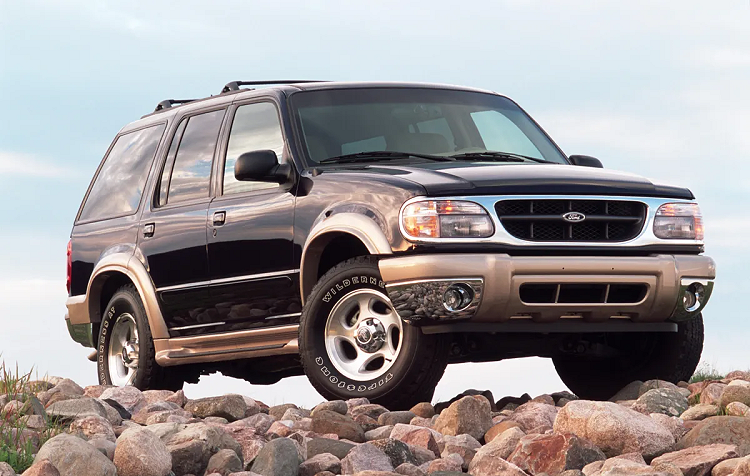
1995–2001 Ford Explorer: Refinement and Expansion
Riding the momentum of a wildly successful first generation, Ford introduced the redesigned Explorer for the 1995 model year. While the new model retained its familiar overall shape and Ranger-based foundation, it brought significant updates in styling, engineering, and performance that helped keep it competitive in a rapidly evolving SUV market.
The redesign softened the Explorer’s appearance with more rounded body contours, updated front and rear styling, and a more modern interior. The five-door model also grew significantly, stretching to 190.7 inches in length—an increase driven in part by shifting market demands following the discontinuation of the full-size Bronco.
Platform and Engineering Updates
Although still based on a chassis derived from the Ford Ranger, the second-generation Explorer received important mechanical upgrades. Most notably, Ford replaced the earlier Twin I-Beam front suspension with a more modern short- and long-arm (SLA) independent front suspension design. This change improved ride quality, handling, and space efficiency.
Additional updates included the adoption of rack-and-pinion steering, further enhancing on-road manners and bringing the Explorer closer in line with passenger car dynamics while maintaining its body-on-frame durability.
Body Styles and Expansion
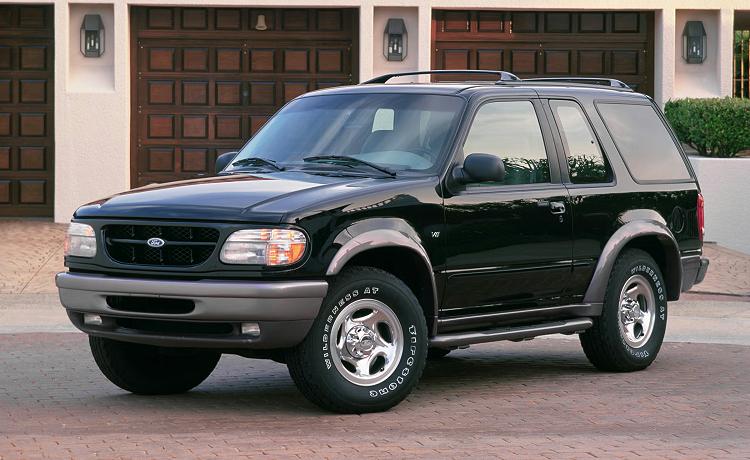
As before, the Explorer was offered in both three-door and five-door configurations. However, Ford began to further differentiate the two-door model during this generation.
By 1999, all two-door Explorers were marketed under the Explorer Sport name, effectively separating them from the main lineup. The Sport model emphasized a shorter wheelbase and improved maneuverability, while the five-door models continued to focus on family-friendly practicality.
In 2001, Ford expanded the Explorer lineup even further with the introduction of the Explorer Sport Trac. Based on the four-door model, the Sport Trac featured a 50-inch composite pickup bed and a longer 125.9-inch wheelbase, transforming the SUV into a midsize crew-cab pickup alternative.
Engine Options and Performance
At launch in 1995, the second-generation Explorer carried over the 4.0-liter OHV V6 from the previous model, now producing 160 horsepower.
Ford quickly expanded the engine lineup to improve performance and competitiveness:
- 4.0L OHV V6 (1995–2000): 160 hp
- 5.0L OHV V8 (introduced 1996): 210 hp and 280 lb-ft of torque
- 4.0L SOHC V6 (introduced 1997): Approximately 205–210 hp
The introduction of the 5.0-liter V8 gave the Explorer a much-needed performance boost, while the new SOHC V6 offered similar horsepower with improved efficiency and modern design. The SOHC engine became standard on higher-end trims like Eddie Bauer and Limited, and by 2001 it replaced the older pushrod V6 entirely.
Transmissions and Drivetrain
The second-generation Explorer initially continued with the same transmission options as before:
- Standard 5-speed manual
- Optional 4-speed automatic
In 1997, Ford introduced a five-speed automatic transmission for V6 models, improving performance and drivability. V8-powered Explorers were equipped with a heavy-duty 4R70W four-speed automatic, and no manual transmission was offered with the V8.
Four-wheel-drive systems also evolved during this generation. All 4WD models adopted electronically controlled systems, while V8 models utilized a full-time all-wheel-drive setup with a 40/60 front-to-rear torque split.
Trim Levels (1995–2001)
The second-generation Explorer largely carried over its trim structure from the first generation, while introducing a few updates over time.
XL / XLS
- XL served as the base model at launch
- Replaced by XLS as the base trim in 2000
XLT
- Mainstream trim level with upgraded features and options
Sport (Two-Door)
- All two-door models rebranded as Explorer Sport by 1999
- Focused on a shorter wheelbase and sportier appearance
Eddie Bauer
- Premium trim with two-tone paint and upscale interior features
- Often included the more powerful engine options
Limited
- Top-tier trim with monochromatic styling
- Added luxury-focused features and unique exterior details
Saleen XP8: The First Performance Explorer (1998–2001)
While most second-generation Ford Explorers were designed with family duty and everyday utility in mind, a little-known high-performance variant quietly pushed the platform into entirely new territory. Built by Saleen between 1998 and 2001, the Saleen XP8 is widely considered one of the first true performance SUVs—years before high-performance models like the BMW X5 M or Mercedes-AMG ML55 became mainstream.
Based on the V8-powered Explorer, the XP8 was extensively reworked to deliver significantly improved power and handling. Under the hood, it featured a 5.0-liter V8 engine, available in both naturally aspirated and supercharged configurations. The supercharged version was the most desirable, producing up to 286 horsepower and 333 lb-ft of torque—substantial gains over the standard Explorer of the time.
Saleen didn’t stop at power. The XP8 received a complete suspension overhaul using the company’s Racecraft components, including stiffer springs and N2 shocks, lowering the vehicle by approximately two inches to improve handling and stability. Performance braking was also upgraded, with optional 13-inch vented discs and four-piston calipers from suppliers such as Alcon or Baer.
Visually, the XP8 stood apart from any factory Explorer. It featured a full aerodynamic body kit with unique front and rear fascias, side skirts, revised door cladding, and a roof-mounted rear wing. The SUV rode on distinctive 18-inch magnesium wheels, giving it an aggressive stance. Inside, the cabin was upgraded with premium materials, including available carbon fiber or wood trim, Saleen-branded gauges, and optional Recaro leather seating.
Rarity is a major part of the XP8’s appeal. Production numbers remain somewhat disputed, but it is generally believed that only around 120 to 150 units were built. An even rarer variant, known as the XP6, was created when Ford mistakenly supplied Saleen with V6-powered Explorers. Rather than returning them, Saleen modified these vehicles with the same visual and suspension upgrades, producing an estimated 10 to 15 examples.
Today, the Saleen XP8 stands as a unique and often overlooked chapter in Ford Explorer history—one that helped pave the way for the high-performance SUVs that would follow in the decades ahead.
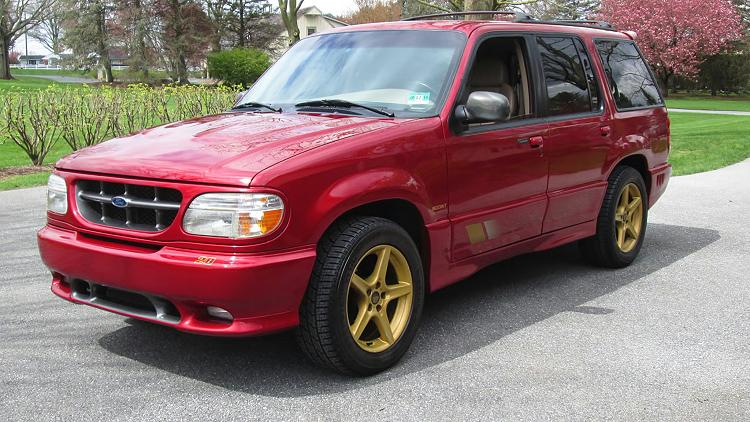
Saleen Ford Explorer
Controversy and Safety Concerns
Despite its popularity, the second-generation Explorer became the center of a major safety controversy in the late 1990s and early 2000s. Reports of rollover accidents drew national attention, many of which were linked to failures of certain Firestone tires equipped on the vehicle.
In 2000, the National Highway Traffic Safety Administration opened an investigation into tire tread separation issues. In 2001, Firestone recalled millions of Wilderness AT tires after it was determined that, under certain conditions, tread separation could occur, leading to loss of control.
Investigations later revealed that the incidents were the result of multiple contributing factors, including tire maintenance, driving conditions, and the inherent high center of gravity common to SUVs of the era. While the controversy significantly impacted public perception, it also led to increased scrutiny and improvements in vehicle safety standards across the industry.
2002–2005 Ford Explorer: A Major Redesign
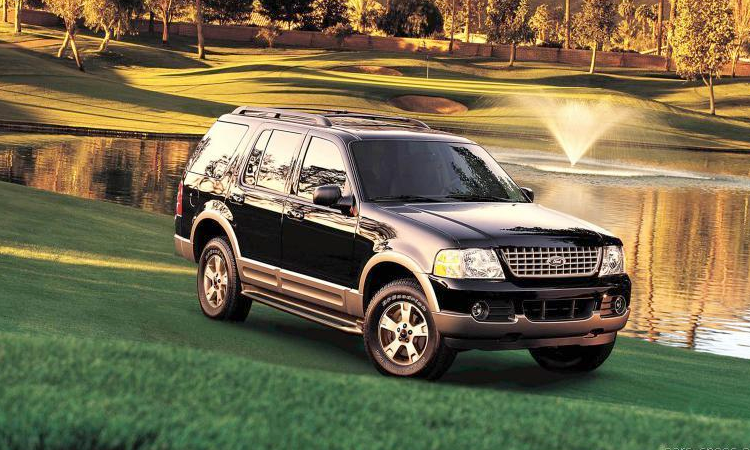
Looking to move beyond the limitations of its earlier designs, Ford introduced a completely redesigned Explorer for the 2002 model year, marking the beginning of the third generation. This was the most significant transformation in the model’s history to that point, as Ford moved away from the Ranger-based platform that had underpinned the Explorer since its debut.
Instead, the new Explorer rode on a dedicated body-on-frame platform, bringing substantial changes in size, refinement, and capability. With this redesign, Ford aimed to position the Explorer as a more comfortable and family-oriented SUV, benchmarking it against more refined competitors while still retaining its traditional truck-based roots.
Platform and Engineering
The third-generation Explorer introduced an all-new rear-wheel-drive-based platform that featured major engineering advancements. Most notably, it became the first Explorer to use an independent rear suspension, replacing the previous solid rear axle.
This change, combined with stronger suspension mounting points and softer bushings and springs, resulted in significantly improved ride quality and handling. The updated chassis also featured an expanded wheelbase of 113.7 inches, allowing for increased interior space.
Four-wheel-drive models were equipped with an updated Control Trac system, providing improved traction and stability in a variety of driving conditions. Beginning in 2003, all-wheel drive also became available on most trims.
Body Style and Interior Space
The third-generation Explorer marked the end of the traditional two-door model. While the Explorer Sport (two-door) carried over briefly from the previous generation, it was discontinued after the 2003 model year, leaving the Explorer as a strictly five-door SUV moving forward.
Thanks to its larger platform and redesigned suspension, the Explorer now offered available third-row seating for the first time. This addition significantly increased passenger capacity and made the Explorer more competitive with other family-oriented SUVs.
Meanwhile, the Explorer Sport Trac—introduced in 2001—continued alongside the new generation. Still based on the previous platform, it retained its pickup-style configuration with a composite cargo bed and solid rear axle.
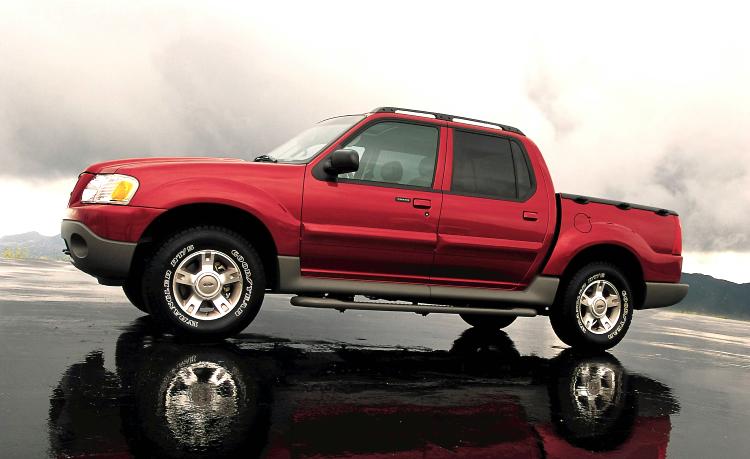
2001-2005 Ford Explorer Sport Trac
Styling and Design
The redesigned Explorer adopted styling cues from the larger Ford Expedition, blending familiar design elements with a more modern and refined appearance. The exterior featured smoother lines, a more rounded profile, and updated lighting, giving it a less rugged and more upscale look compared to earlier models.
Inside, the cabin was also modernized with improved materials, additional features, and a more spacious layout, further reinforcing its shift toward comfort and practicality.
Engine Options and Performance
The third-generation Explorer carried over the 4.0-liter SOHC V6 as its base engine, producing 210 horsepower.
Ford also introduced a new, more powerful V8 option:
- 4.0L SOHC V6: 210 hp
- 4.6L SOHC V8: 238–239 hp and 282 lb-ft of torque
The new 4.6-liter V8, part of Ford’s Modular engine family and shared with vehicles like the Crown Victoria and Grand Marquis, provided a significant boost in performance and made this the most powerful Explorer to date.
Transmissions and Drivetrain
All third-generation Explorers were equipped with a five-speed automatic transmission, replacing the mix of manual and automatic options offered in earlier models.
Rear-wheel drive remained standard, while four-wheel drive and, later, all-wheel drive systems were available depending on trim and configuration. These systems were designed to improve traction and drivability in a variety of conditions while maintaining everyday usability.
Trim Levels (2003–2005)
The third-generation Explorer continued with a familiar trim structure, while introducing a new off-road-oriented package during its run.
XLS
- Base model with essential features
XLT
- Primary trim level with additional comfort and convenience features
Eddie Bauer
- Premium trim with upscale materials and distinctive two-tone styling
Limited
- Top-tier trim with luxury-focused features and monochromatic styling
NBX (No Boundaries Experience) – 2003–2004
- Off-road-oriented package
- Included all-terrain tires, black body cladding, heavy-duty roof rack, and unique interior accents
2006–2010 Ford Explorer: Refinement and Modernization
For the 2006 model year, Ford introduced an updated Explorer that built upon the foundation of the third generation while continuing its shift toward a more refined, mainstream SUV. Although the redesign was evolutionary on the surface, significant improvements beneath the sheetmetal enhanced ride quality, performance, and overall comfort.
With this update, the Explorer moved further away from its rugged roots, adopting more modern styling cues and improved interior features aimed at everyday usability and family appeal.
Platform and Engineering Improvements
The fourth-generation Explorer rode on an updated platform that featured a stronger, stiffer frame and numerous suspension refinements. Revised upper and lower control arms in the front suspension, along with new monotube dampers, improved both ride quality and handling.
These updates, combined with continued use of the independent rear suspension introduced in the previous generation, resulted in a smoother, quieter ride. Ford engineers also focused on reducing interior noise, and the cabin was notably quieter at highway speeds compared to earlier models.
Styling and Interior Updates
Visually, the 2006 refresh brought subtle but noticeable changes. The exterior featured a redesigned front end with a more prominent grille, additional chrome accents, and reshaped headlights with distinctive round elements. A revised tailgate and updated rear styling completed the look.
Inside, the Explorer received a significant upgrade in both design and materials. The cabin featured a more modern layout with improved fit and finish, along with new technology options such as a touchscreen infotainment system, Sirius Satellite Radio, and DVD-based navigation.
Additional updates included a floor-mounted shifter with chrome accents and more upscale trim throughout, further reinforcing the Explorer’s transition toward a more refined SUV experience.
Body Styles and Sport Trac
The fourth-generation Explorer continued as a five-door SUV only, with the two-door configuration no longer offered.
In 2007, Ford introduced the redesigned second-generation Explorer Sport Trac. Based on the Explorer platform, the Sport Trac combined SUV practicality with a composite pickup bed and a longer 130.5-inch wheelbase. Unlike its predecessor, the new Sport Trac adopted the Explorer’s independent rear suspension, improving ride quality and handling.
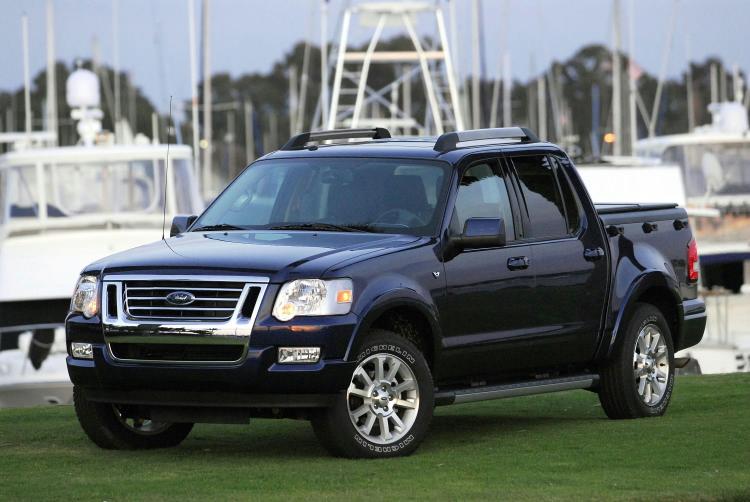
2007 Ford Explorer Sport Trac
Engine Options and Performance
The fourth-generation Explorer retained the familiar engine lineup from the previous generation, though with key updates.
- 4.0L SOHC V6: 210 hp and 254 lb-ft of torque
- 4.6L SOHC V8 (updated): 292 hp and 300 lb-ft of torque
The updated 4.6-liter V8, now featuring variable cam timing and a three-valve cylinder head design, delivered a substantial increase in power over earlier versions. Shared with vehicles like the Ford Mustang GT and F-150, this engine significantly improved acceleration and overall performance.
Transmissions and Drivetrain
Transmission options were updated to match the improved powertrains:
- 5-speed automatic (V6 models)
- 6-speed automatic (V8 models)
Rear-wheel drive remained standard, while electronically controlled four-wheel drive was available as an option. These systems continued to provide a balance between everyday drivability and off-road capability.
Trim Levels (2006–2010)
The fourth-generation Explorer retained its core trim structure while introducing new appearance and performance-oriented packages.
XLS
- Base model with essential features
XLT
- Mainstream trim with additional comfort and technology options
Eddie Bauer
- Premium trim with distinctive styling and upscale interior features
Limited
- Top-tier trim with luxury-focused features and refined styling
Ironman Package (2007–2010, XLT)
- Unique grille and smoked headlights
- Amber fog lights and black fender flares
- 18-inch wheels and two-tone leather interior
Explorer Sport Trac Adrenalin: A Performance Truck That Almost Was (2008–2010)
As Ford continued to expand the Explorer lineup in the mid-2000s, it experimented with blending SUV practicality and pickup utility through the Explorer Sport Trac. Among the most ambitious versions was the Sport Trac Adrenalin, a limited-production model that aimed to bring high-performance styling—and potentially performance—to the segment.
The Adrenalin’s story begins with a much more aggressive vision. Unveiled as a concept at the 2005 New York Auto Show, the original design was developed by Ford’s Special Vehicle Team (SVT) and featured a supercharged 4.6-liter V8 producing an estimated 390 horsepower, along with all-wheel drive. Ford positioned it as the “world’s first high-performance sport utility truck,” effectively envisioning it as a spiritual successor to the F-150 SVT Lightning.
However, shifting priorities within Ford—including the company’s “Way Forward” restructuring plan and the financial pressures of the late-2000s economic downturn—ultimately prevented the high-performance SVT version from reaching production. Instead, the Adrenalin was introduced between 2008 and 2010 as a specialized appearance and trim package that retained much of the concept’s aggressive styling while utilizing standard powertrains.
The production Adrenalin stood out visually from the standard Sport Trac with a bold, street-focused design. It featured unique front and rear fascias that lowered the vehicle’s appearance by approximately 3.5 inches, a large gloss-black grille, integrated running boards, and functional side fender vents. It rode on 20-inch polished aluminum wheels wrapped in Pirelli tires, giving it a distinctly performance-oriented stance.
Under the hood, the Adrenalin was available with either a 4.0-liter V6 producing 210 horsepower or a 4.6-liter V8 delivering 292 horsepower. While it lacked the supercharged performance of the concept, it did introduce a more performance-focused all-wheel-drive system with a 60/40 rear torque bias, improving traction and driving dynamics compared to standard models.
Inside, the Adrenalin featured a sportier, more upscale interior, including charcoal black leather bucket seats, “Adrenalin” branded floor mats, and white-faced gauges that reinforced its performance-inspired identity.
Despite its toned-down performance, the Sport Trac Adrenalin remains a rare and intriguing chapter in Explorer history. With approximately 14,000 units produced over its three-year run, it is often remembered as a “what-could-have-been”—a bold styling exercise that hinted at the high-performance SUVs and trucks Ford would fully realize years later with models like the Explorer ST and F-150 Raptor.
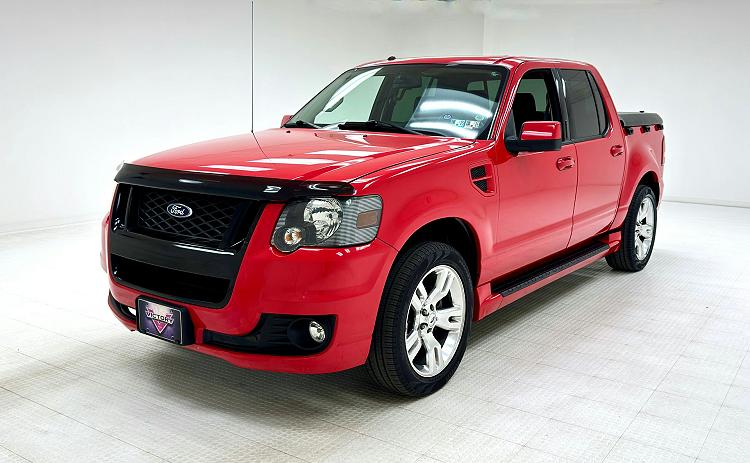
2008-2010 Ford Explorer Sport Trac Adrenalin
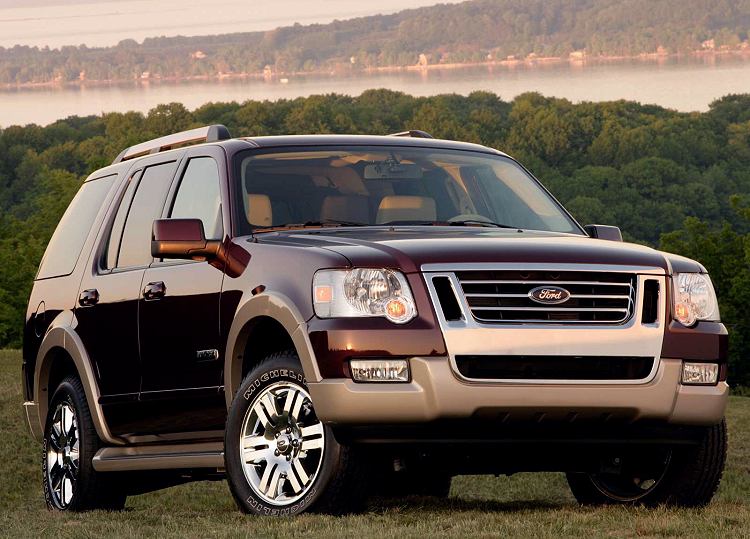
2006-2010 Ford Explorer
2011–2019 Ford Explorer: The Crossover Revolution
For the 2011 model year, Ford gave the Explorer its most dramatic transformation to date, fundamentally changing its identity. After two decades as a body-on-frame, truck-based SUV, the Explorer transitioned to a unibody construction, adopting a car-based platform and fully embracing its role as a family-oriented crossover.
This shift marked a major turning point in the Explorer’s evolution. Built on a platform derived from the Ford Taurus and influenced by Volvo architecture, the new design prioritized ride comfort, interior space, and fuel efficiency while still offering available all-wheel drive.
Platform and Engineering
The fifth-generation Explorer moved to a front-wheel-drive-based unibody platform, replacing the traditional rear-wheel-drive, body-on-frame layout used since 1991. This new architecture significantly improved ride quality, handling, and overall refinement.
An intelligent all-wheel-drive system became available, capable of automatically adjusting torque distribution based on road conditions. This system helped maintain traction in poor weather while preserving everyday drivability.
Styling and Design
The 2011 redesign introduced a more modern and aerodynamic appearance. The Explorer featured a sculpted body with smoother lines, a more aggressive front fascia, and wraparound headlights with a swept-back design.
From the side, the SUV adopted a more dynamic profile with a raked windshield, a power-domed hood, and distinctive blacked-out rear pillars that created a floating roof effect. This design element became a signature styling cue for the Explorer moving forward.
At the rear, a roof spoiler and sharply styled taillights gave the vehicle a more contemporary look, while still maintaining visual ties to earlier generations.
Interior and Technology
Inside, the Explorer took a significant step toward a more car-like experience. The redesigned cabin featured a higher-quality interior with improved materials and a more modern layout.
Technology played a major role in this generation, with features that included:
- Available SYNC infotainment system
- Touchscreen interface on higher trims
- Available dual-screen instrument cluster
- Six-speaker audio system with CD and MP3 capability (standard)
The Explorer also offered improved versatility, with a 60/40 split-folding second row and an available third-row seat that could fold flat into the floor, increasing overall passenger and cargo flexibility.
Engine Options and Performance
The fifth-generation Explorer introduced a new lineup of engines focused on balancing performance and efficiency.
- 3.5L V6 (2011–2019): 290 hp and 255 lb-ft of torque
- 2.0L EcoBoost Turbo I4 (introduced 2011): 240 hp and 270 lb-ft of torque
- 2.3L EcoBoost Turbo I4 (introduced 2016): 280 hp and 310 lb-ft of torque
- 3.5L EcoBoost Twin-Turbo V6 (Sport, introduced 2013): 365 hp and 350 lb-ft of torque
The introduction of turbocharged EcoBoost engines marked a significant shift in Ford’s powertrain strategy. The twin-turbocharged Sport model delivered strong performance, with acceleration comparable to some performance-oriented SUVs.
Transmissions and Drivetrain
All fifth-generation Explorers were equipped with a six-speed automatic transmission.
Front-wheel drive was standard, while all-wheel drive was available across most trims and came standard on performance-oriented models like the Sport. The intelligent AWD system continuously monitored traction conditions and adjusted power delivery accordingly.
Trim Levels (2011–2019)
The fifth-generation Explorer offered a range of trims that evolved over time, adding both performance and luxury-focused options.
Base
- Standard features with cloth seating and basic technology
XLT
- Mid-range trim with additional comfort and convenience features
Limited
- Luxury-oriented trim with upgraded materials and advanced technology
Sport (Introduced 2013)
- Twin-turbocharged V6 engine
- Standard all-wheel drive
- Sport-oriented styling with black exterior accents
Platinum (Introduced 2016)
- Top-tier trim with premium materials and advanced technology
- High-end interior finishes and exclusive features
Mid-Cycle Refresh (2016)
For 2016, Ford updated the Explorer with a refreshed exterior design that included a new grille, revised headlights, and updated fog lights inspired by the F-150. The update also brought a revised engine lineup, replacing the 2.0-liter EcoBoost engine with a more powerful 2.3-liter turbocharged four-cylinder.
Additional technology and safety features were introduced during this update, further enhancing the Explorer’s appeal in the competitive crossover SUV segment.
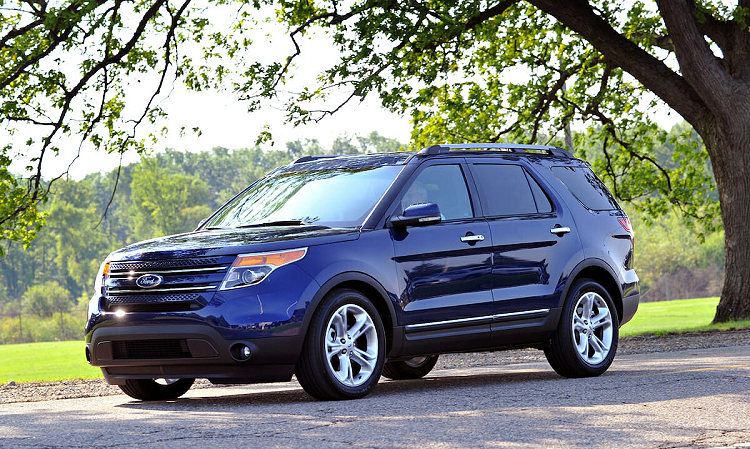
2011-2019 Ford Explorer
2020–2024 Ford Explorer: A Return to Rear-Wheel-Drive Roots
For the 2020 model year, Ford once again reinvented the Explorer, blending its modern crossover identity with key elements from its past. While it retained unibody construction, the sixth-generation Explorer moved to an all-new rear-wheel-drive platform, marking a return to its performance-oriented roots.
This redesign combined the comfort and efficiency of a crossover with improved driving dynamics, increased capability, and a broader range of powertrain options than ever before.
Platform and Engineering
The sixth-generation Explorer rides on a new rear-wheel-drive-based architecture shared with the Lincoln Aviator. Unlike the previous generation’s front-wheel-drive layout, this configuration allows for better weight distribution, improved handling, and increased towing capability.
Despite the return to rear-wheel drive, the Explorer remains a unibody vehicle, maintaining the refined ride quality and interior space expected from a modern SUV. All-wheel drive is available across most trims and comes standard on higher-performance models.
Styling and Design
The 2020 redesign introduced a more athletic and upscale appearance. The Explorer featured a wider stance, a more defined front fascia, and a larger grille with a bold, modern design.
From the side, the longer hood and shorter front overhang emphasized its rear-wheel-drive proportions, while sculpted body lines and flared wheel arches added a more aggressive look. A gently sloping roofline and blacked-out rear pillars continued the floating roof design theme introduced in the previous generation.
At the rear, updated LED taillights and a roof spoiler gave the Explorer a clean and contemporary finish, while subtle design cues maintained continuity with earlier models.
Interior and Technology
Inside, the sixth-generation Explorer featured a more advanced and technology-focused cabin. Higher trims offered premium materials and a refined layout, while base models still delivered a functional and comfortable interior.
Key technology features included:
- Standard 8-inch touchscreen infotainment system
- Available 10.1-inch portrait-oriented touchscreen
- Apple CarPlay and Android Auto integration
- Available 12.3-inch digital instrument cluster
- Ford Co-Pilot360 driver-assist technologies
The Explorer continued to offer three rows of seating for up to seven passengers, with available second-row captain’s chairs and a fold-flat third row for improved cargo flexibility.
Engine Options and Performance
The sixth-generation Explorer introduced a diverse lineup of powertrains designed to meet a wide range of needs, from efficiency to high performance.
- 2.3L EcoBoost Turbo I4: 300 hp and 310 lb-ft of torque
- 3.3L Hybrid V6: 318 hp and 332 lb-ft of torque (combined output)
- 3.0L EcoBoost Twin-Turbo V6 (ST): Up to 400 hp and 415 lb-ft of torque
The turbocharged 2.3-liter engine served as the base powerplant, delivering a strong balance of power and efficiency. The hybrid option provided improved fuel economy while maintaining solid towing capability.
At the top of the lineup, the performance-oriented ST model offered significantly increased power, upgraded suspension components, and enhanced driving dynamics, making it one of the quickest Explorers ever produced.
Transmissions and Drivetrain
All sixth-generation Explorers are equipped with a 10-speed automatic transmission, improving both performance and fuel efficiency.
Rear-wheel drive is standard, while all-wheel drive is available on most trims and standard on higher-performance models such as the ST and Platinum. This setup enhances both on-road handling and all-weather capability.
Trim Levels (2020–2024)
The sixth-generation Explorer is offered in a wide range of trims, providing options that span from practical to performance-focused and luxury-oriented.
Base
- Essential features with a focus on value and functionality
XLT
- Popular mid-range trim with added comfort and technology
Limited
- Premium features and advanced technology
Limited Hybrid
- Hybrid powertrain with improved efficiency
ST
- High-performance model with twin-turbo V6
- Sport-tuned suspension and aggressive styling
Platinum
- Top-tier luxury trim with premium materials and advanced features
Performance and Capability
The move back to a rear-wheel-drive platform improved overall performance, particularly in handling and towing. Properly equipped models can tow up to 5,600 pounds, making the Explorer competitive in the midsize SUV segment.
The ST model stands out for its performance, offering quick acceleration and a more engaging driving experience compared to previous generations.
A Modern Evolution of a Classic Nameplate
The sixth-generation Explorer represents a careful balance between heritage and modernization. By returning to a rear-wheel-drive layout while maintaining unibody construction, Ford successfully blended the strengths of its earlier SUVs with the demands of modern buyers.
With a wide range of powertrains, advanced technology, and improved driving dynamics, the 2020–2024 Explorer continues to evolve as one of Ford’s most important and versatile vehicles.
2025 Ford Explorer Refresh: Technology and Refinement
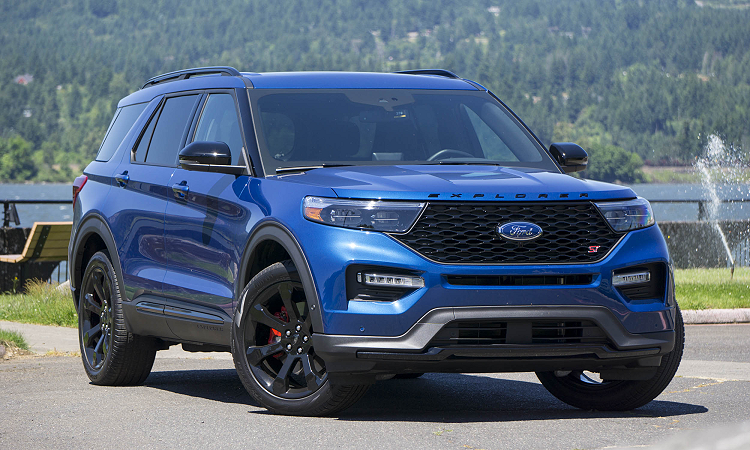
For the 2025 model year, Ford introduced a significant mid-cycle refresh for the sixth-generation Explorer, bringing updated styling, a redesigned interior, and a major leap forward in technology. While the overall platform and powertrain lineup carried over, the updates focused on improving refinement, usability, and competitiveness in the midsize SUV segment.
Exterior Updates
The 2025 Explorer received a revised front fascia with a larger grille and updated styling elements that vary by trim level. Sleeker headlights and redesigned LED taillights give the SUV a more modern and refined appearance.
Subtle changes to the body maintain the Explorer’s rear-wheel-drive proportions, including its long hood, short front overhang, and slightly sloping roofline. New wheel designs and updated exterior accents further distinguish each trim level.
Interior and Technology Overhaul
The most significant changes for 2025 take place inside the cabin. Ford completely redesigned the dashboard, creating a more open and modern layout with improved materials and a stronger focus on digital integration.
Every 2025 Explorer now comes standard with:
- 13.2-inch touchscreen infotainment system
- 12.3-inch digital instrument cluster
- Wireless Apple CarPlay and Android Auto
- Ford Digital Experience infotainment system
The new Ford Digital Experience introduces built-in Google Assistant and Amazon Alexa functionality, along with enhanced connectivity features. The system also supports media streaming and gaming when the vehicle is parked, marking a significant step forward in in-car technology.
Interior materials were upgraded across the lineup, addressing criticisms of the previous model’s cabin quality while maintaining the Explorer’s practical three-row layout.
Powertrain and Performance
The 2025 Explorer retains its proven engine lineup, with refinements to improve drivability and overall performance.
- 2.3L EcoBoost Turbo I4: 300 hp and 310 lb-ft of torque
- 3.0L EcoBoost Twin-Turbo V6 (ST and available on Platinum): Up to 400 hp and 415 lb-ft of torque
All models are equipped with a 10-speed automatic transmission. Rear-wheel drive remains standard, while all-wheel drive is available across the lineup. Updates to the transmission tuning improve shift quality and responsiveness compared to earlier models.
The performance-focused ST model continues to deliver strong acceleration and sportier driving dynamics, remaining one of the quickest vehicles in the Explorer lineup.
Trim Levels (2025–Present)
Ford simplified the Explorer lineup for 2025, reducing the number of trims and consolidating features into four primary models:
Active
- New base trim combining features from previous lower trims
- Standard 2.3L turbocharged engine and modern technology features
ST-Line
- Sport-inspired styling with black accents and unique interior details
- Retains the 2.3L turbocharged engine
ST
- High-performance model with twin-turbo V6
- Sport-tuned suspension and aggressive styling
Platinum
- Top-tier luxury trim with premium materials and advanced features
- Available twin-turbo V6 for added performance
Capability and Features
The 2025 Explorer continues to offer strong capability for a midsize SUV, including a standard Class III towing package with up to 5,000 pounds of towing capacity on most models.
Ford Co-Pilot360 Assist+ comes standard, offering a suite of advanced driver-assistance features. Available technology includes BlueCruise hands-free highway driving, further enhancing long-distance comfort and convenience.
Keeping the Explorer Competitive
The 2025 refresh represents a focused effort by Ford to modernize the Explorer without altering its core strengths. By improving interior quality, expanding technology, and simplifying the lineup, Ford positions the Explorer to remain competitive in an increasingly crowded midsize SUV market.
More than three decades after its introduction, the Explorer continues to evolve, balancing its legacy as a pioneering SUV with the expectations of modern drivers.
The Evolution of an SUV Icon
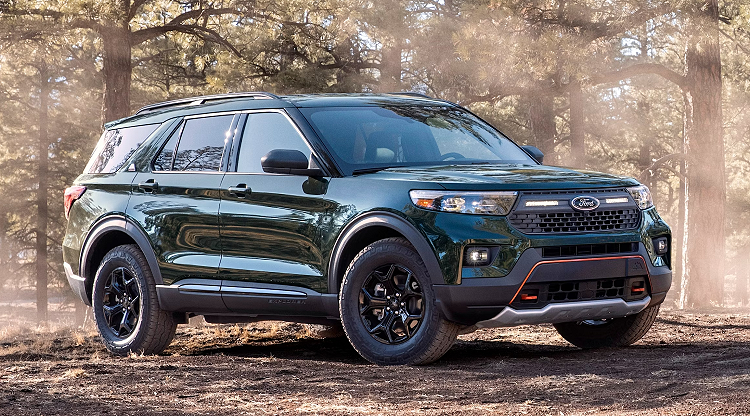
From its introduction in 1991 as a rugged replacement for the Bronco II to its current role as a refined, technology-packed three-row SUV, the Ford Explorer has consistently adapted to meet the needs of American drivers.
Each generation reflects a shift in the automotive landscape—from the rise of family SUVs in the 1990s, to the move toward improved safety and comfort in the 2000s, to the crossover revolution of the 2010s, and now the integration of advanced technology, hybrid powertrains, and driver-assist systems.
Despite these changes, the Explorer has remained true to its core mission: delivering a versatile vehicle capable of handling daily driving, road trips, and light-duty utility with ease.
More than 30 years after its debut, the Explorer continues to be one of Ford’s most important vehicles and a cornerstone of the midsize SUV segment. Its ability to evolve while maintaining its identity is a key reason it remains a popular choice for families, enthusiasts, and everyday drivers alike.
As the automotive industry moves toward electrification and even more advanced technology, the Ford Explorer is poised to continue evolving—just as it has since the very beginning.
About The Author

Growing up, my father always believed that every family needed a truck—there’s just something about having a vehicle capable of hauling anything at a moment’s notice. That philosophy stuck with me, and it’s been the foundation of my lifelong passion for Ford trucks.
While I’m best known for my work with Ford Rangers, I’ve owned a wide variety of Ford trucks over the years—including F-150s, F-250s, F-350s, and even larger rigs like the Ford Excursion, Ford Expedition, and a 1982 Ford Econoline Sportsmobile camper van. I’ve used these vehicles for everything from family transportation to towing car trailers and campers, and each one has fueled my love for Ford’s versatility and durability.
I especially enjoy the styling of 1970s and 1980s Ford trucks—the bold designs, rugged presence, and classic charm are timeless. Sharing my passion for Ford trucks, vans, and SUVs with other enthusiasts online brings me a great deal of joy, and it’s why I created Blue Oval Trucks.
This website is dedicated to helping Ford truck enthusiasts explore, learn about, and celebrate these incredible vehicles. While I share my expertise and experiences here, Blue Oval Trucks is an independent enthusiast site and is not affiliated with Ford Motor Company.