
Ten Used Ford Trucks I’d Buy With a $10,000 Budget
There was a time when buying a new truck made sense. Today, that’s becoming harder to justify.
I used to have a Ford F-350 Lariat FX4 Crew Cab diesel. Today that truck would easily cost between $86,000 and $100,000 depending on how it’s equipped. That’s a lot. Especially when I bought a house five years ago for $112,000.
One mistake I see people make is buying more truck than they actually need. Bigger trucks cost more to buy, more to insure, more to maintain, and more to fuel. Unless you’re regularly towing heavy loads, a smaller truck or an F-150 will do everything most people ask of a pickup. Sometimes the smartest truck purchase isn’t the biggest truck you can afford—it’s the one that best fits how you actually use it.
It’s not just the price that bothers me.
Modern trucks ride nice, tow more, and offer features we couldn’t have imagined thirty years ago. But they’ve also become incredibly complicated. Today’s trucks rely on dozens of computers, sensors, cameras, control modules, electric steering systems, and emissions equipment. When everything works, they’re fantastic. When something doesn’t, repairs can get expensive in a hurry.
Meanwhile, I’m constantly seeing older Ford trucks on the road working, hauling loads, pulling trailers, and taking people on weekend adventures. Not having a huge truck payment leaves more money for the toys you want to haul on the weekend.
Heck, I see plenty of older Ford trucks with custom paint, lifted suspensions, aftermarket wheels, and other upgrades where the truck itself has become the toy. Even after all the modifications, many of those owners still have less invested than the cost of a brand-new pickup.
That doesn’t mean newer is always bad, or older is automatically better. Every truck on this list has strengths and weaknesses. Some make excellent daily drivers. Others are better suited for towing, hauling, or weekend projects. A few are becoming collectible in their own right. This page contains the top ten Ford trucks I’d consider buying if I had a $10,000 budget.
How I Chose These Trucks
There are plenty of lists online claiming to rank the “best used trucks,” but many of them simply list the newest trucks that happen to fit the budget. That’s not how I approached this article.
I looked at several factors:
- Current market prices
- Long-term reliability
- Ease of repair
- Parts availability
- Capability
- Overall ownership costs
- Whether I’d actually buy one myself
I also avoided trucks that have earned a reputation for expensive engine or drivetrain problems. A truck isn’t a bargain if it needs a $6,000 repair six months after you buy it.
One thing you’ll notice is that I often recommend a specific engine rather than an entire generation of trucks. That’s intentional. Sometimes the difference between buying a great used truck and buying one you’ll regret comes down to what’s under the hood.
With that said, here are the ten used Ford trucks I’d be shopping for if my budget was capped at $10,000.
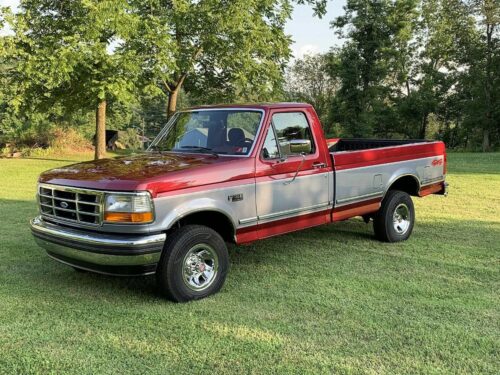
1. 1987-1996 Ford F-150 (300 Inline-Six)
Best Overall Value
If I were shopping for a used Ford truck with a $10,000 budget, this is where I’d start.
Ford’s legendary 300 cubic-inch inline-six wasn’t designed to win races. It was designed to work, and that’s exactly what it has done for decades. Instead of using a timing chain or belt, it uses a durable gear-driven timing set that has become one of the reasons for its legendary reputation. Combined with its simple pushrod design and outstanding low-end torque, it’s earned a reputation as one of the most dependable engines Ford has ever built.
The 1987-1996 F-150 is also simple enough that many repairs can still be done in your own garage with basic hand tools. Parts are plentiful, aftermarket support is excellent, and there are still plenty of trucks available that haven’t been modified beyond recognition. Whether you need a dependable work truck, a weekend project, or a classic pickup to enjoy for years to come, it’s hard to go wrong with a clean OBS Ford.
Ford built the 300 inline-six from 1965 through 1996. It powered everything from F-100s and F-150s to Econoline vans, industrial equipment, and medium-duty trucks. Engines don’t stay in production for more than 30 years unless they’re doing something right.
Why I’d Buy It
- Legendary reliability.
- Excellent low-end torque for hauling and everyday work.
- Easy to repair with inexpensive replacement parts.
- Huge aftermarket support.
- OBS Ford trucks continue to grow in popularity and collector interest.
Things to Know Before You Buy
The 300 inline-six is incredibly durable, but it isn’t fast. If you’re expecting modern acceleration, you’ll be disappointed. These trucks were built for steady work, not stoplight races. Rust should be your biggest concern, especially around the cab corners, rocker panels, bed supports, and frame on trucks that spent time in northern climates. I’d also look for signs that the truck has been maintained rather than modified. A stock, well-cared-for F-150 is usually a much better buy than one with a long list of questionable upgrades.
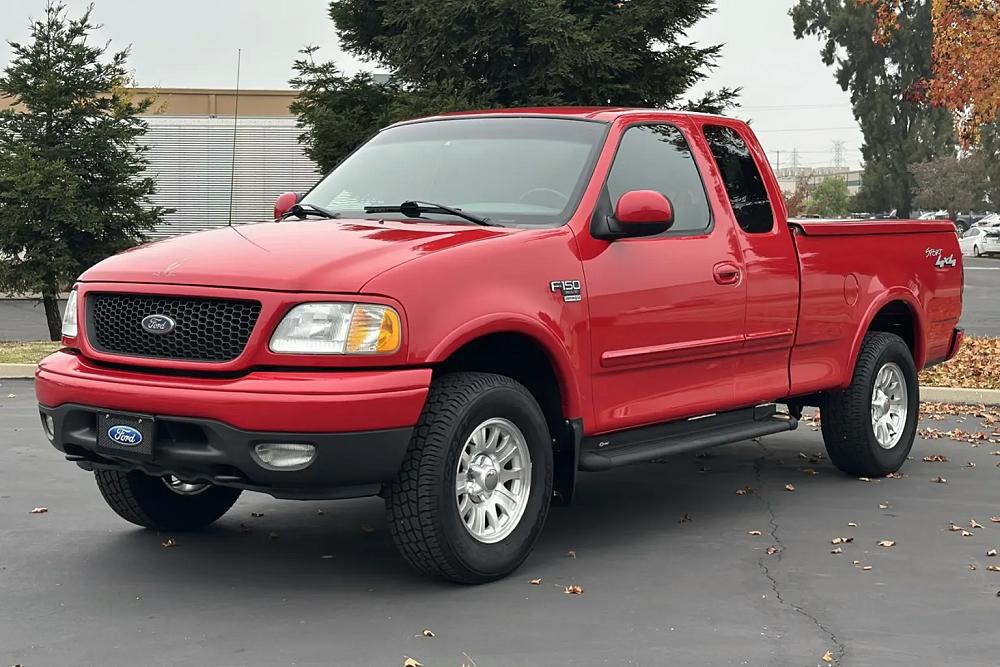
2. 1997-2003 Ford F-150 (4.6L 2-Valve V8)
Best Budget Full-Size Truck
If you’re looking for a dependable full-size pickup that can serve as both a daily driver and a weekend work truck, it’s hard to beat a 1997-2003 F-150 with the 4.6L 2-valve V8.
When most people shop this generation of F-150, they automatically look for the larger 5.4L Triton. I think that’s a mistake. The 4.6L 2-valve V8 has earned a reputation for being one of Ford’s most reliable modern V8 engines. It delivers plenty of power for everyday driving, towing a utility trailer, or hauling materials home from the lumber yard, while avoiding many of the expensive problems that gave later Triton engines a bad name.
The tenth-generation F-150 also marked a huge step forward in comfort compared to the previous generation. They ride better, the interiors are quieter, and they make excellent road-trip trucks without giving up the utility you’d expect from an F-150.
Because so many buyers insist on finding a 5.4L, the 4.6L trucks are often overlooked. That’s good news if you’re shopping on a budget, because you can often buy a cleaner, lower-mileage truck for the same money.
Why I’d Buy It
- One of Ford’s most dependable modern V8 engines.
- Comfortable enough to drive every day.
- Lower purchase prices than comparable 5.4L trucks.
- Excellent parts availability.
- A great balance of capability, comfort, and reliability.
Things to Know Before You Buy
The 4.6L isn’t a powerhouse, especially if you’re used to modern half-ton pickups. If you regularly tow heavy trailers, you’ll probably be happier with a Super Duty. Also pay attention to the condition of the intake manifold. Early composite intake manifolds were known to crack around the thermostat housing, although many trucks have already been updated over the years. As with any used truck, maintenance history is more important than mileage alone.
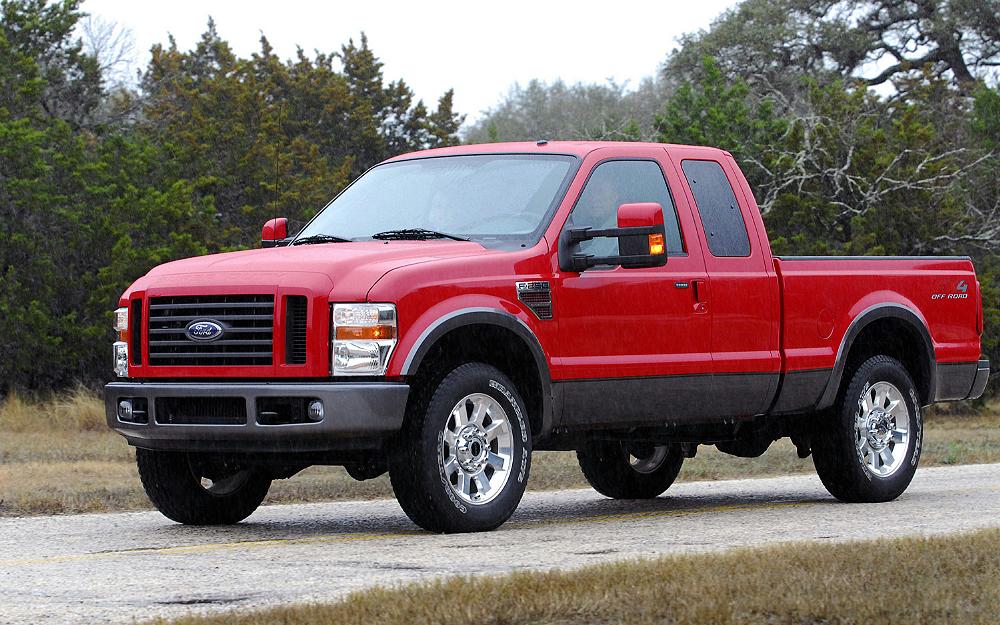
3. 2008-2010 Ford F-250/F-350 Super Duty (6.8L V10)
Best Heavy-Duty Gas Truck
If you need a truck that’s built to tow heavy trailers or haul serious loads, but you don’t want the expense and complexity of an older diesel, the 2008-2010 Super Duty with the 6.8L Triton V10 deserves a serious look.
Most people shopping for a used Super Duty immediately start searching for a diesel, especially the legendary 7.3L Power Stroke. The problem is that clean 7.3L trucks have become expensive, and many of the ones under $10,000 have extremely high mileage, worn-out suspension components, or years of hard towing behind them.
The V10 offers a different approach. It doesn’t have the fuel economy or low-end torque of a diesel, but it provides excellent towing power and avoids many of the expensive diesel-specific repairs that can turn an affordable truck into an expensive project. The 2008-2010 Super Duty represents the final years of the 6.8L V10 before Ford replaced it with the 6.2L Boss V8 as the standard gasoline engine option.
The 6.8L V10 was available in Super Duty trucks for many years, but if I were buying one today, I’d look specifically for a 2008-2010 model. Ford revised the cylinder heads several times during the V10’s production. Earlier versions became known for spark plug thread issues, while the 2005-2007 heads introduced problems with spark plugs breaking during removal. The later 2008-2010 heads used a conventional one-piece spark plug design that eliminated those concerns.
Why I’d Buy It
- Excellent towing capability without the ownership costs of a diesel.
- Strong Super Duty chassis and suspension.
- No turbocharger, HEUI injection system, or diesel emissions equipment.
- Later models avoid the earlier spark plug issues.
- Usually much less expensive than comparable diesel trucks.
Things to Know Before You Buy
The biggest downside is fuel economy. Expect single-digit mileage when towing and around 10-12 mpg in normal driving depending on configuration. A Super Duty is also more expensive to maintain than a half-ton truck. Tires, brakes, steering components, and suspension parts cost more simply because these trucks are built for heavier work.
This is not the truck I’d recommend for someone who just needs to haul lumber home from the hardware store or tow a small trailer. But if you’re regularly pulling a large camper, car trailer, equipment trailer, or other heavy loads, a clean V10 Super Duty can be a much smarter buy than a worn-out diesel.
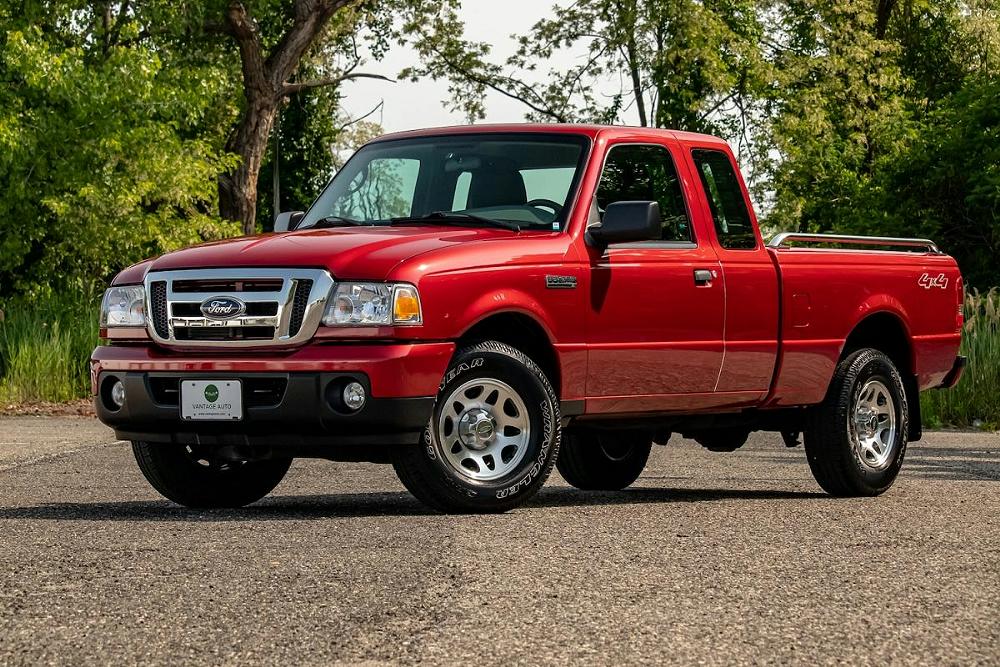
4. 2001-2011 Ford Ranger (4.0L SOHC V6)
Best Midsize Truck Value
The Ford Ranger has always been more than just a small pickup. For many owners, it became the perfect balance between affordability, capability, and adventure.
The 4.0L SOHC V6 was introduced in the Ranger for the 2001 model year and brought a significant improvement in horsepower and torque compared to the earlier 4.0L OHV engine. With 207 horsepower and 238 lb-ft of torque, it gave the Ranger the power it needed to remain competitive with newer midsize pickups while keeping the smaller size, affordability, and versatility that made the Ranger popular.
The 2002-2011 Ranger FX4 is especially appealing today. Ford saw how Ranger owners had been modifying their trucks and built the FX4 package with features like a 31-spline 8.8-inch rear axle with a Torsen differential, off-road suspension tuning, skid plates, and available manual transfer case (2002-2003 only), making it one of the most capable factory-built small trucks of its era.
For someone looking to build an affordable adventure vehicle, an FX4 Ranger is hard to beat. Add some camping gear, recovery equipment, and a few thoughtful upgrades, and you have a truck capable of exploring places that many larger pickups won’t want to go.
Why I’d Buy It
- Excellent balance of size, capability, and affordability.
- Available FX4 package makes a great adventure platform.
- Huge aftermarket support.
- 4×4 models are highly capable off-road.
- Lower ownership costs than a full-size pickup.
Things to Know Before You Buy
The 4.0L SOHC is a strong performer, but it does have known timing chain issues. The rear timing chain is located at the back of the engine, making repairs expensive if the guides or tensioners fail. Listen for startup rattles and look for evidence of proper maintenance.
Also remember that a Ranger is still a compact pickup. It isn’t designed to replace a Super Duty for heavy towing. Its strength is versatility: a truck that can commute during the week, haul supplies on the weekend, and take you places most people never see.
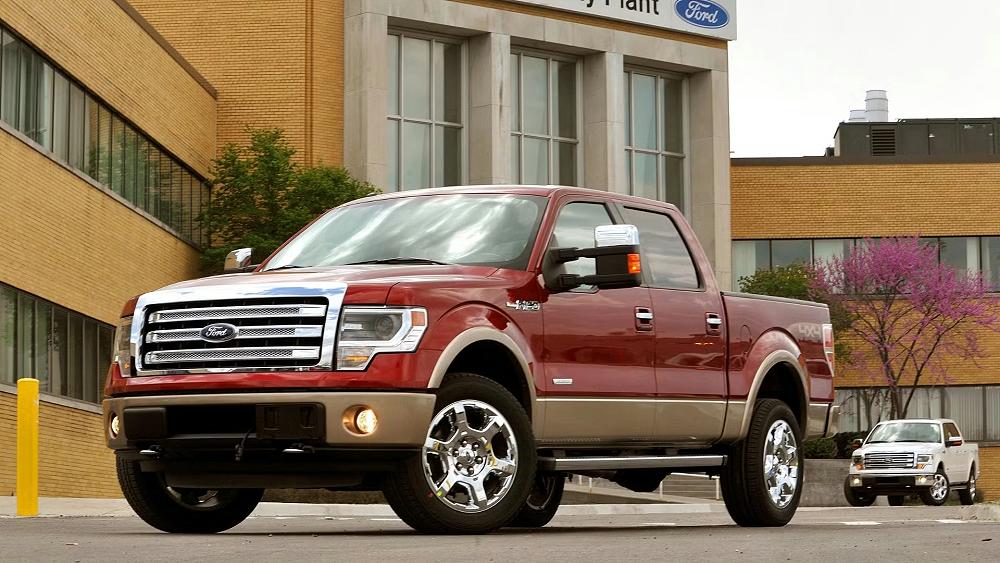
5. 2009-2010 Ford F-150 (5.4L Triton V8)
Best Towing F-150
The 5.4L Triton V8 has a complicated reputation, and a lot of that comes from people grouping every version of this engine together. That isn’t fair because Ford made significant changes throughout its production.
The early 2-valve engines became known for limited spark plug thread engagement issues, while the 2004-2007 3-valve engines became known for timing components, cam phaser, and spark plug issues. However, the later 2008-2010 5.4L engines benefited from updated cylinder heads and improved timing components, making them a much better choice for someone shopping for a used F-150.
This generation of F-150 is one of the sweet spots in the used truck market. It offers a modern cab, improved safety, a fully boxed frame, and the capability most truck owners actually need without the cost of a brand-new pickup.
The 5.4L is the engine I’d choose if I planned to tow. While the 4.6L V8 is a dependable engine, the 5.4L provides the additional torque that makes a difference when pulling a trailer. The 2009-2010 trucks used Ford’s 6R80 six-speed automatic transmission, which provided improved performance and efficiency compared to the older four-speed automatics.
Why I’d Buy It
- Strong torque for towing and hauling.
- Improved later-generation 5.4L engine design.
- Stronger 6R80 six-speed automatic transmission.
- Comfortable enough for daily driving.
- Excellent balance between capability and affordability.
Things to Know Before You Buy
Avoid the problem years and look specifically for the later 2008-2010 engines. Maintenance history is extremely important, especially oil changes, because the variable cam timing system depends on clean oil.
This isn’t a replacement for a Super Duty if you regularly tow very heavy trailers. But for the majority of truck owners who tow boats, utility trailers, campers, and recreational equipment, a properly equipped F-150 with the 5.4L V8 is more than capable.
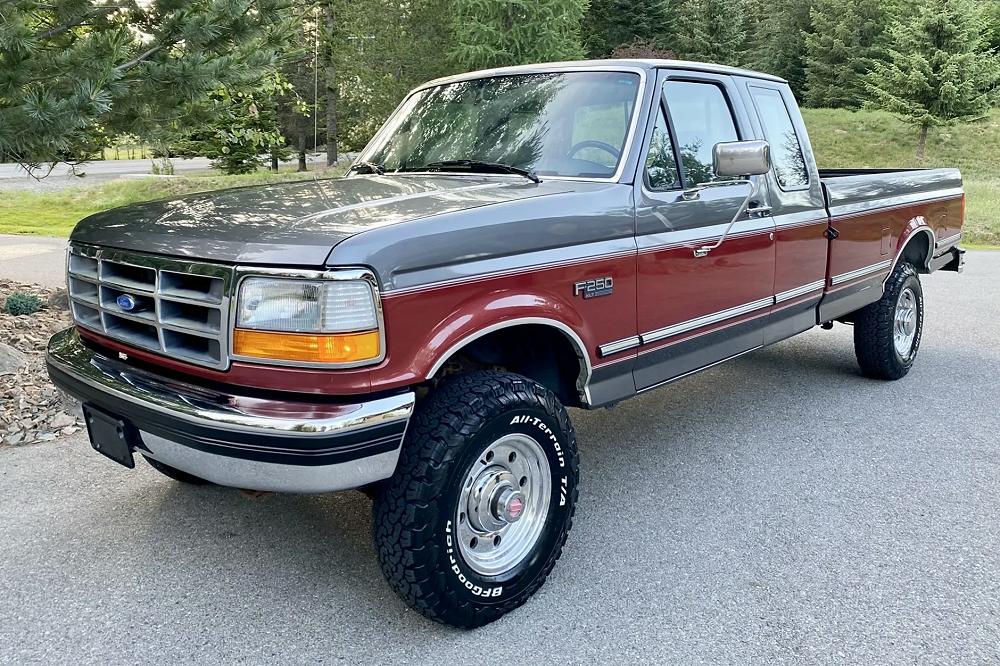
6. 1993-1997 Ford F-250 HD (7.5L 460 EFI)
Best Old-School Heavy Hauler
If you want a heavy-duty Ford truck without the complexity and cost of a modern diesel, the 1993-1997 F-250 HD with the 7.5L 460 V8 deserves a look.
Before the Triton V10 and Power Stroke diesel became Ford’s heavy-duty options, the 460 was the engine buyers turned to when they needed serious towing and hauling capability. By the 1990s, Ford had replaced the old carbureted versions with electronic fuel injection, making these big-block trucks much easier to live with.
The 460 isn’t a fuel-saver. It was never designed to be. It makes its power through cubic inches, and that’s exactly what truck owners wanted when pulling heavy trailers. For someone who needs a work truck, a tow rig, or simply enjoys the character of an old-school Ford pickup, the 460-powered F-250 HD is hard to ignore.
These trucks also have something newer trucks don’t: simplicity. There are fewer computers, fewer modules, and fewer systems that require specialized equipment to diagnose. For someone who enjoys maintaining their own vehicles, that’s a big advantage.
Why I’d Buy It
- Big-block torque for towing and hauling.
- Electronic fuel injection makes it easier to live with than older carbureted trucks.
- Simple design with fewer complicated electronics.
- Classic OBS Ford styling.
- Excellent choice for a dedicated work or tow truck.
Things to Know Before You Buy
Fuel economy is the biggest downside. Expect single-digit mileage when towing and roughly 10 mpg in normal driving depending on gearing, tires, and driving habits.
Because these trucks are now approaching thirty years old, condition matters more than mileage. Check the frame, body mounts, suspension, steering components, and transmission carefully. A clean, rust-free example is becoming harder to find.
The 460 F-250 is not the truck I’d recommend for everyone. If you tow a few times a year and want something comfortable to drive every day, an F-150 is probably a better choice. But if you need an affordable heavy-duty truck and appreciate old-school simplicity, this Ford still has a lot to offer.
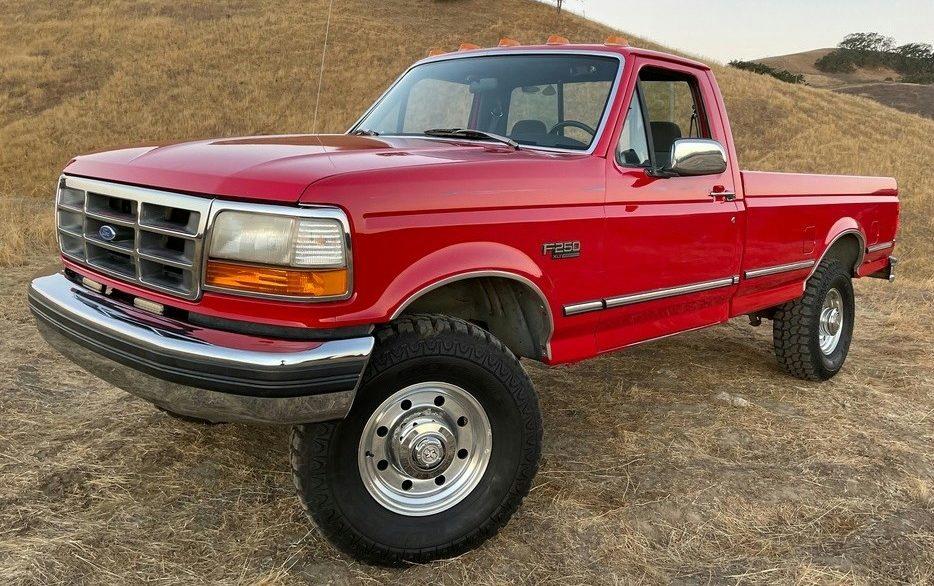
7. 1988-1993 Ford F-250 (7.3L IDI Diesel)
Best Budget Diesel
If you want a diesel truck but don’t want to pay the premium that comes with a 7.3L Power Stroke, the 7.3L IDI deserves a serious look.
Before the Power Stroke name became legendary, Ford used the 7.3L International diesel in its heavy-duty trucks. Unlike modern diesels, the IDI uses a simple mechanical injection system and doesn’t rely on the complex electronics, high-pressure oil injection, and emissions equipment found on newer diesel trucks.
The IDI was built for work. It doesn’t have the horsepower or acceleration of newer diesel pickups, but it has the kind of durability that made these trucks popular with farmers, contractors, and fleet owners.
For someone who needs a dependable truck for hauling equipment, pulling trailers locally, or simply wants an old-school diesel, the 7.3L IDI still makes a lot of sense. Because it doesn’t have the same collector status as the Power Stroke, you can still find examples that fit a realistic $10,000 budget.
Why I’d Buy It
- Simple mechanical fuel injection.
- No complicated computer-controlled diesel systems.
- No HEUI injection system.
- Excellent reputation for durability.
- Lower purchase price than comparable Power Stroke trucks.
Things to Know Before You Buy
The biggest drawback is performance. Compared to modern diesel trucks, the IDI is slow. Very slow. It was built in an era when diesel trucks were about durability and pulling power, not horsepower numbers.
Age is also a factor. These trucks are now more than thirty years old, so finding one that has been properly maintained is more important than mileage. Check the cooling system, glow plug system, transmission, steering components, and rust carefully.
A clean 7.3L IDI won’t impress people at a stoplight, but it can still be an incredibly dependable work truck for someone who values simplicity over speed.
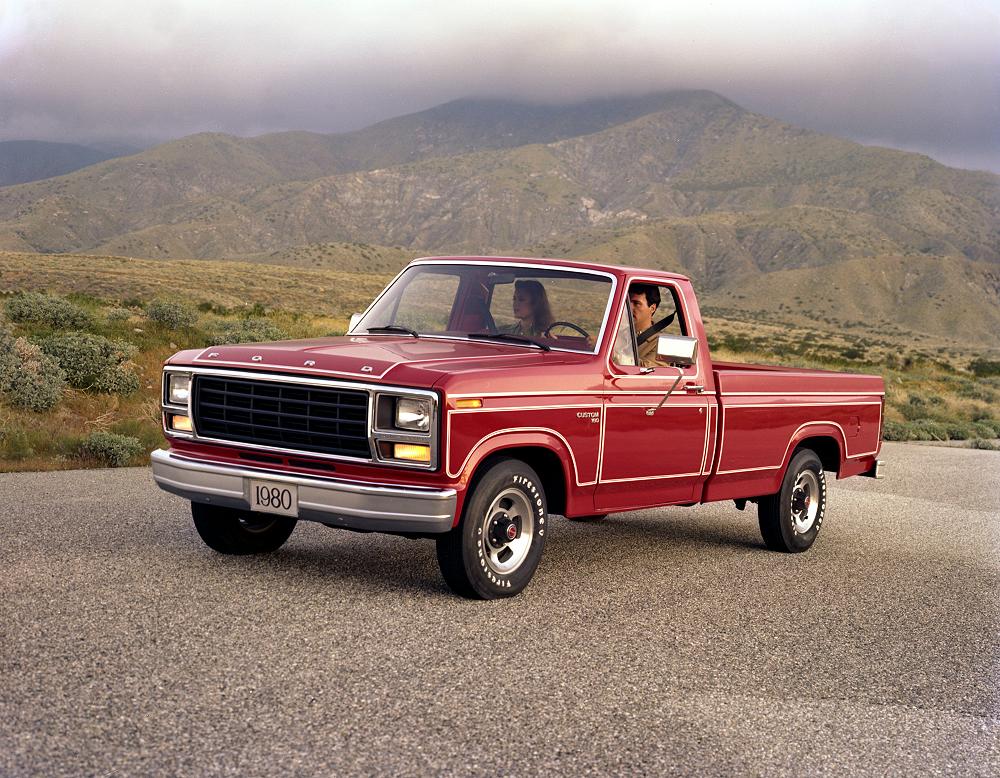
8. 1980-1986 Ford F-150 (351W/5.8L V8)
Best Classic Work Truck
The Bullnose Ford F-Series has become one of the most recognizable classic pickup designs, and it remains one of the most affordable ways to get into an older Ford truck.
While the 302 V8 gets a lot of attention because of its connection to the Mustang world, the 351 Windsor is the engine I’d look for in a truck. The additional displacement gives it more low-end torque, making it a better fit for towing, hauling, and turning larger tires.
These trucks were built during an era when pickups were still simple, easy-to-repair machines. There are fewer computers, fewer sensors, and fewer systems that require specialized equipment. For someone who enjoys working on their own vehicles, that’s a big part of the appeal.
The Bullnose also has a huge aftermarket. Whether you want to restore one, build a mild off-roader, or create a dependable weekend truck, parts and support are easy to find.
Why I’d Buy It
- 351 Windsor provides excellent low-end truck torque.
- Classic Ford styling.
- Simple design and easy repairs.
- Strong aftermarket support.
- Affordable entry into classic truck ownership.
Things to Know Before You Buy
These trucks are now forty years old, so condition matters more than mileage. Expect older-truck issues like worn suspension, aging electrical systems, vacuum leaks, and rust depending on where the truck lived.
They also won’t drive like a modern F-150. The ride, brakes, handling, and fuel economy are all from another era. But for someone who appreciates an old-school Ford truck, a clean Bullnose with a 351W is hard to beat.
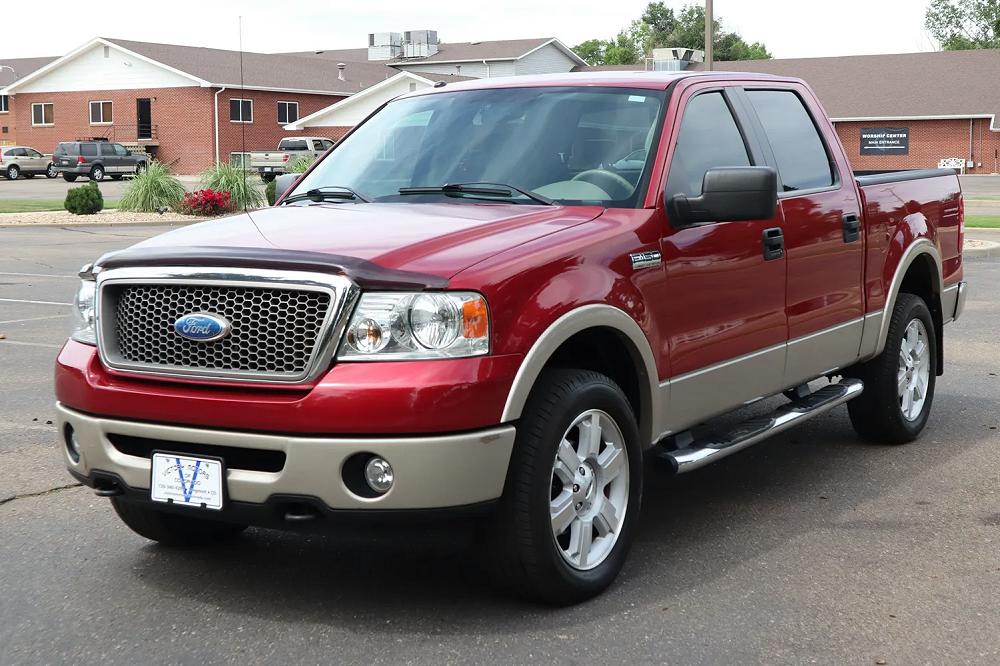
9. 2004-2008 Ford F-150 (4.6L 2-Valve V8)
Most Modern Truck for $10K
If you want a newer full-size truck but don’t want to spend new truck money, the 2004-2008 Ford F-150 with the 4.6L 2-valve V8 is worth looking at.
The 11th-generation F-150 brought a major change to Ford’s half-ton lineup with a fully boxed frame, improved crash protection, better interior comfort, and a more refined driving experience. It feels much more modern than the previous generation while still retaining a simple and reliable powertrain.
Most buyers looking at these trucks are searching for the larger 5.4L V8, but the 4.6L 2-valve is the engine I’d prefer for a budget buyer. It doesn’t have the same torque as the larger engine, but it has earned a reputation for reliability and avoids many of the problems that affected the 5.4L 3-valve introduced during this generation.
For someone who needs a dependable truck for home projects, hauling supplies, commuting, and occasional towing, this generation F-150 offers a lot of truck for the money.
Why I’d Buy It
- Reliable 4.6L 2-valve V8.
- Newer platform with improved safety and comfort.
- Strong fully boxed frame.
- Avoids the problematic 5.4L 3-valve engine.
- Affordable replacement parts and easy maintenance.
Things to Know Before You Buy
The 4.6L is dependable, but it is not the engine I’d choose for regularly towing heavy trailers. If you frequently tow a large camper, enclosed trailer, or heavy equipment, a 5.4L F-150 or Super Duty would be a better choice.
Pay close attention to maintenance history and overall condition. These trucks are now old enough that previous ownership matters more than mileage. A clean XL or XLT with the 4.6L V8 can be a much smarter purchase than a neglected truck with more power and more options.
This is the kind of truck that makes sense for someone who wants a reliable pickup without paying a premium for a diesel or a newer turbocharged truck.
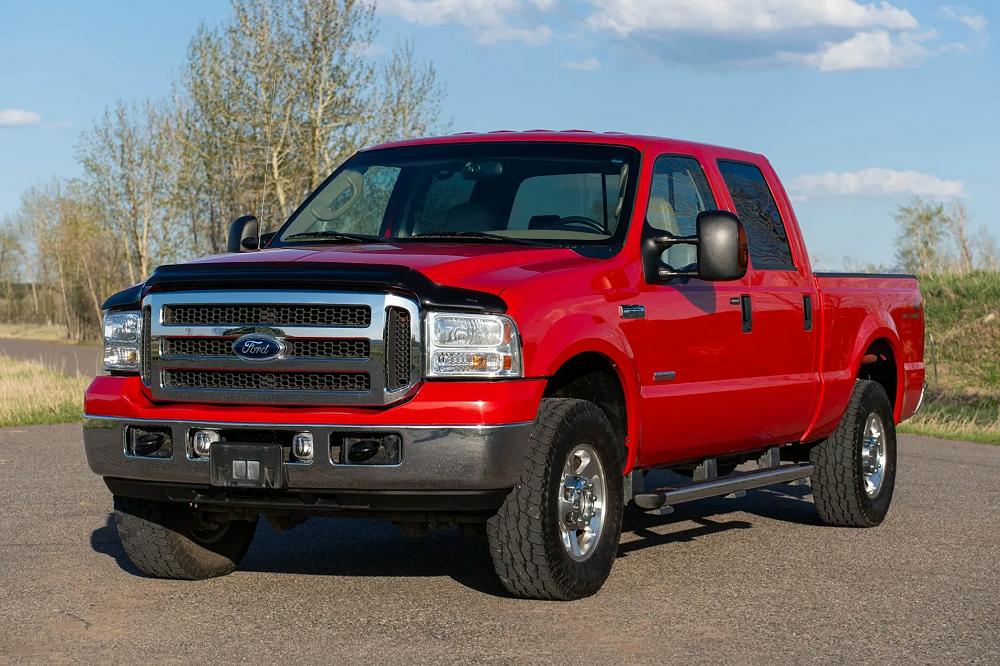
10. 1994.5-2003 Ford F-250/F-350 Super Duty (7.3L Power Stroke Diesel)
Best Diesel If You Find the Right One
There was no way I could finish this list without talking about the 7.3L Power Stroke. It is one of the engines that built Ford’s reputation in the diesel truck market, and many enthusiasts consider it one of the best diesel engines Ford ever offered.
Introduced in 1994.5, the 7.3L Power Stroke replaced the older 7.3L IDI diesel and brought electronic controls, turbocharging, and direct injection to Ford’s heavy-duty trucks. The result was a diesel that offered impressive power, excellent reliability, and the ability to rack up hundreds of thousands of miles when properly maintained.
So why isn’t it higher on this list?
Because the biggest challenge with buying a 7.3L Power Stroke today isn’t finding the engine. It’s finding the right truck.
The popularity of these trucks has driven prices up significantly. Many examples under $10,000 have extremely high mileage, rust issues, worn suspension components, tired transmissions, or years of hard work behind them.
A clean, well-maintained 7.3L Power Stroke is absolutely worth considering. But a cheap one is not always a bargain.
Why I’d Buy It
- Legendary 7.3L Power Stroke reliability.
- Excellent towing capability.
- Massive aftermarket support.
- Strong resale value.
- Can provide hundreds of thousands of miles when maintained properly.
Things to Know Before You Buy
Don’t buy a 7.3L Power Stroke just because it has the right engine. At this age, the condition of the entire truck matters.
Inspect the frame for rust, check the steering and suspension, verify transmission operation, and look closely at maintenance history. A truck with 250,000 miles that has been cared for can be a better purchase than one with 150,000 miles that has been neglected.
If you find a rust-free, well-maintained 7.3L Power Stroke within your budget, it is absolutely worth a serious look. Just don’t assume every inexpensive example is the legendary truck you’ve heard about.
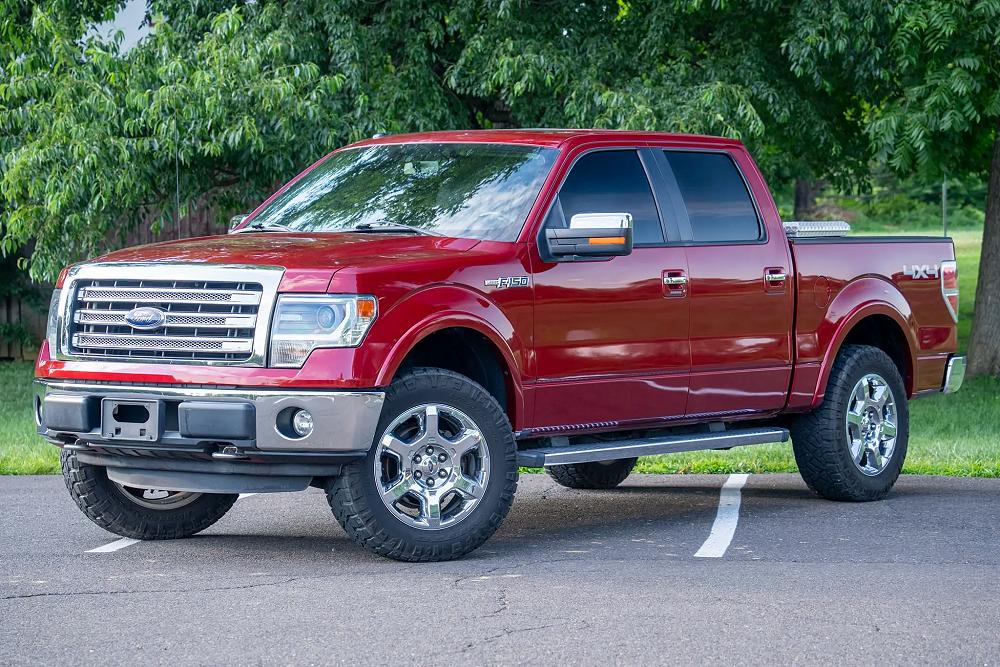
Honorable Mention: 2011-2014 Ford F-150 (5.0L Coyote V8)
Best Modern V8 F-150 If You Can Find One
If your budget has some flexibility, the 2011-2014 Ford F-150 with the 5.0L Coyote V8 deserves a serious look.
This generation of F-150 brought modern comfort, improved safety, a fully boxed frame, and one of Ford’s most popular engines. The 5.0L Coyote produces strong horsepower, has excellent aftermarket support, and avoids some of the concerns that come with adding turbochargers and direct injection to a high-mileage truck.
The 3.5L EcoBoost is an impressive engine and changed the way people looked at half-ton trucks. It produces incredible low-end torque and is an excellent towing engine. However, for someone shopping for a used truck they plan to keep for many years, I would lean toward the naturally aspirated 5.0L Coyote.
The EcoBoost’s twin turbochargers, direct injection system, timing components, and additional complexity aren’t necessarily deal breakers, but they are additional systems that can become expensive as mileage climbs. The 5.0L gives up some low-end torque compared to the EcoBoost, but its simpler design makes it an attractive choice for long-term ownership.
Why I’d Buy It
- Proven 5.0L Coyote V8.
- Excellent power and towing capability.
- Naturally aspirated simplicity.
- Strong aftermarket support.
- Modern truck features without today’s prices.
Things to Know Before You Buy
The biggest challenge is finding one that fits the budget. Clean examples are becoming harder to find under $10,000, and many trucks in that price range will have higher mileage.
If you find a well-maintained 5.0L F-150 that has been cared for, it may be worth stretching your budget. A good one could easily provide many more years of service.
About The Author

Growing up, my father always believed that every family needed a truck—there’s just something about having a vehicle capable of hauling anything at a moment’s notice. That philosophy stuck with me, and it’s been the foundation of my lifelong passion for Ford trucks.
While I’m best known for my work with Ford Rangers, I’ve owned a wide variety of Ford trucks over the years—including F-150s, F-250s, F-350s, and even larger rigs like the Ford Excursion, Ford Expedition, and a 1982 Ford Econoline Sportsmobile camper van. I’ve used these vehicles for everything from family transportation to towing car trailers and campers, and each one has fueled my love for Ford’s versatility and durability.
I especially enjoy the styling of 1970s and 1980s Ford trucks—the bold designs, rugged presence, and classic charm are timeless. Sharing my passion for Ford trucks, vans, and SUVs with other enthusiasts online brings me a great deal of joy, and it’s why I created Blue Oval Trucks.
This website is dedicated to helping Ford truck enthusiasts explore, learn about, and celebrate these incredible vehicles. While I share my expertise and experiences here, Blue Oval Trucks is an independent enthusiast site and is not affiliated with Ford Motor Company.