
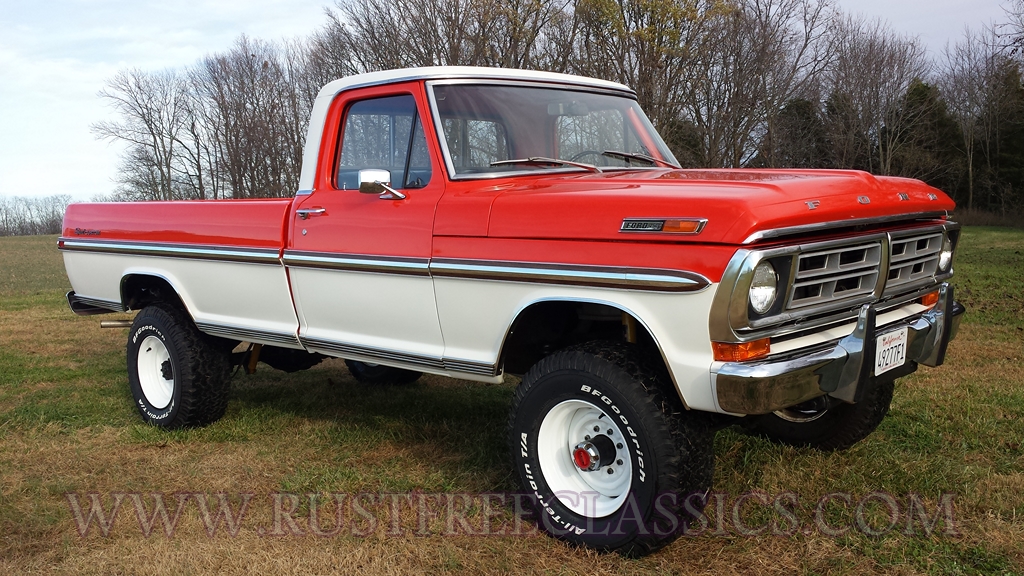
(1972 Ford F-250 “Highboy” 4X4)
The term “Highboy” has been used to refer to the 1967-1977.5 Ford F-250 4X4, although ‘Highboy’ wasn’t actually a Ford term.
The early 4X4 pickups were conversions of a 2WD chassis. It was simpler and cheaper to utilize the original 2WD transmission than to design an adapter to marry them. This meant that the transfer case (either Dana 24, NP203, or NP205) was connected to the transmission with a short driveshaft (also referred to as being a divorced transfer case) rather than being married to the back of the transmission like they are today.
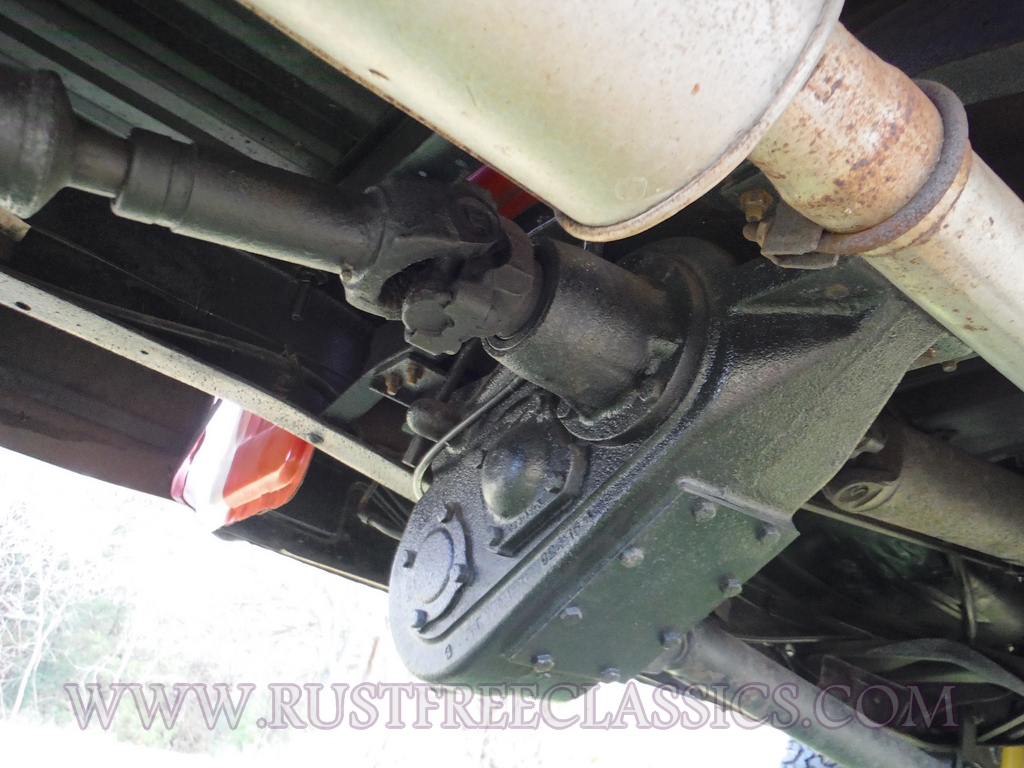
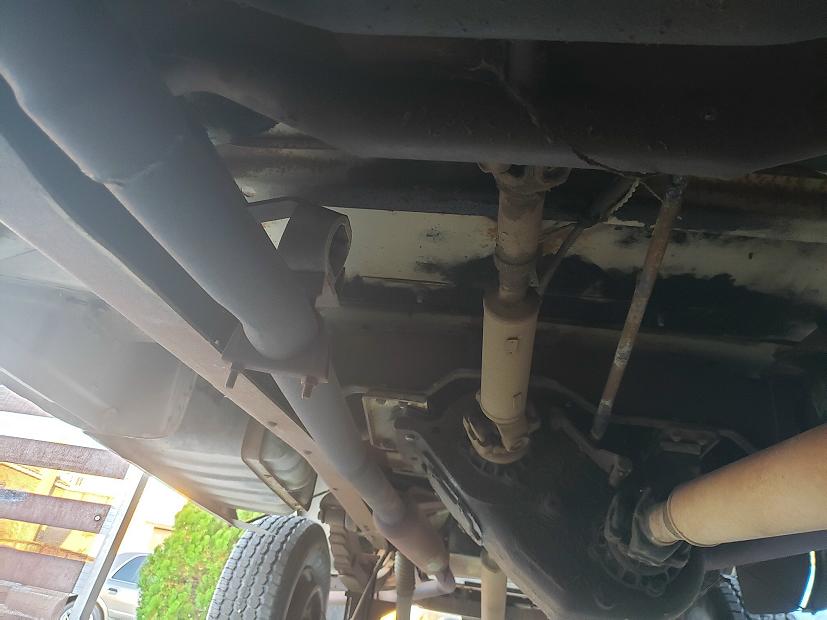
Having the transfer case further back required a longer front driveshaft (as seen in the photo below), which also required the truck to sit higher for proper clearance. The rear suspension used a 4-inch lift block to compensate for the height in the front. The end result was a higher cargo loading height verses that of the 2WD F-250, and a higher center of gravity. This is one reason why the Camper Special option was not offered on the 4X4 models, because they didn’t want to encourage their use with a high center of gravity.
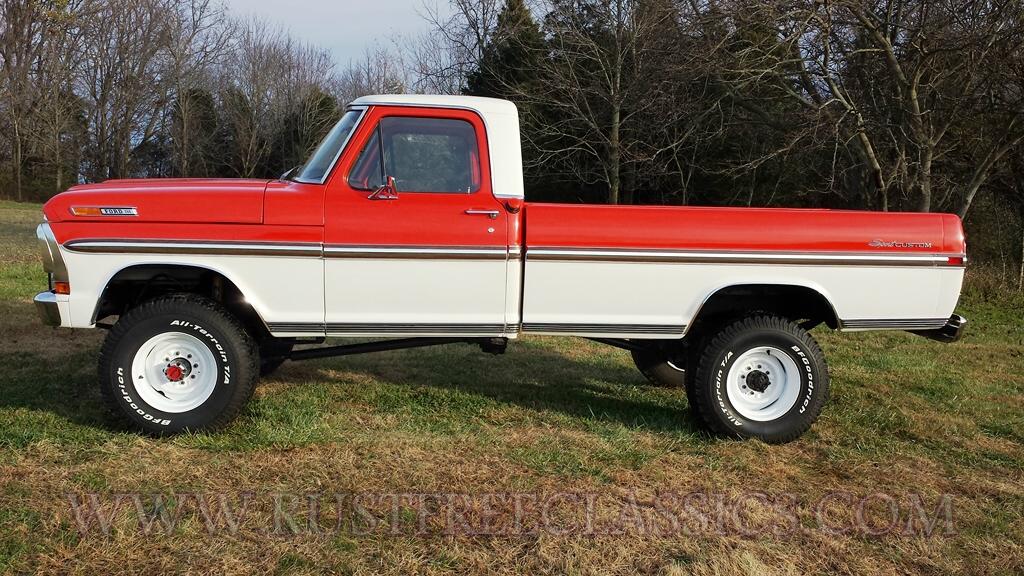
In 1975.5, Ford began attaching the transfer case directly to the transmission, which required a shorter front driveshaft, and allowed Ford to have the proper clearance to lower the truck, and it’s center of gravity.
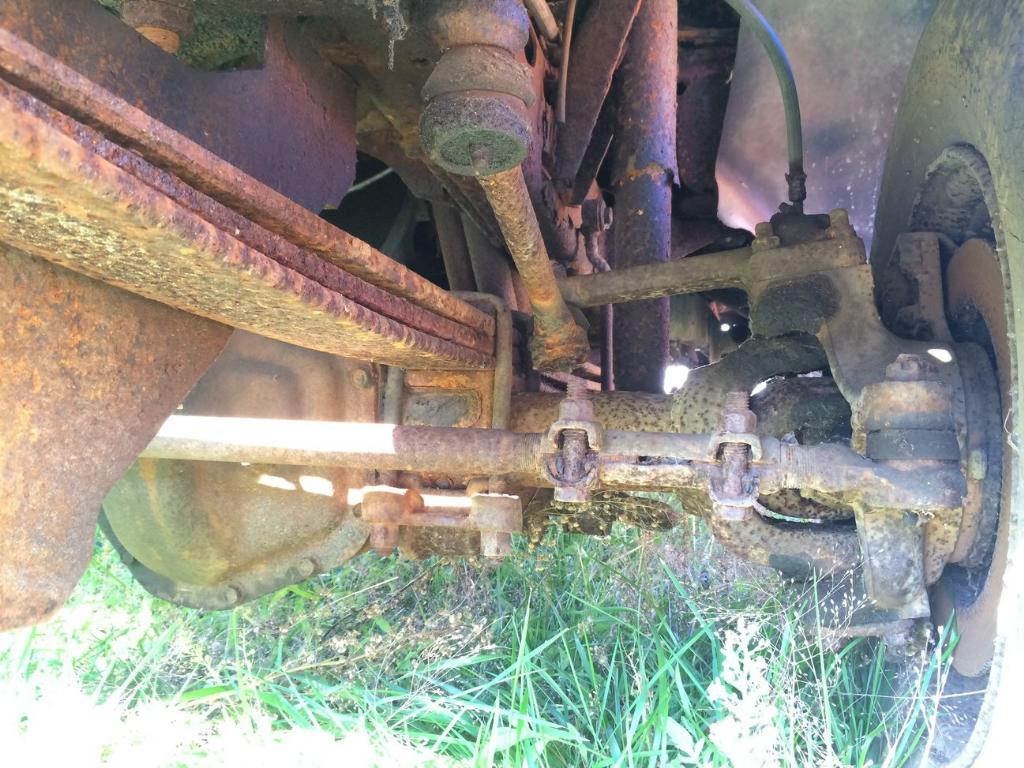
Here’s is a look at the front springs on a 1972 Ford F-250 4X4 “Highboy”:
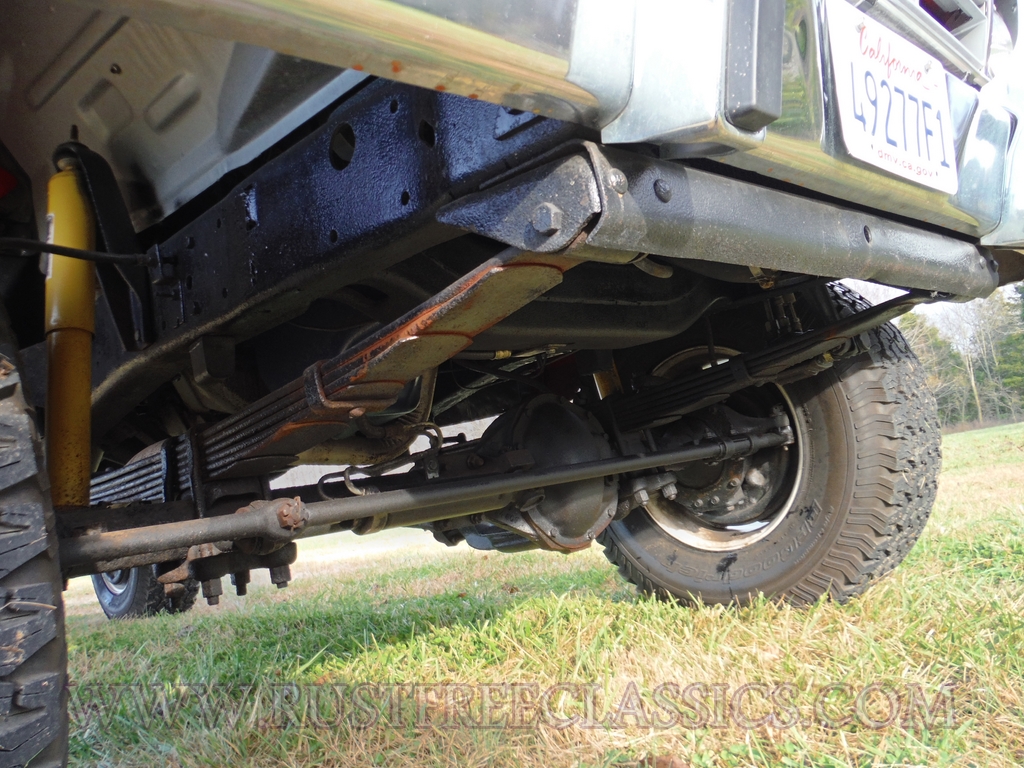
And here’s a look at the front leaf spring on a 1978 Ford F-250 4X4:
When Ford lowered the stance of the 1977.5 Ford F-250 4×4, the earlier models (1967-1977.5) became known as a “Highboy”. Again, this was a nickname, not a name designated by Ford. Why does the nickname start in 1967 when Ford started offering a factory 4X4 option in 1959? Likely because 1967 started a new bodystyle.
The 1967-1972 Highboy sits approximately 2.58-2.77 inches higher than a comparable F-100 4X4, 5.24-5.6 inches higher than the F-250 2WD, and 6.1-6.4 inches higher than the F-100 2WD. Later “Highboys” didn’t sit much higher than their counterparts, as total height didn’t vary much between models.
The front leaf springs on a “Highboy” were 3-inches wide and came with either 5 or 6 leafs, depending on gross vehicle weight. These leaf springs are easily identified because they are noticeably more arched than non-“Highboy” leaf springs. Rear leaf springs were 2-1/4″ wide and consisted of 9 leafs. By comparison, non-“Highboy” springs measured 3-inches wide.
Highboy front axles consisted of either an 8-lug Dana 44, Dana 44HD, or Dana 60, all of which were low pinion. Rear axles were either a 16 or 30 spline 8-lug Dana 60. All “Highboys” used a 4.10:1 gear ratio.
From 1967-1975, drum brakes were used at all four corners, while the later models were available with disc brakes in the front. Power brakes were also optional from 1973-1977.5.
Depending on the model year, a grand total of six different engine options were available:
- 240 six-cylinder (1967-1974)
- 300 six-cylinder (1967-1977.5)
- 351M V8 (1977)
- 352 V8 (1967)
- 360 V8 (1968-1976)
- 400 V8 (1977)
Transmission options consisted of either a:
- Toploader 3-speed manual (1967-1971)
- NP-435 4-speed manual (1967-1977.5)
- SelectShift Cruise-O-Matic C6 (1973-1977.5)
Early Highboys (1967-1972) sported a 133-inch wheelbase, while later models measure in at 150 inches.
The F-250’s built from 1977.5 and later are referred to as a “Lowboy” because they sit lower than the 1977.
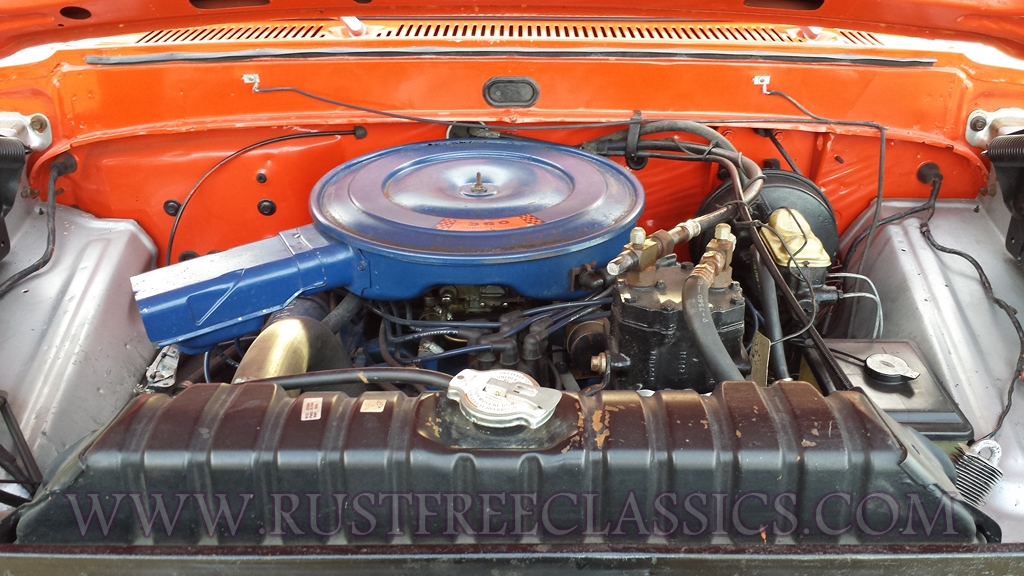
(1972 Ford F-250 4X4 “Highboy” 360 V8)
Proof That Not All “Highboy” V8’s Are 360’s:
People will tell you that if it’s a “Highboy”, it should either have a 6-cylinder, or 360 V8. But this is not true.
Here is the VIN tag from a 1977 Ford F-250 4×4.
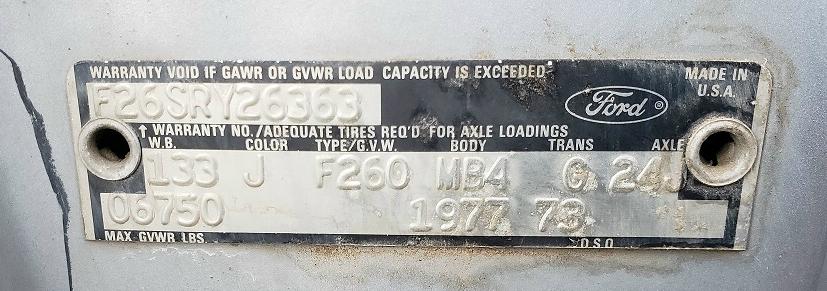
The ‘F26’ designates this as a F-250 4X4. The ‘S’ that follows shows that this truck has a 400 V8 with a 2-BBL carb.
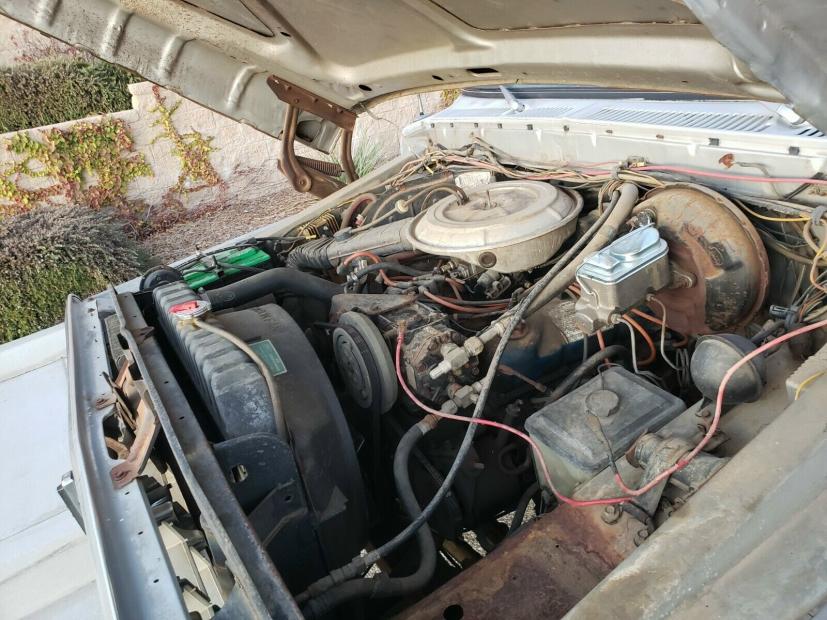
The F-250 switched from a divorced transfer case to a married (attached) transfer case in 1977. But this 1977 still has the divorced transfer case found in the “Highboy” models.
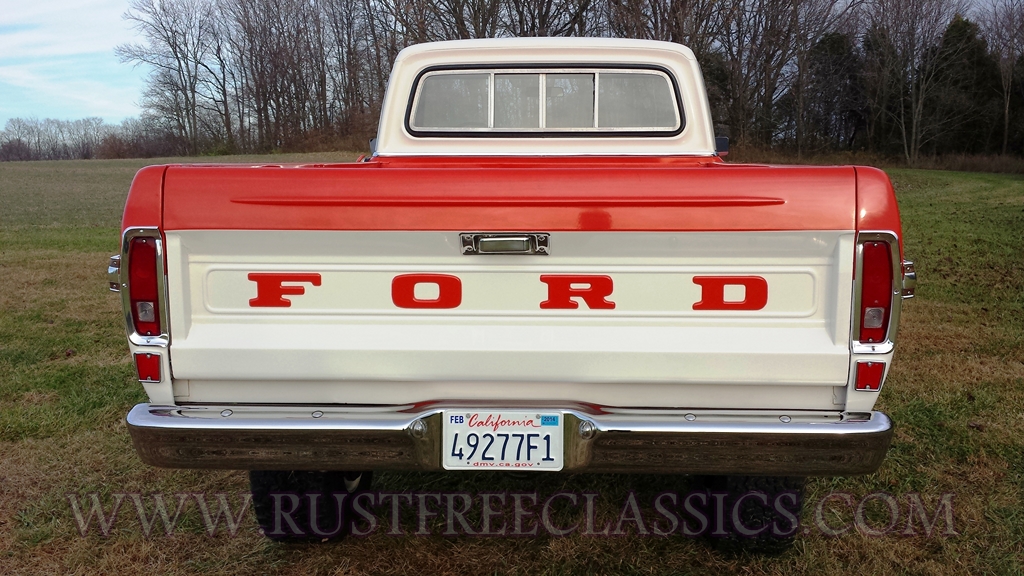
This truck shows that 1977 was an exception to the “highboy” 360 V8 theory.
Related Articles
1976 Ford F250 Highboy Overlander
About The Author

Growing up, my father always believed that every family needed a truck—there’s just something about having a vehicle capable of hauling anything at a moment’s notice. That philosophy stuck with me, and it’s been the foundation of my lifelong passion for Ford trucks.
While I’m best known for my work with Ford Rangers, I’ve owned a wide variety of Ford trucks over the years—including F-150s, F-250s, F-350s, and even larger rigs like the Ford Excursion, Ford Expedition, and a 1982 Ford Econoline Sportsmobile camper van. I’ve used these vehicles for everything from family transportation to towing car trailers and campers, and each one has fueled my love for Ford’s versatility and durability.
I especially enjoy the styling of 1970s and 1980s Ford trucks—the bold designs, rugged presence, and classic charm are timeless. Sharing my passion for Ford trucks, vans, and SUVs with other enthusiasts online brings me a great deal of joy, and it’s why I created Blue Oval Trucks.
This website is dedicated to helping Ford truck enthusiasts explore, learn about, and celebrate these incredible vehicles. While I share my expertise and experiences here, Blue Oval Trucks is an independent enthusiast site and is not affiliated with Ford Motor Company.