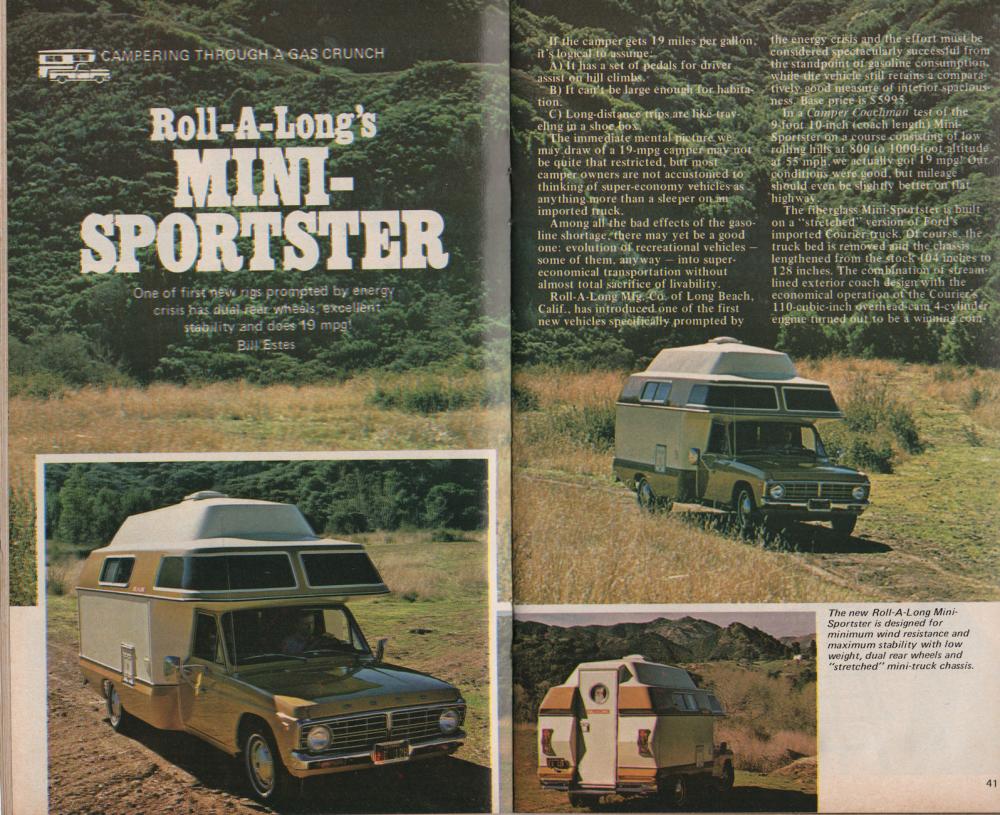
The information used for this post was taken from the article pictured at the bottom of this page….
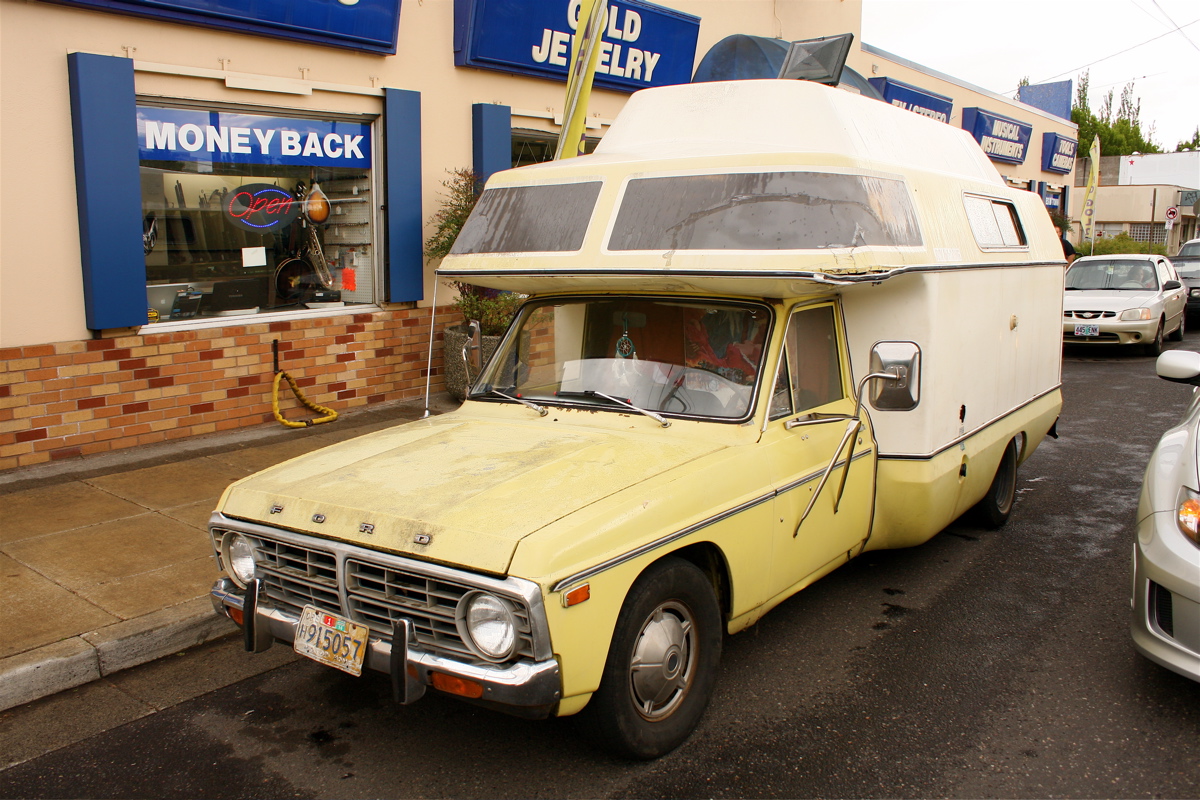
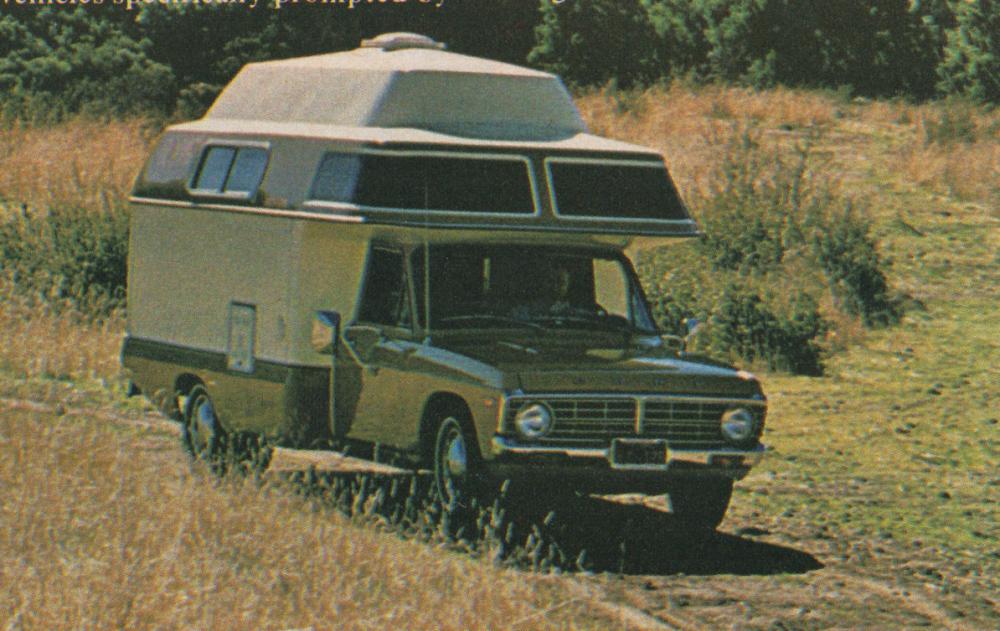
Roll-A-Long Manufacturing Co. of Long Beach California has introduced one of the first new vehicles specifically prompted by the energy crisis and the effort must be considered spectacularly successful from the the standpoint of gasoline consumption, while the vehicle still retains a comparatively good measure of interior spaciousness. Base price is $5,995.
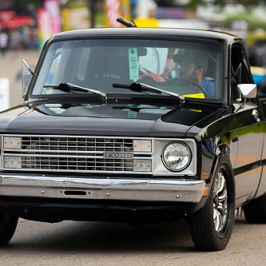
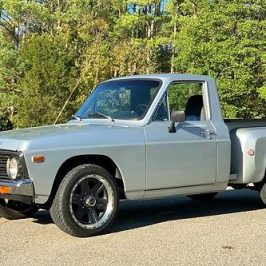
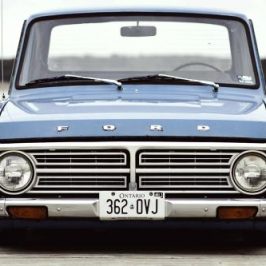
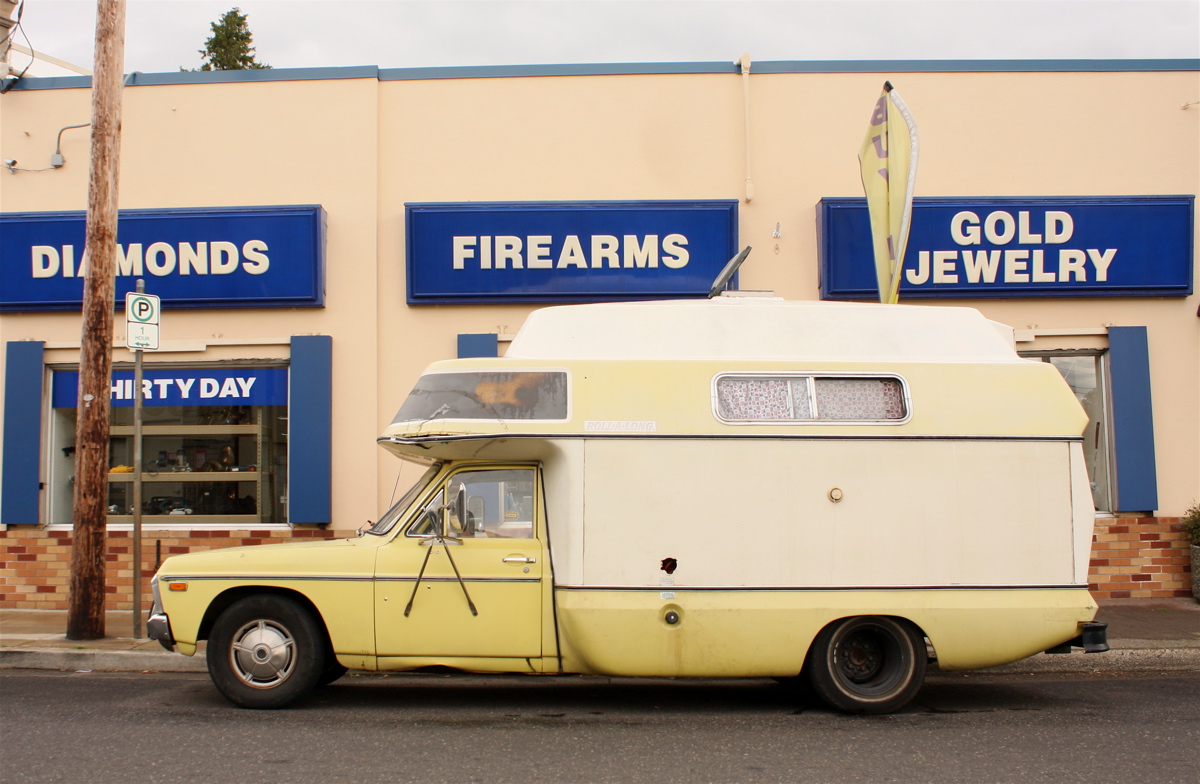
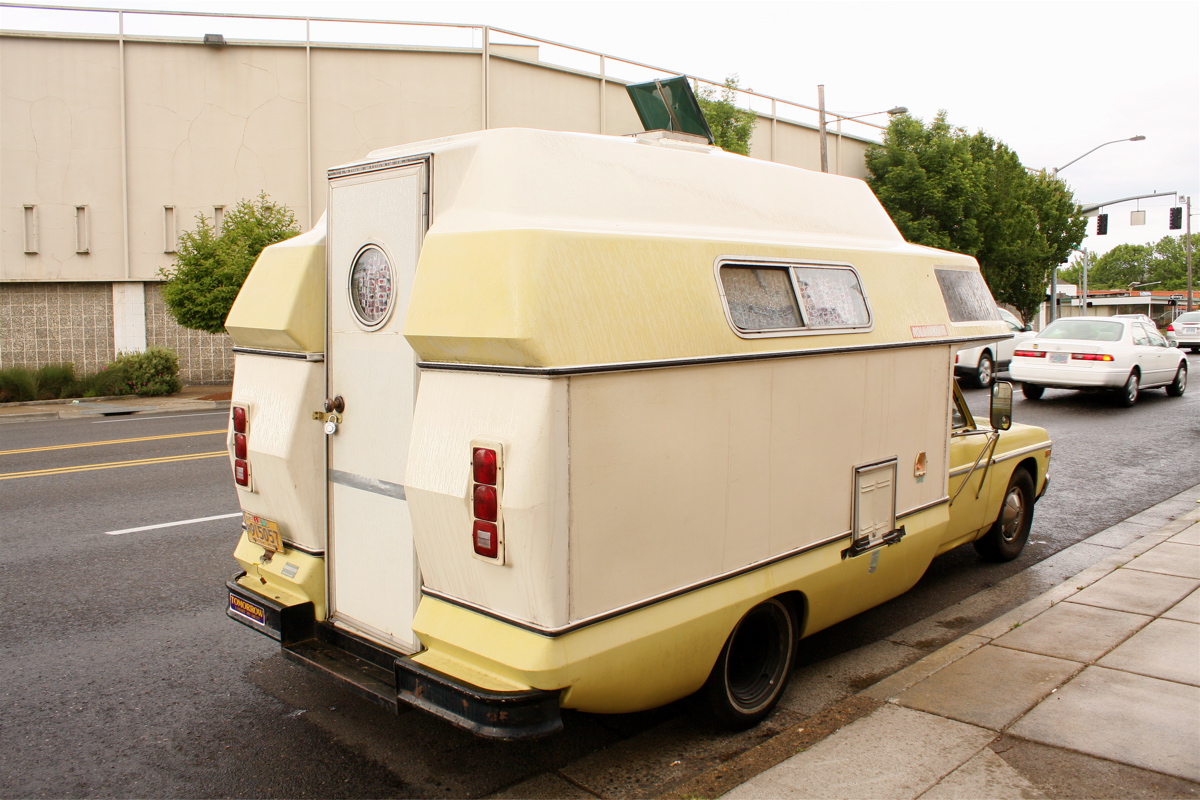
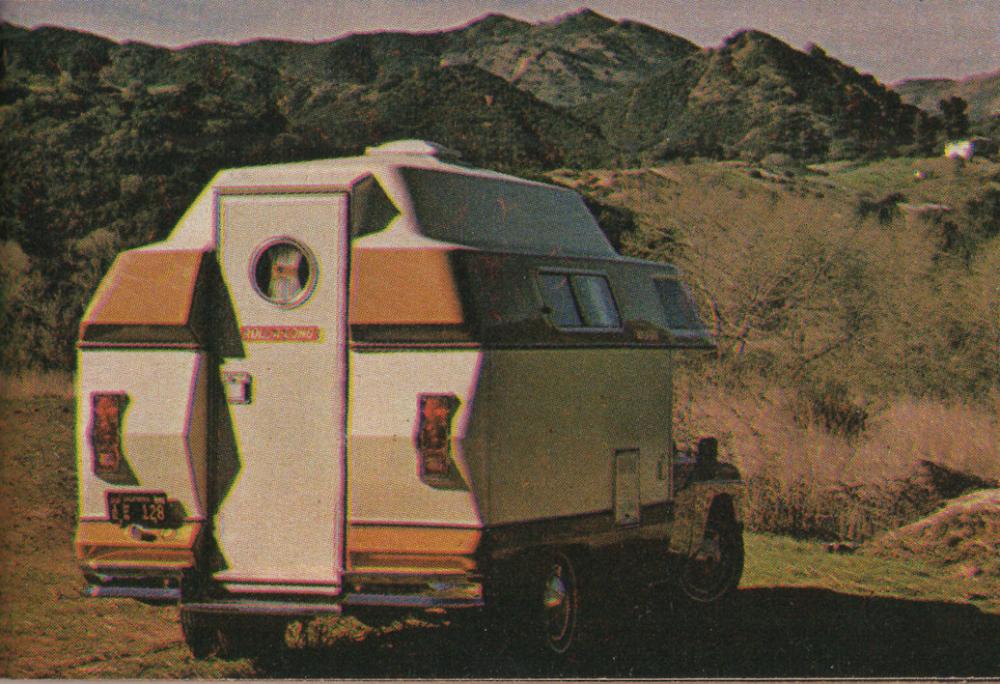
The fiberglass Mini-Sportster is built on a stretched version of Ford’s imported Courier truck. The Courier started without a bed, and the chassis was lengthened from 104 inches to 128 inches. The combination of streamlined 9 foot 10 inch exterior coach design with the economical operation of the Courier’s 110-CID overhead cam 4-cylinder engine turned out to be a winning combination with a MPG rating of 19 MPG.
The upper shell extends a few inches forward of the truck cab in camper cabover fashion, but the cabover area is used for storage rather than a bed. Flat counter areas just aft of the front storage counter will serve as part of the platform for an optional upper bed. In this frontal area, much of the truck cab roof has been cut away for easy access to seats in the cab.
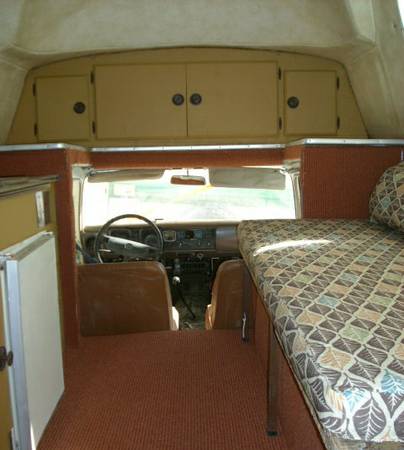
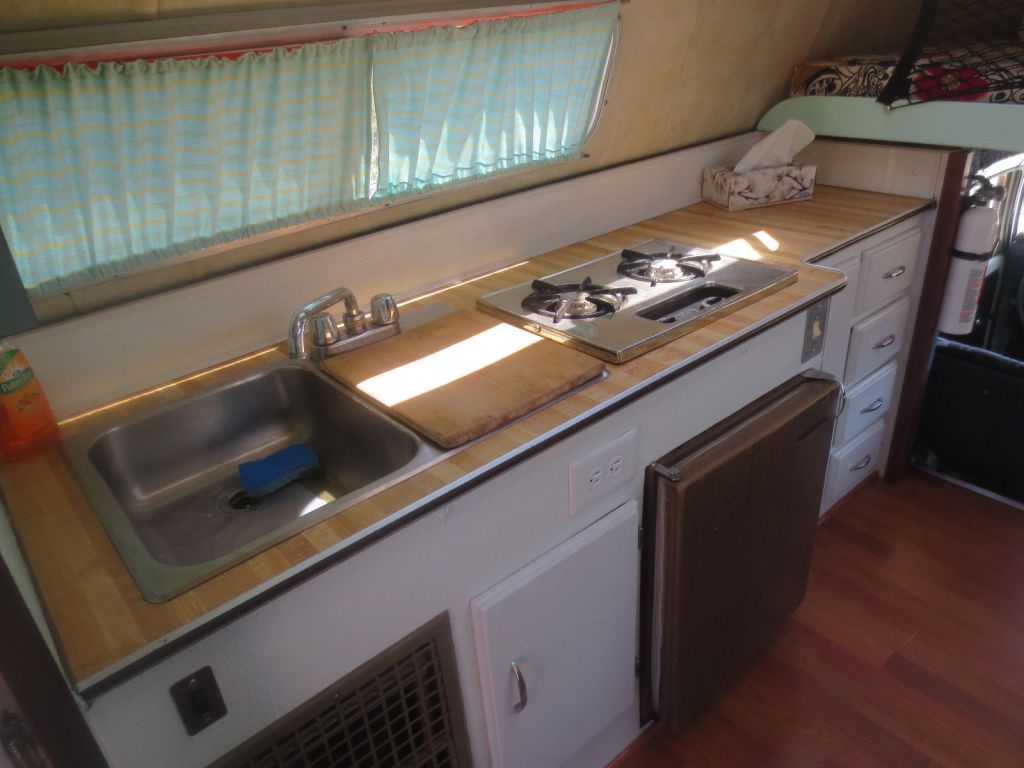
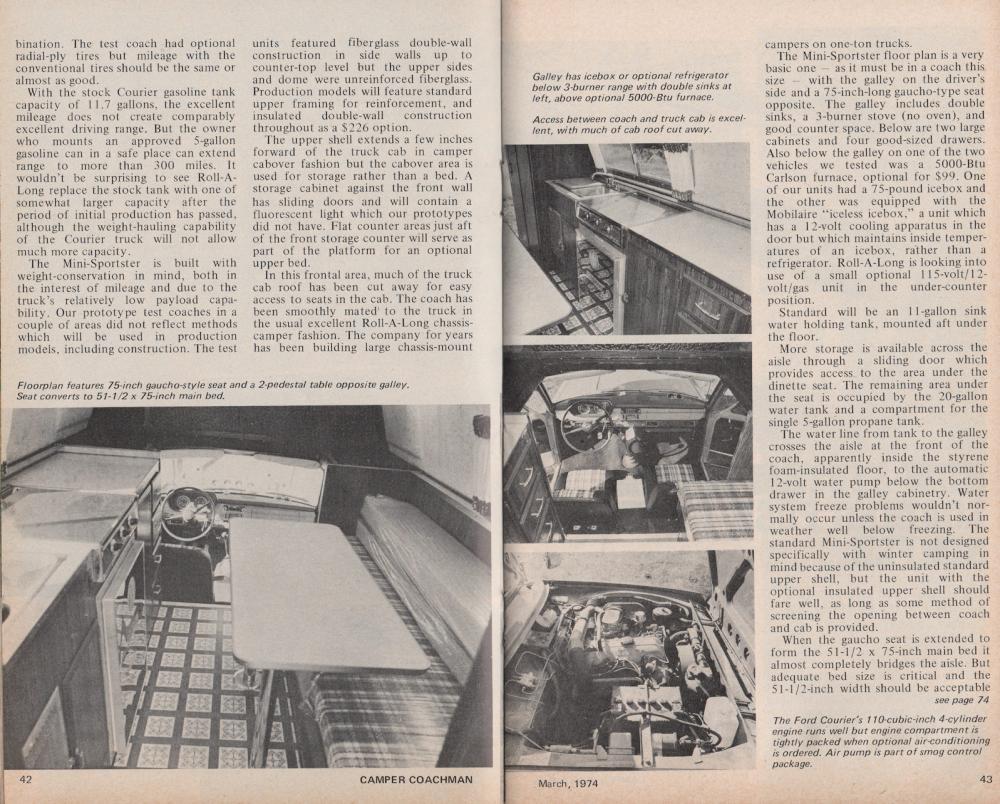
The Mini-Sportster floor plan is a very basic one – as it must be in a coach this size – with the galley on the drivers side, and a 75-inch long gaucho type seat opposite. The galley includes double sinks, a 3-burner stove (no oven), and good counter space. Below are two large cabinets and four good size drawers. Also below the galley is a 5,000 BTU Carlson furnace (a $99 option). Some have a 75 pound icebox or a Mobilaire “iceless icebox”, a unit which has a 12-volt cooling apparatus in the door, but which maintains inside temperatures of an ice box, rather than a refrigerator. Standard is an 11-gallon sink water holding tank, mounted aft under the floor. More storage is available across the aisle through a sliding door which provides access to the area under the dinette seat. The remaining area under the seat is occupied by the 20-gallon water tank, and a compartment for the single 5-gallon propane tank. The water is pumped in to the sink by a 12-volt water pump below the bottom drawer in the galley cabinetry.
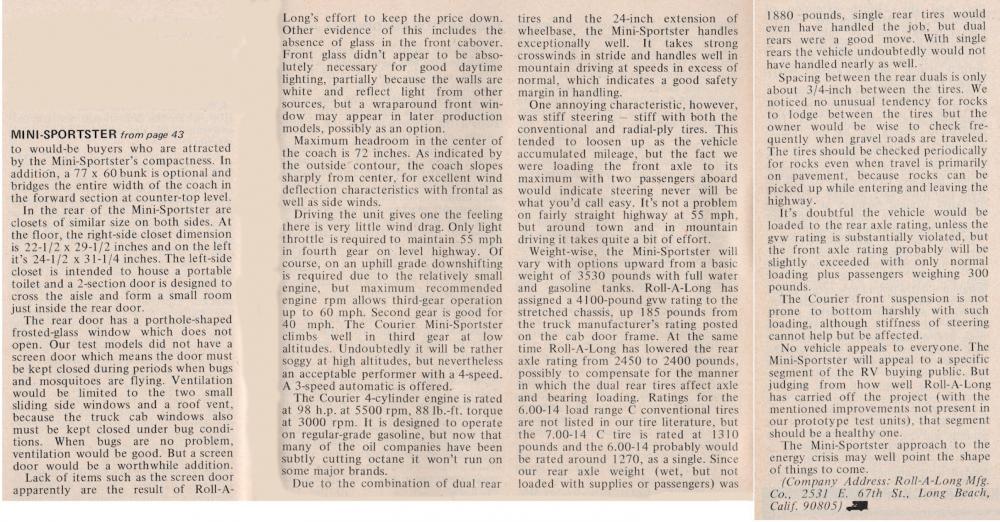
When the gaucho seat is extended to form the 51-1/2 x 75 inch main bed it almost completely bridges the aisle. In addition, a 77 x 60 inch bunk is optional and bridges the entire width if the coach in the forward section at counter-top level.
In the rear of the Mini-Sportster are closets. At the floor, the right side closet is 22-1/2 x 29-1/2 inches and on the left it’s 24-1/2 x 31-1/4 inches. The left side closet is intended to house a portable toilet, and a 2-section door is designed to cross the aisle and form a small room just inside the rear door.
Maximum headroom in the center of the coach is 72-inches (6-feet).
The combination of dual rear wheels and the 24-inch wheelbase extension allows the Mini-Sportster to handle exceptionally well.
Weight wise, the Mini-Sportster will vary with options upward from a basic weight of 3,530 pounds with full water and gas tanks. Roll-A-Long has assigned a 4,100 pound GVW rating to the stretched chassis, up 185 pounds from the truck manufacturers rating posted on the cab door frame.
Roll-A-Long MFG Co.
2531 E. 67th Street
Long Beach, California 90805
Interior:
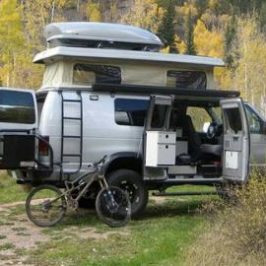
These interior photos are not from the Ford Courier, but are examples of the interior layout:
Roll-A-Long Mini Sportster Article:
Click the images to enlarge.
About The Author

Growing up, my father always believed that every family needed a truck—there’s just something about having a vehicle capable of hauling anything at a moment’s notice. That philosophy stuck with me, and it’s been the foundation of my lifelong passion for Ford trucks.
While I’m best known for my work with Ford Rangers, I’ve owned a wide variety of Ford trucks over the years—including F-150s, F-250s, F-350s, and even larger rigs like the Ford Excursion, Ford Expedition, and a 1982 Ford Econoline Sportsmobile camper van. I’ve used these vehicles for everything from family transportation to towing car trailers and campers, and each one has fueled my love for Ford’s versatility and durability.
I especially enjoy the styling of 1970s and 1980s Ford trucks—the bold designs, rugged presence, and classic charm are timeless. Sharing my passion for Ford trucks, vans, and SUVs with other enthusiasts online brings me a great deal of joy, and it’s why I created Blue Oval Trucks.
This website is dedicated to helping Ford truck enthusiasts explore, learn about, and celebrate these incredible vehicles. While I share my expertise and experiences here, Blue Oval Trucks is an independent enthusiast site and is not affiliated with Ford Motor Company.