
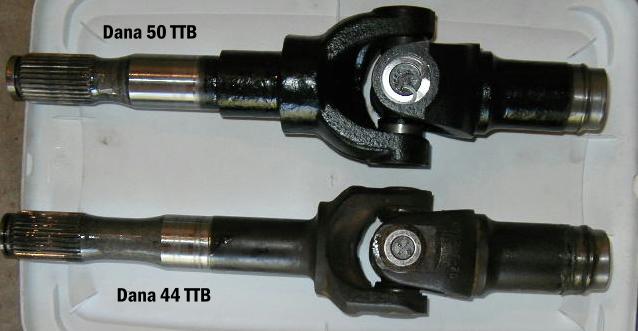
One of the upgrades that people have done to the Dana 44 TTB is install the passenger side inner axle shaft and slip yoke from a Dana 50 TTB. The Dana 50 shaft will actually fit into the Dana 44 TTB housing, and the shaft and slip yoke have the same length as the inner axle shaft and slip yoke on the Dana 44 TTB. What this does is allows you to upgrade this link to a larger 799x (1350) u-joint for more strength. You can see in the photo above how much larger the 799x u-joint is in the top shaft, compared to the 760x (760x is the replacement number for 297x) u-joint one on the bottom.
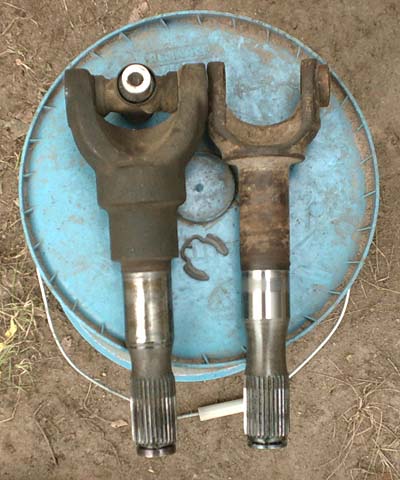
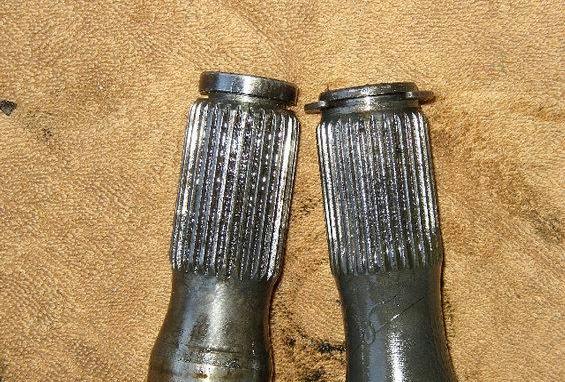
Above is another photo of the Dana 50 TTB inner shaft on the left, and the Dana 44 TTB inner shaft on the right. You can see that they have the same lengths, and that both insert into the carrier at the same depths. Both shafts have the same diameter and spline count where they enter the differential.
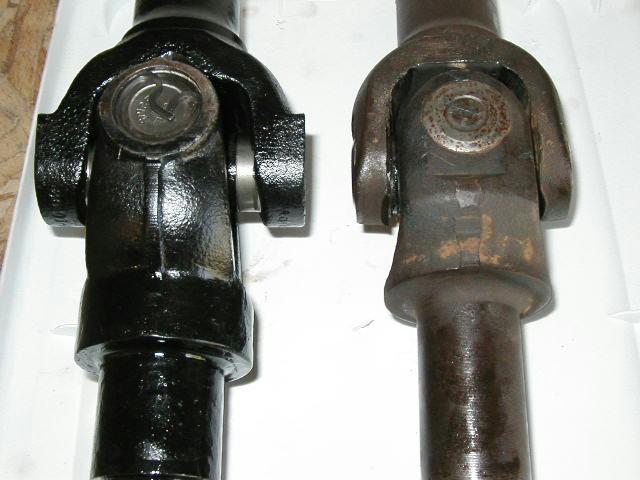
More photos (above and below) showing the size difference between these shafts.
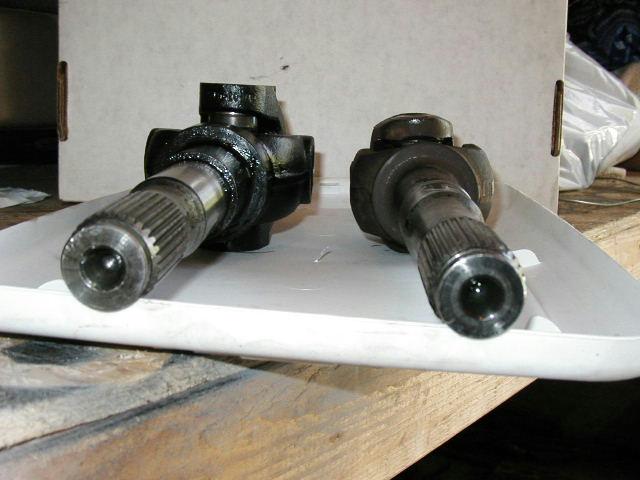
The Dana 50 TTB inner shaft will not work in the Dana 44 differential using the internal c-clip that holds it in place. The c-clip is thicker than the Dana 44 version and will hit the spider gear cross pin before you can get the c-clip to engage. The remedy for this a C-Clip Eliminator / Slip Yoke Spring Modification.
C-Clip Eliminator / Slip Yoke Spring Modification
This modification involves putting a spring in the cup of the slip shaft. (This method is also used for a locked front end and can be used with a stock Dana 44 stub shaft as well). The spring will provide pressure, pushing the (2) passenger inner axles apart and keeping the stub shaft secure in the housing. People have used a 7/8-inch compression spring cut down to about 2-1/2 inches. You may have to play around with the length of the spring before you are comfortable. Make sure you install the complete passenger side axle shaft and spindle. This will give you an idea as to how much play the spring allows and ensure everything will bolt together.
Some people have also used a Chevy valve spring. Whatever spring you choose, cut it to a length (if you need to) so that when you put the spindle back on the knuckle, and before you start bolting it down, you are just able to start feeling some resistance…spindle will push against outer shaft, which in turn will try and push that spring in.
Some believe that a valve spring is too long, when you really just need a bit of push to keep the shaft where it belongs. Remember, the differential will not exert a force to push the axle shaft out. It can move out on its own, but not if there is a small amount of resistance.
You should weld the cap on the slip yoke in place so it will not pop off from the spring pressure.
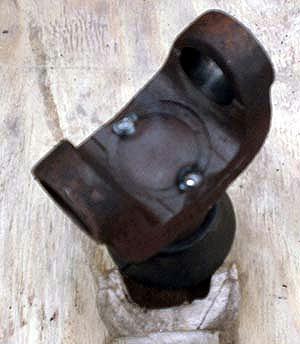
Choose a spring…
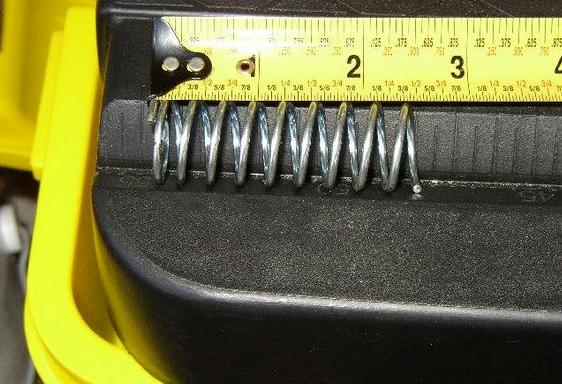
Cut it to the desired length….
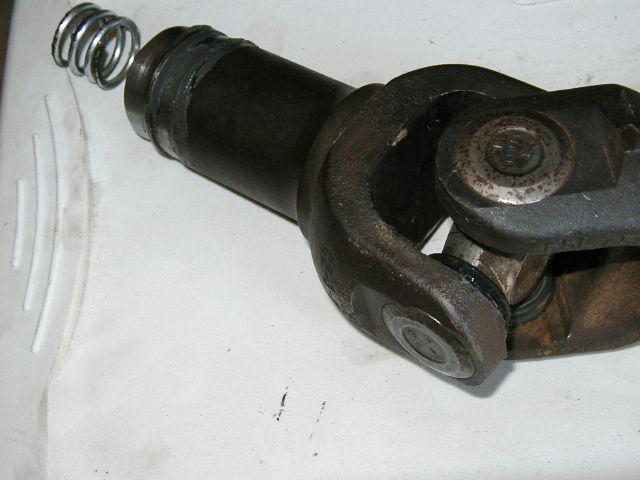
And insert it into the slip yoke….
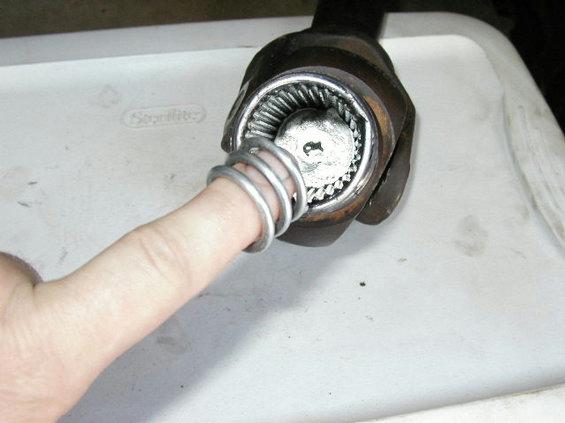
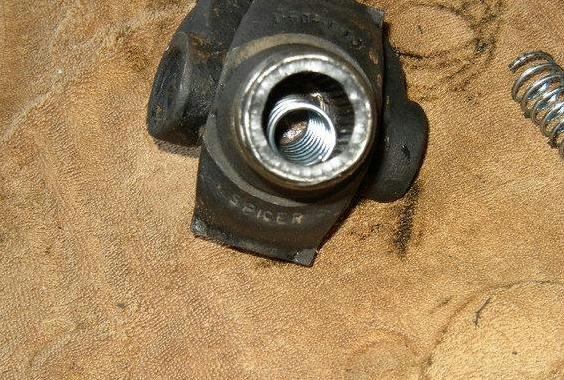
You may need to cut a little of the spring off at a time and check it until you find the ideal length and tension.
Check For Clearance
Now, since the Dana 50 TTB axle shaft yoke is bigger than the Dana 44 TTB axle shafts, you’ll want to rotate the shaft to see if it’s going to hit the axle beam. It may be necessary to take a grinder or cut off wheel and trim a little material off of the axle beam for clearance.
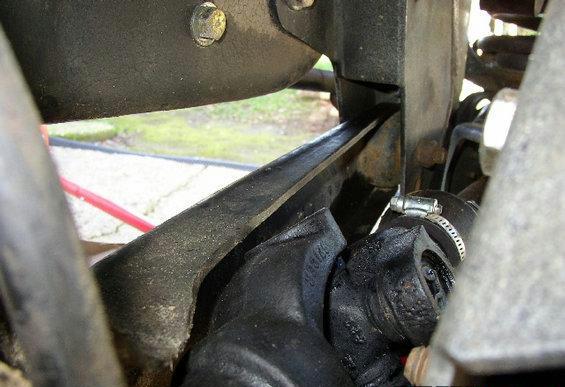
In the photo above, you can see how close the Dana 55 TTB axle shaft is to the axle beam.
That’s It!
Once you’ve got it installed and made sure it’s not going to hit the axle beam when it rotates, you’re all done!
About The Author

Growing up, my father always believed that every family needed a truck—there’s just something about having a vehicle capable of hauling anything at a moment’s notice. That philosophy stuck with me, and it’s been the foundation of my lifelong passion for Ford trucks.
While I’m best known for my work with Ford Rangers, I’ve owned a wide variety of Ford trucks over the years—including F-150s, F-250s, F-350s, and even larger rigs like the Ford Excursion, Ford Expedition, and a 1982 Ford Econoline Sportsmobile camper van. I’ve used these vehicles for everything from family transportation to towing car trailers and campers, and each one has fueled my love for Ford’s versatility and durability.
I especially enjoy the styling of 1970s and 1980s Ford trucks—the bold designs, rugged presence, and classic charm are timeless. Sharing my passion for Ford trucks, vans, and SUVs with other enthusiasts online brings me a great deal of joy, and it’s why I created Blue Oval Trucks.
This website is dedicated to helping Ford truck enthusiasts explore, learn about, and celebrate these incredible vehicles. While I share my expertise and experiences here, Blue Oval Trucks is an independent enthusiast site and is not affiliated with Ford Motor Company.