
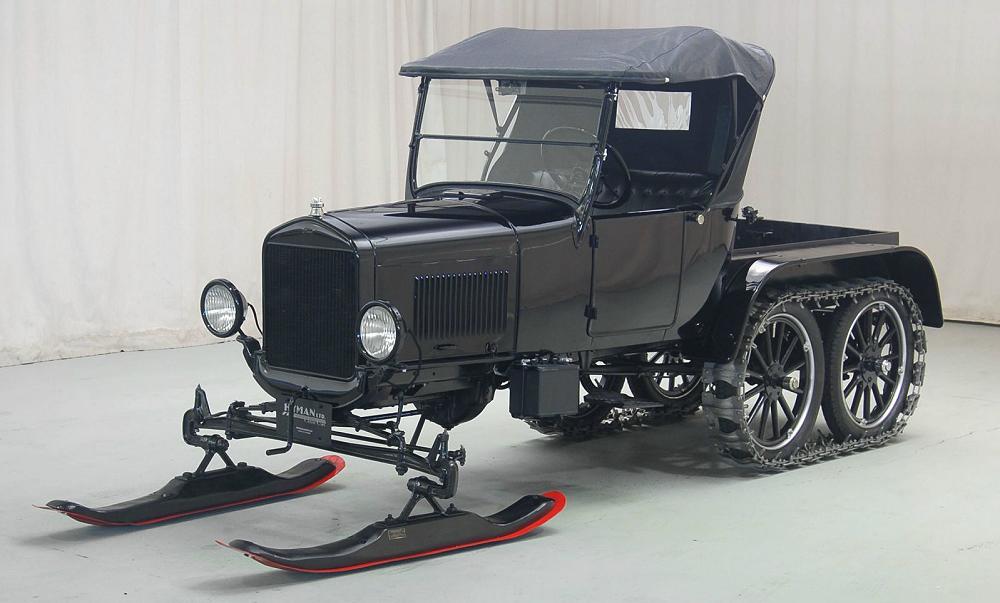
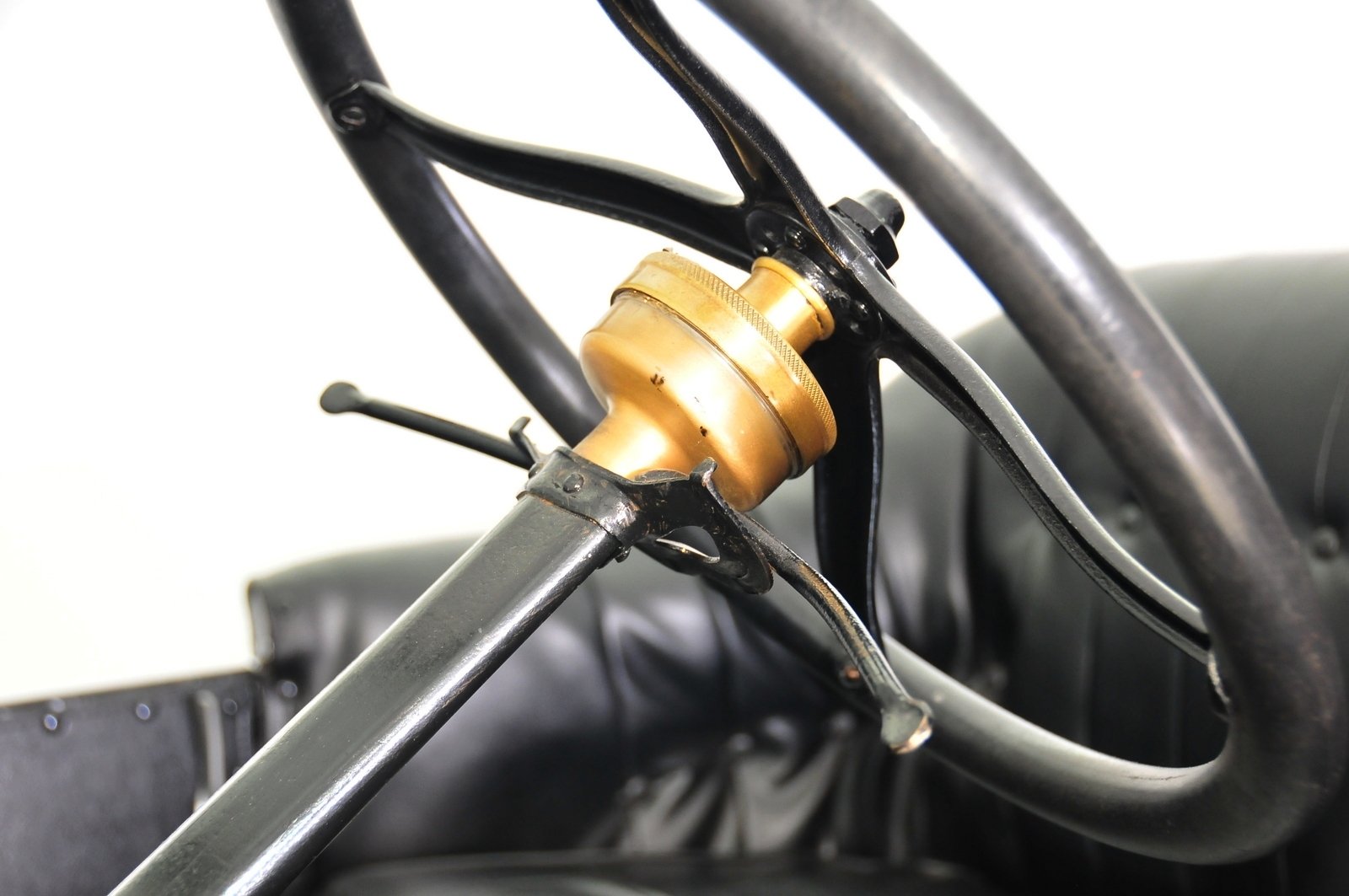
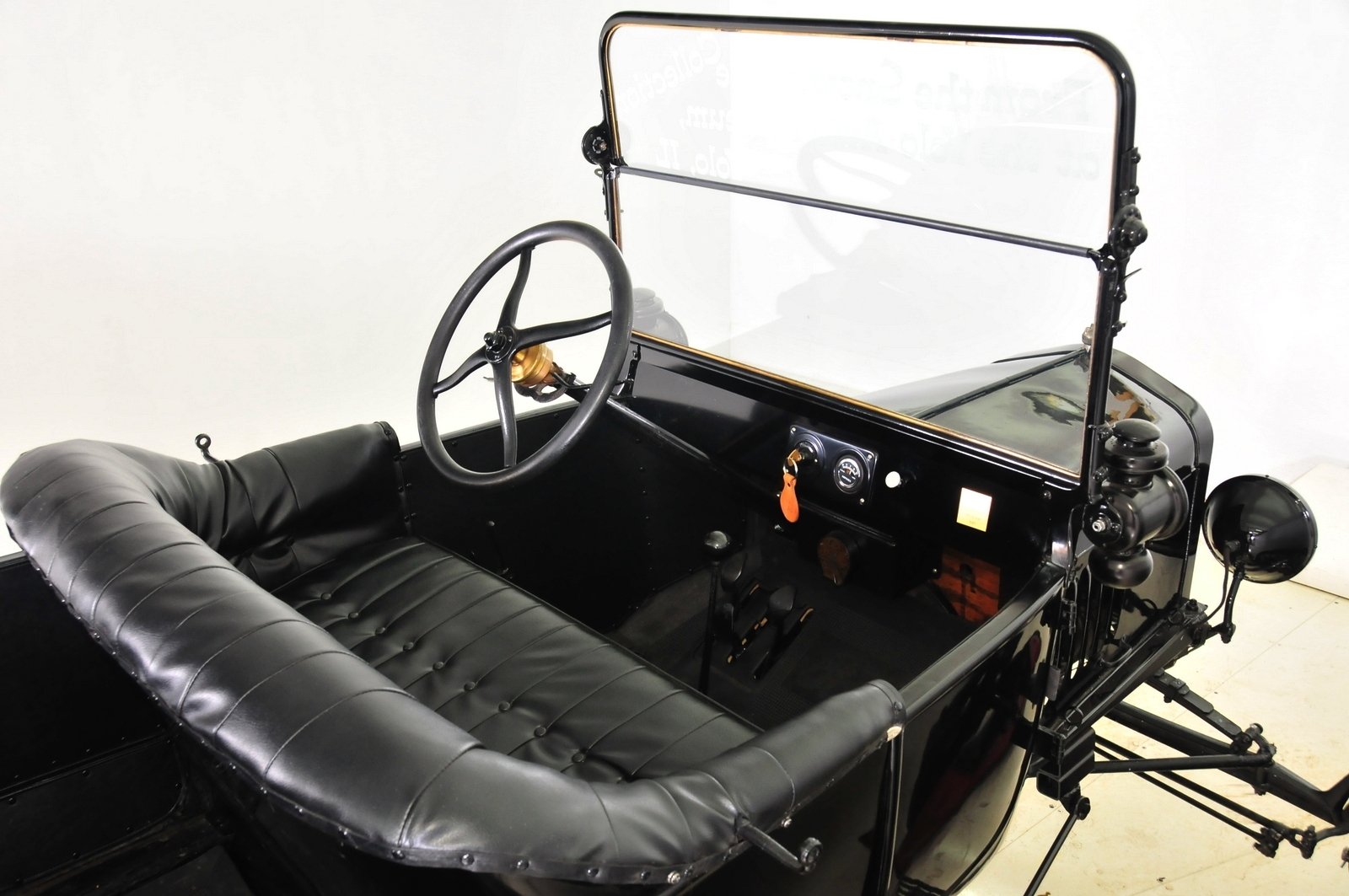
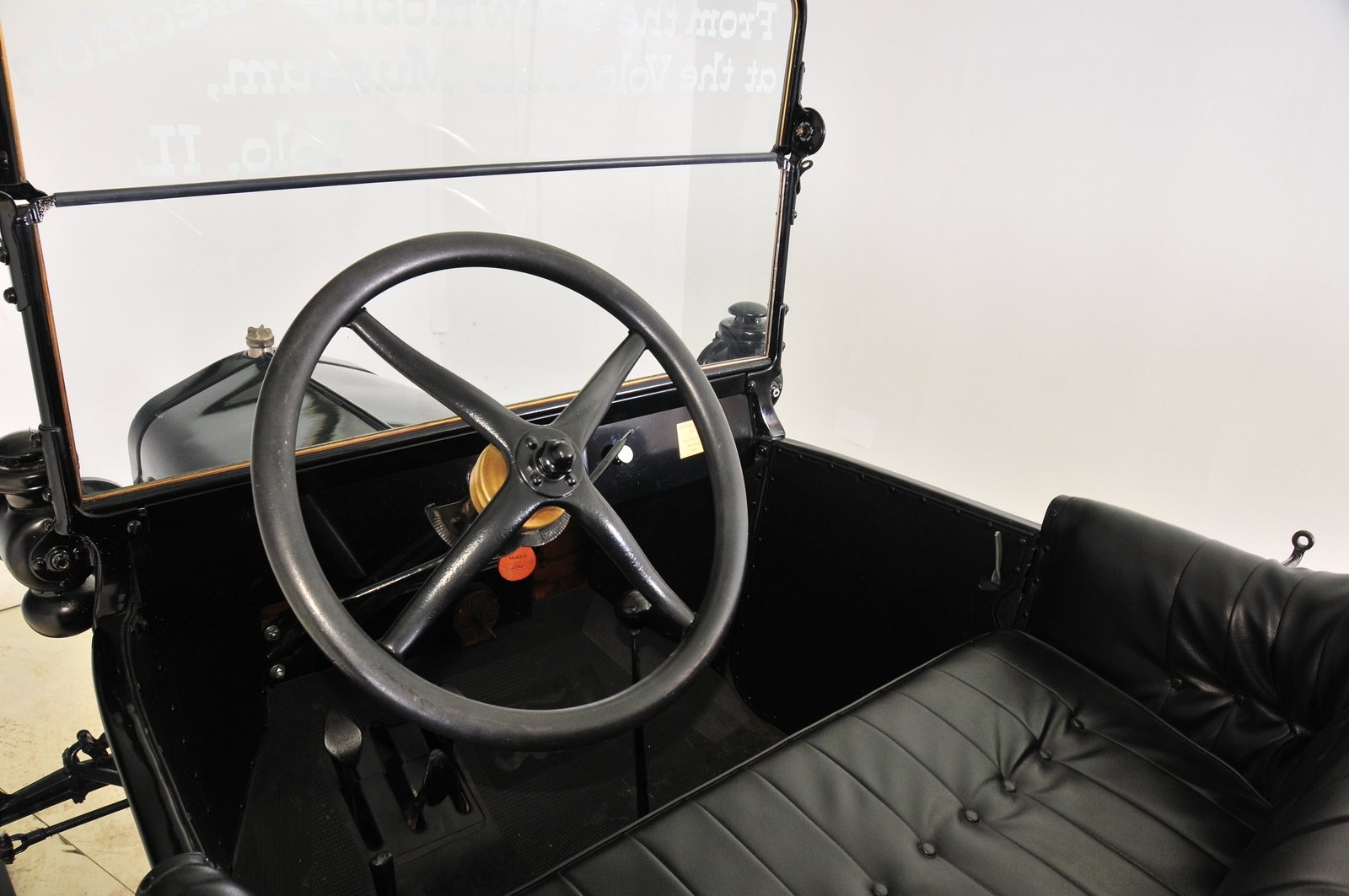
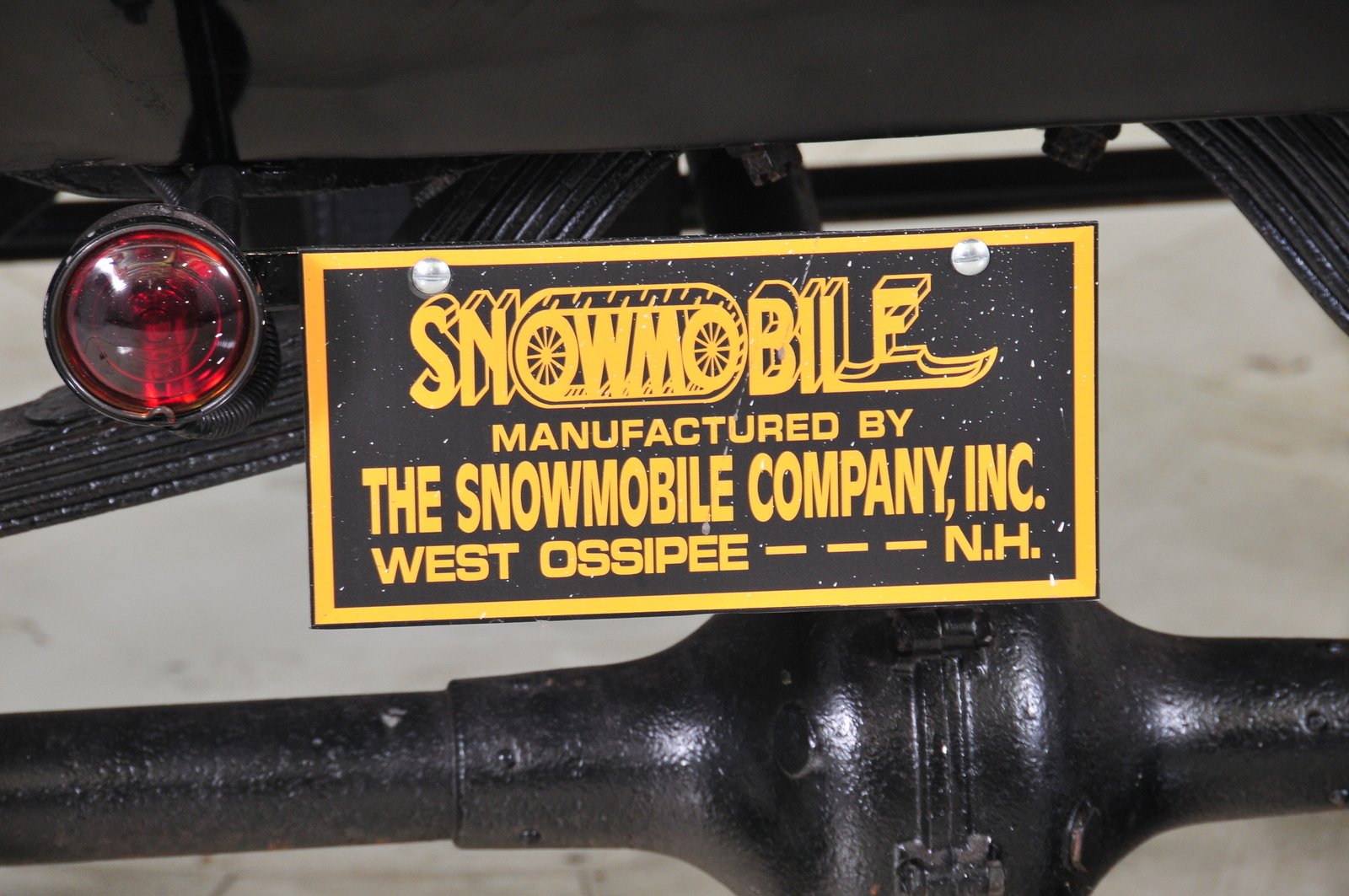
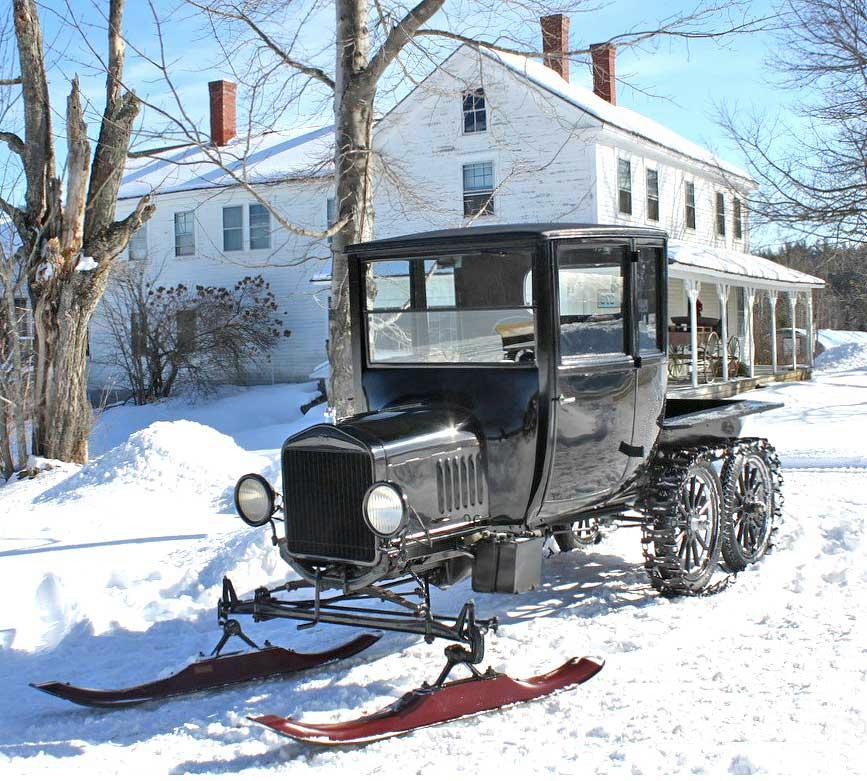
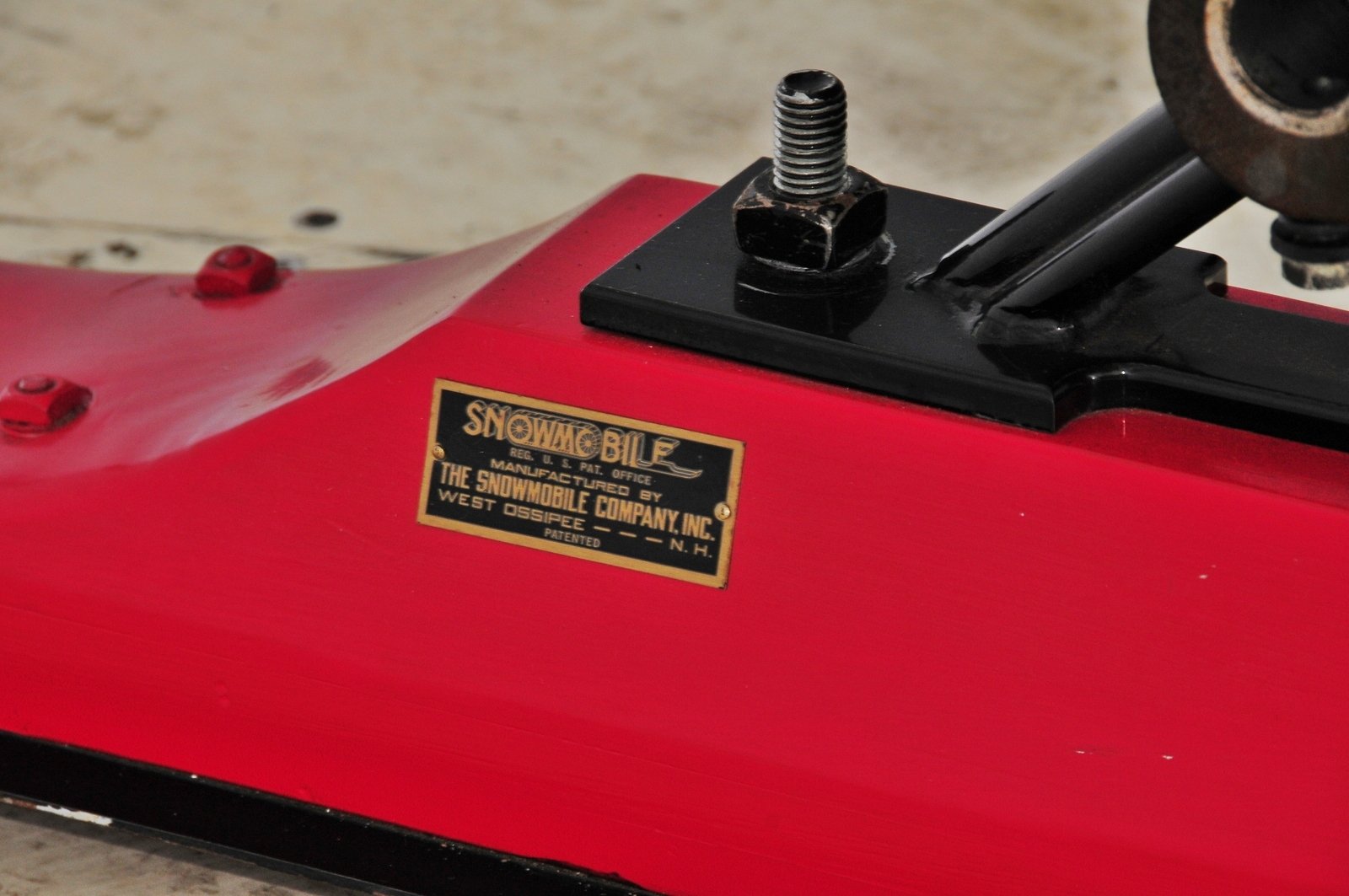
In 1917 Virgil D. White received a patent for an attachment designed to convert a Model T into a ‘Snowmobile,’ a name coined and copyrighted by White. White, a Ford dealer in Ossipee, New Hampshire, built his first snowmobile attachment 1913.
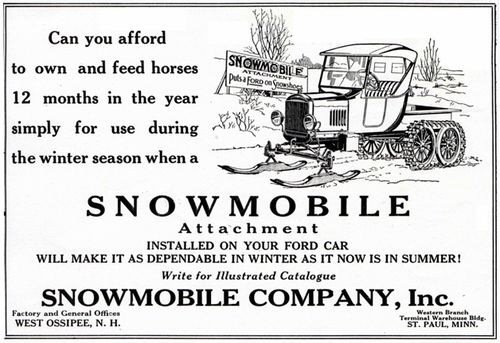
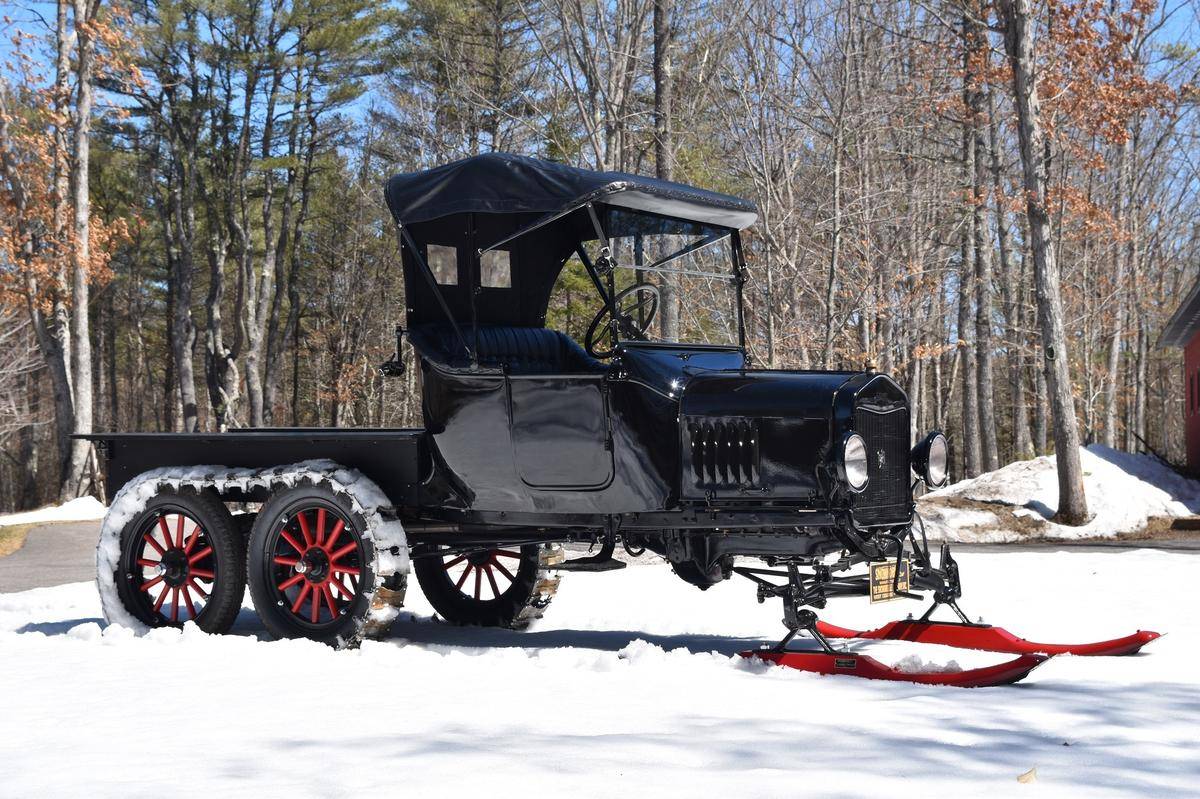
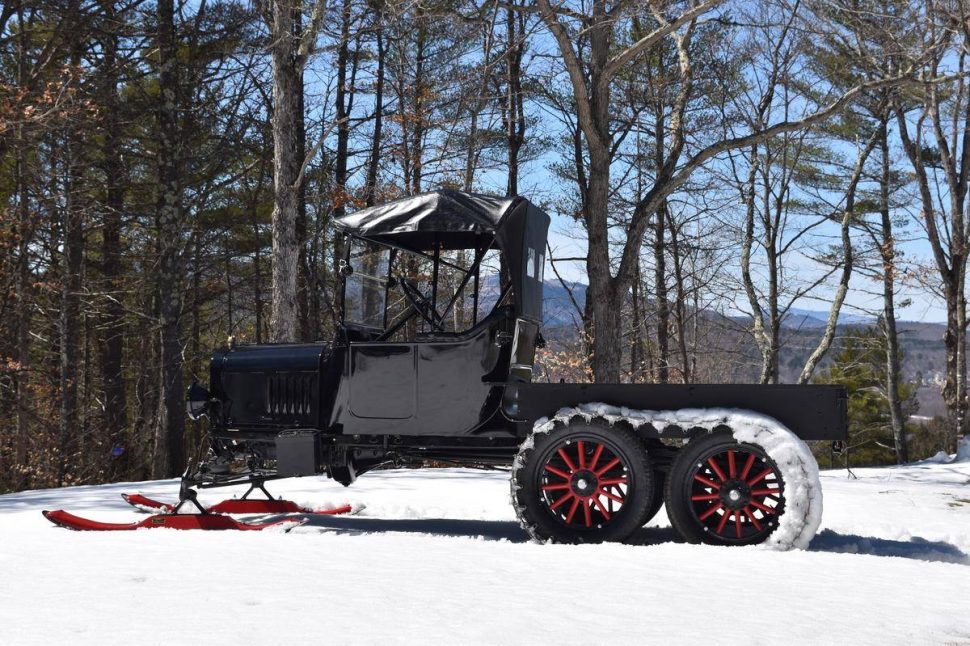
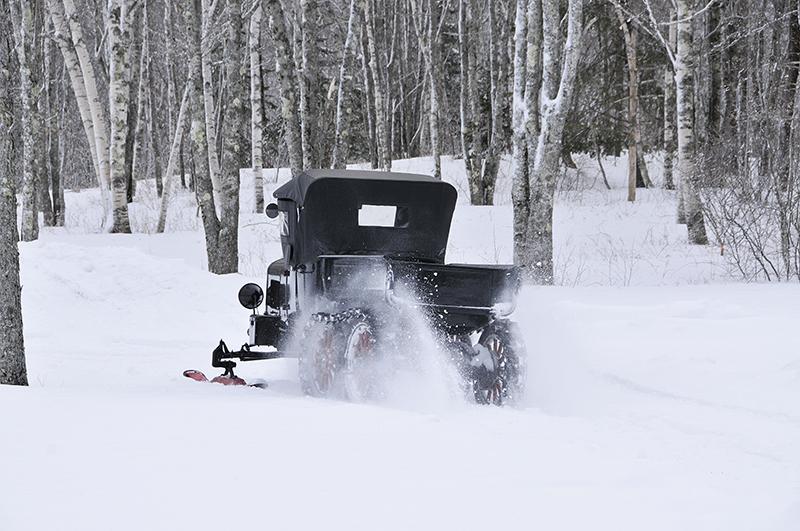
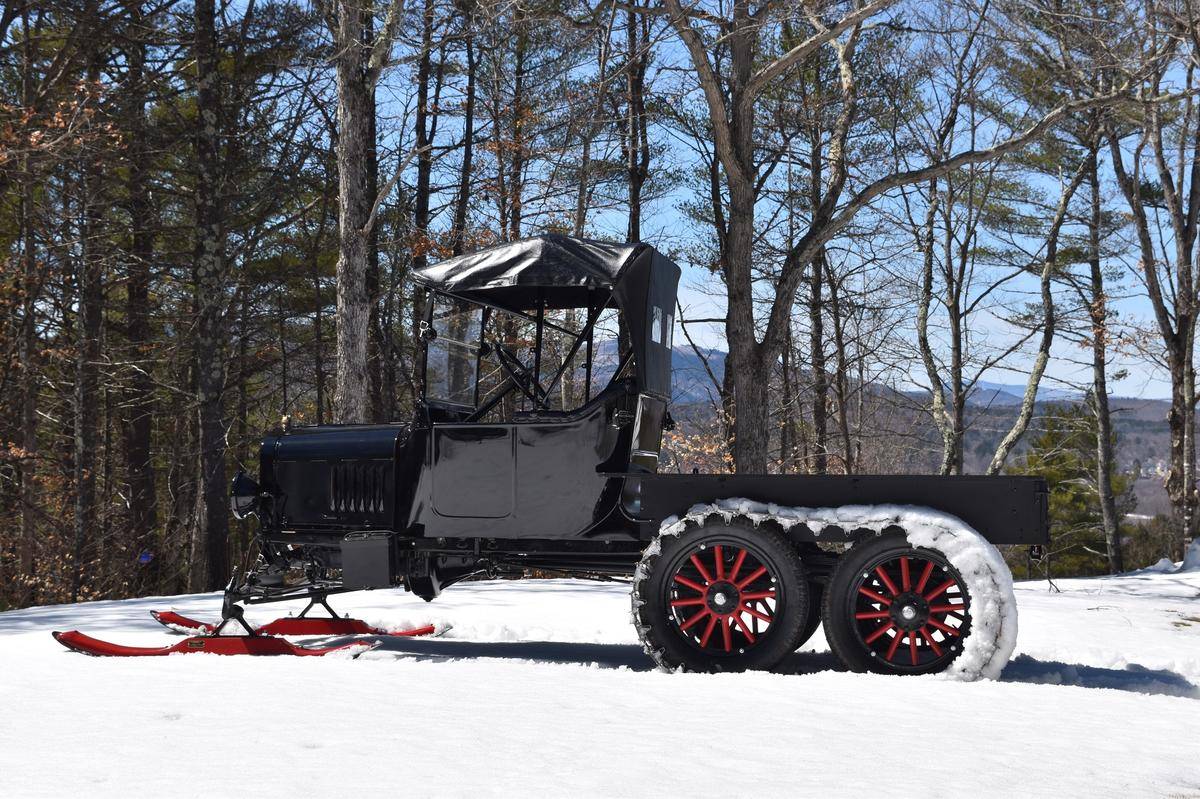
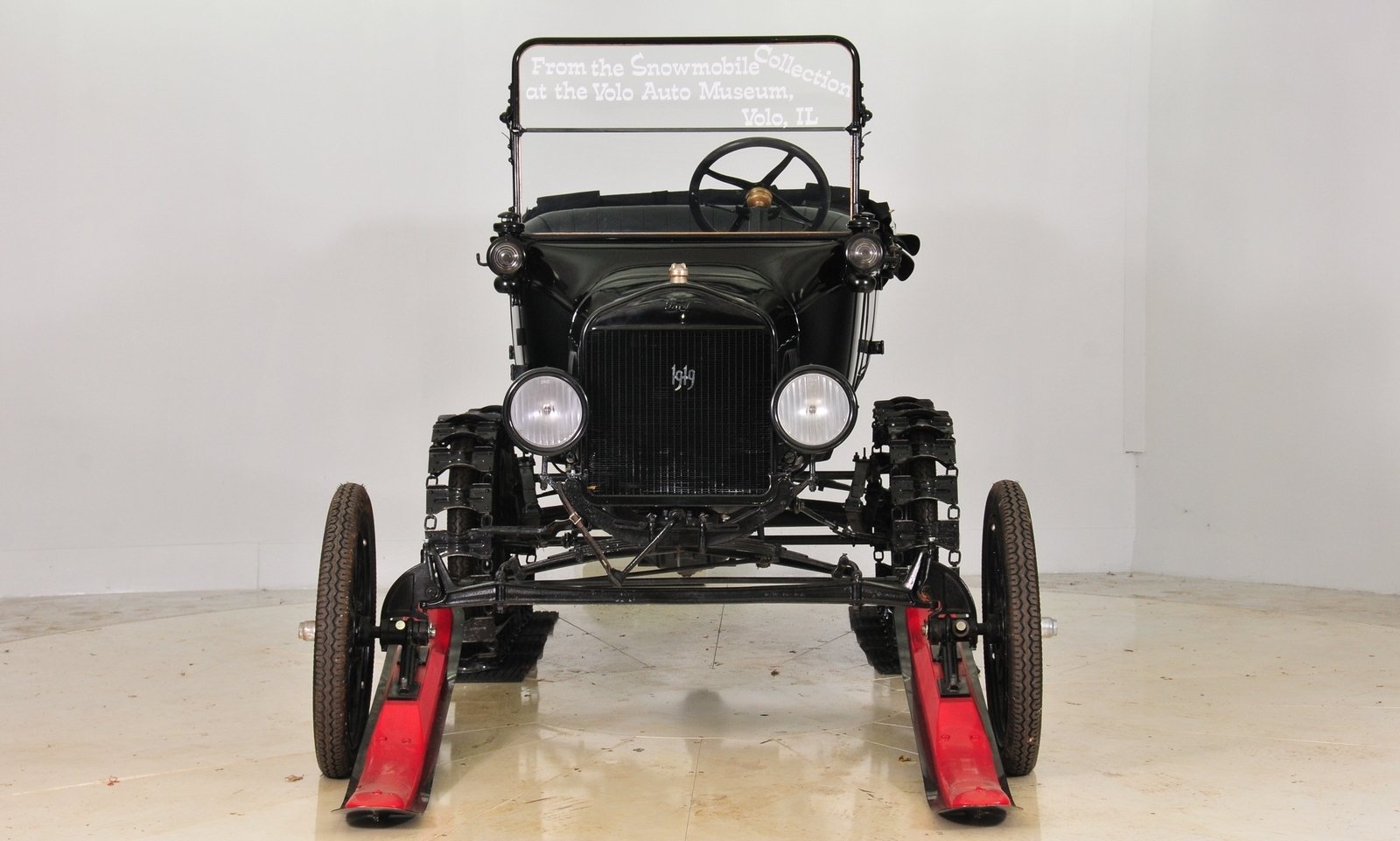
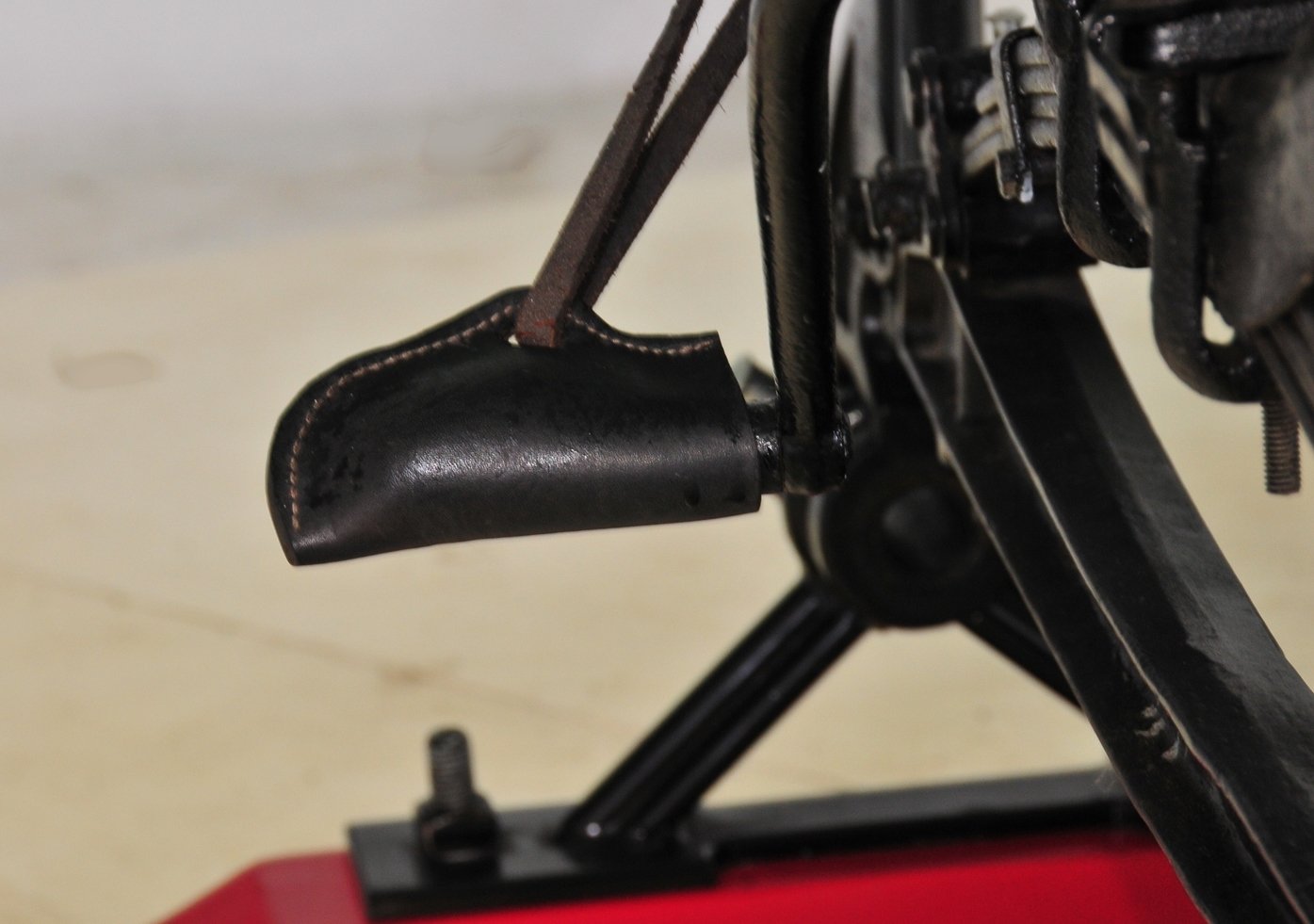
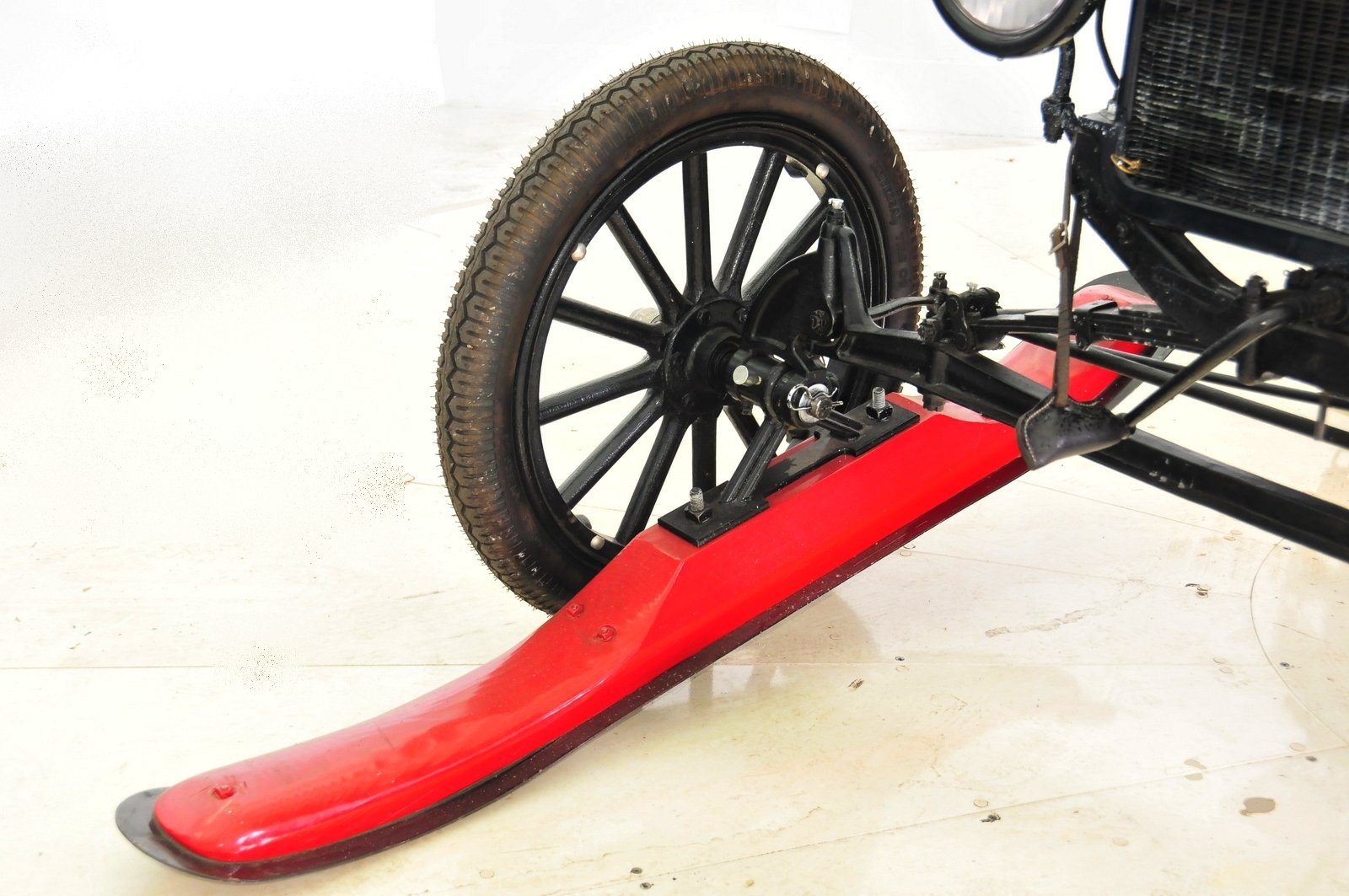
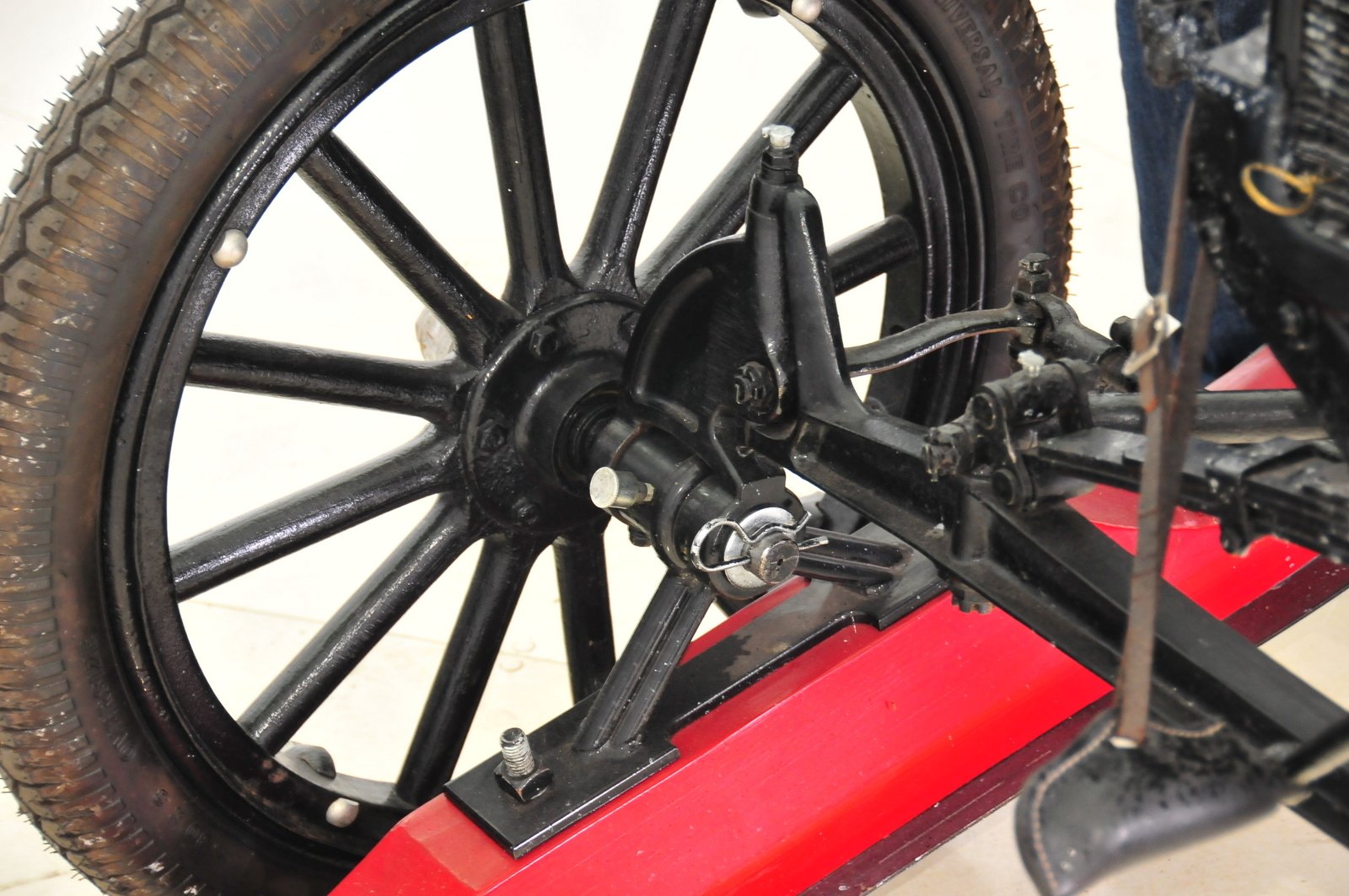
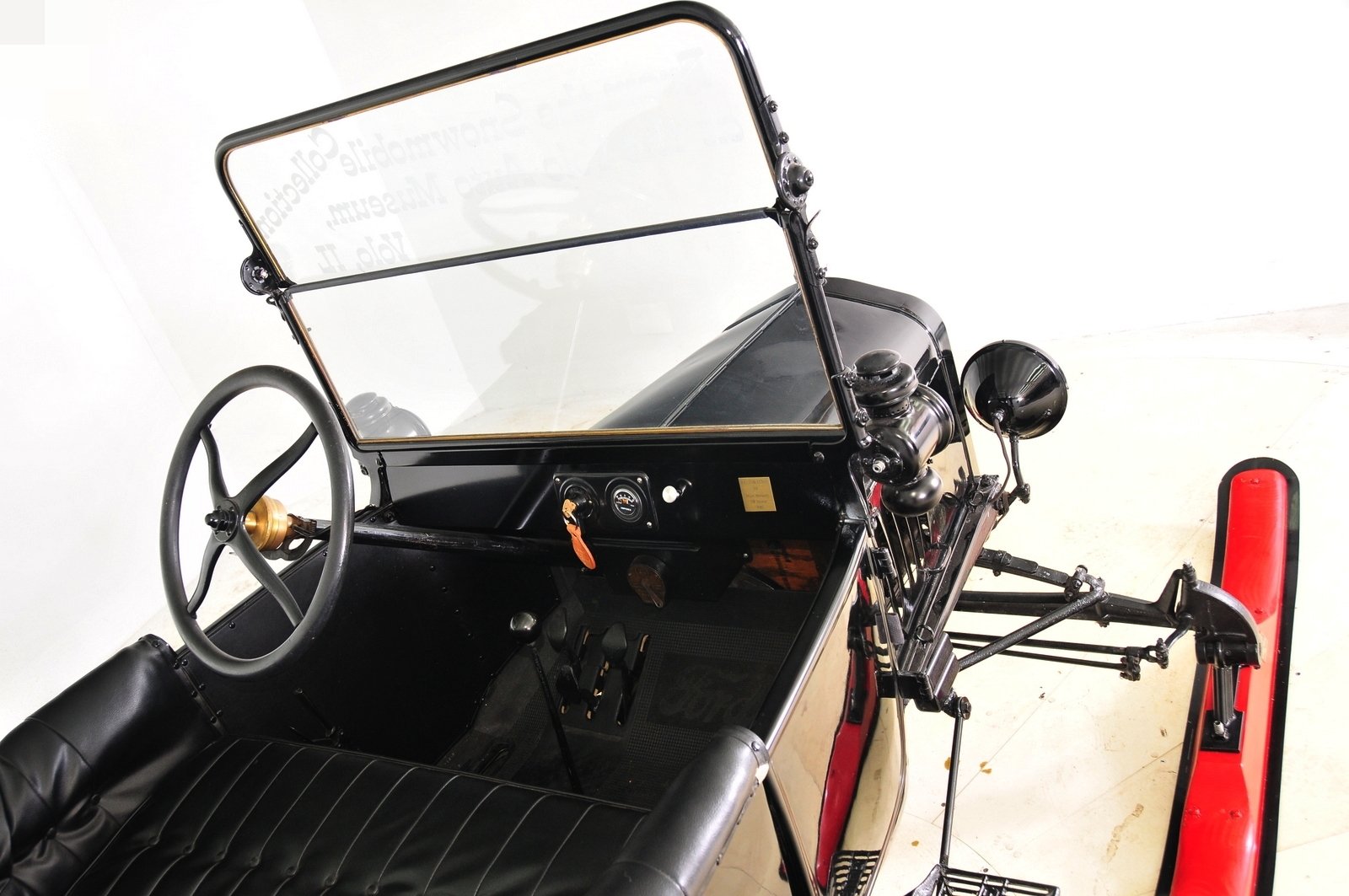
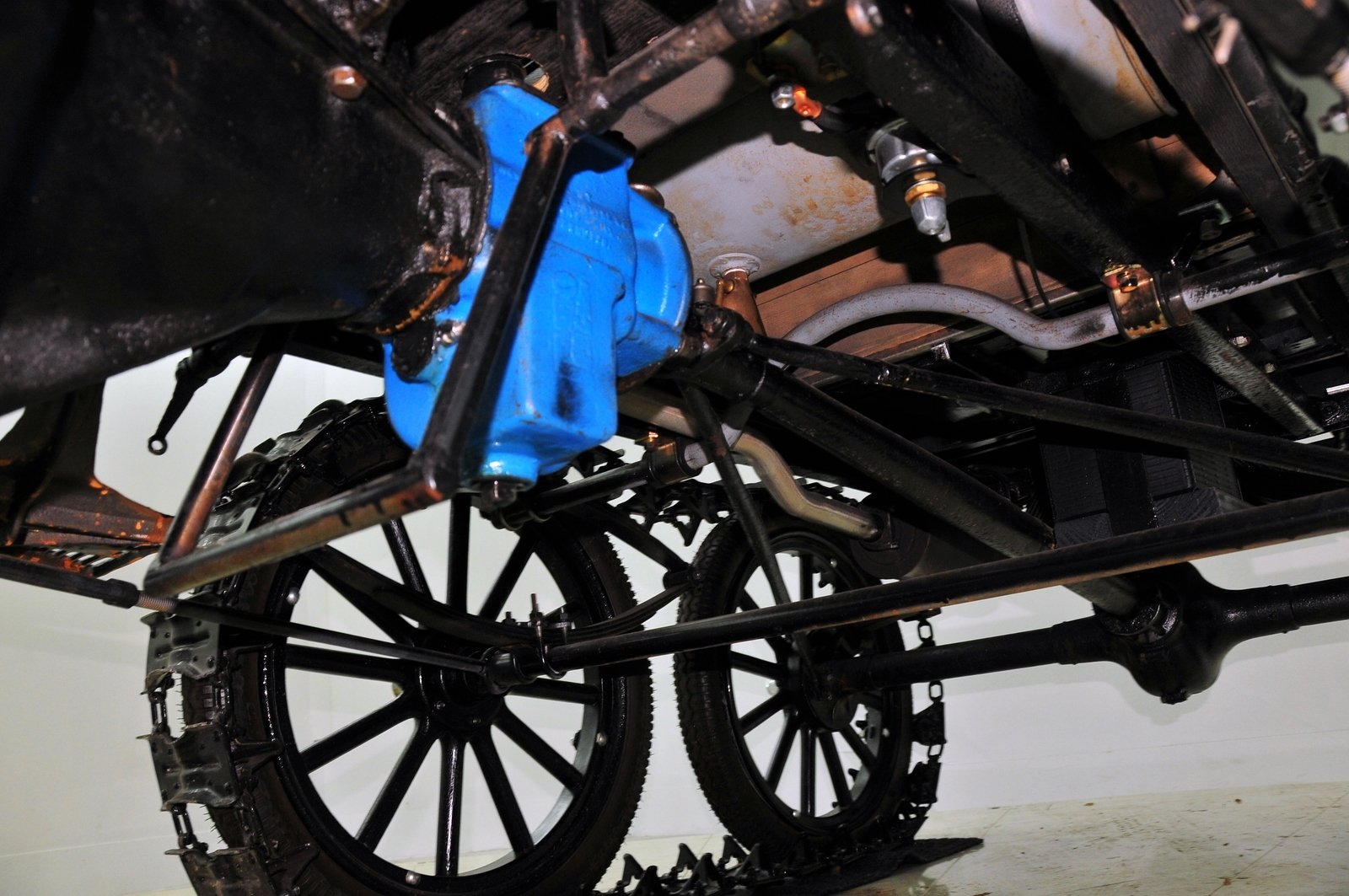
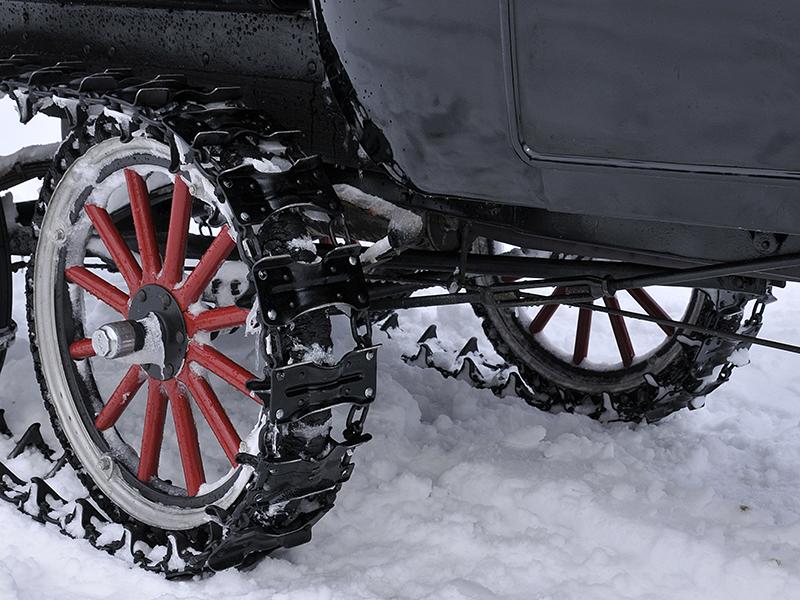
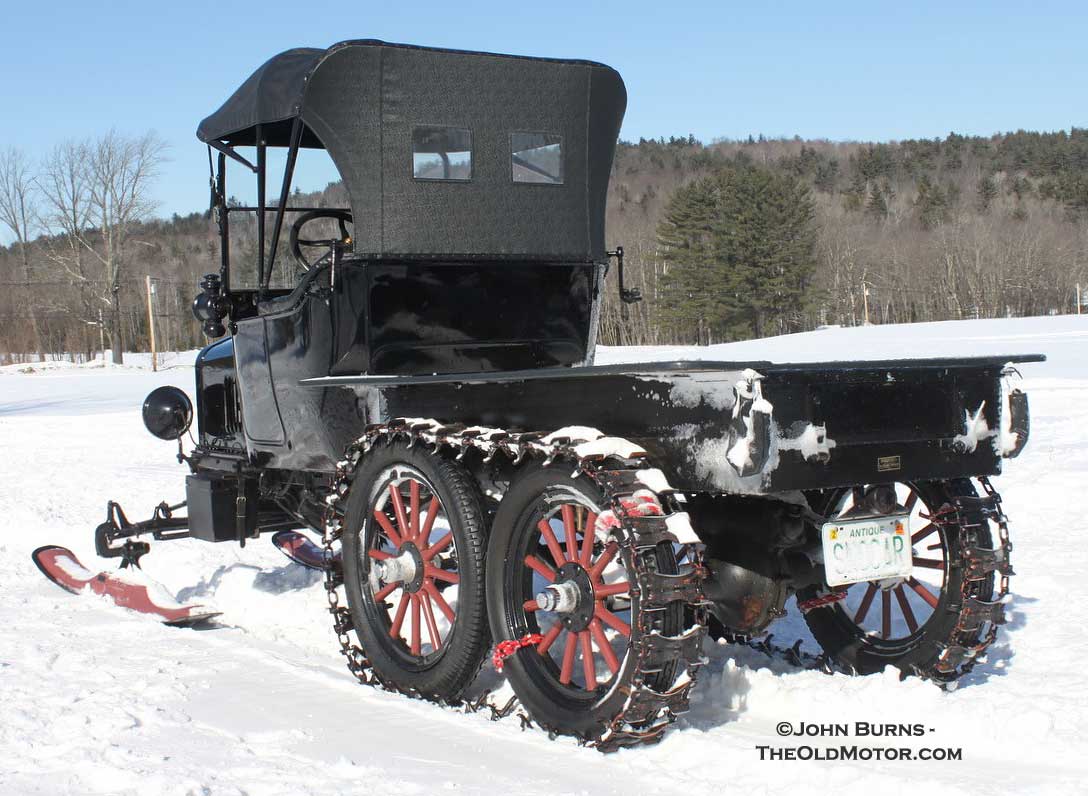
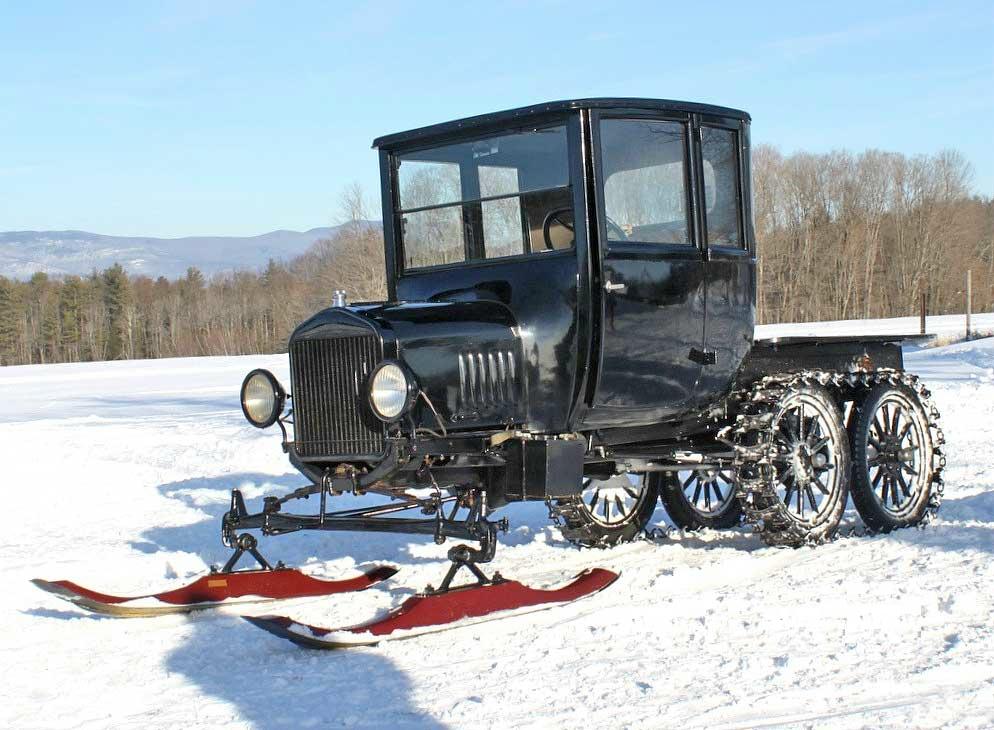
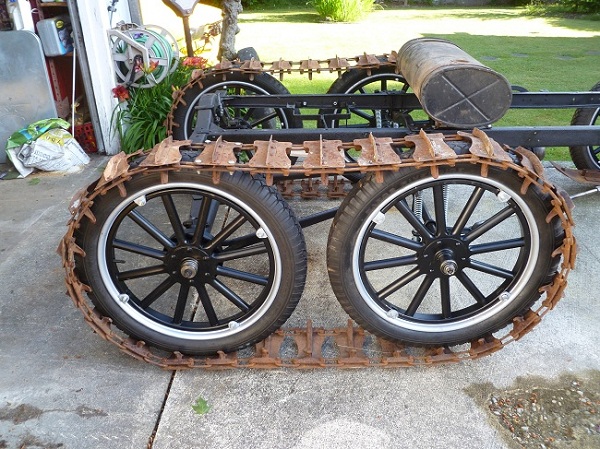
He put it on the market during the winter of 1922 after ‘perfecting it in every detail,’ selling the attachments exclusively through Ford dealers. The Snowmobile attachment consisted of the complete package necessary to convert a Ford into a reliable snow machine. Skis made of metal and wood and rear mounted tracks were the most noticeable differences.
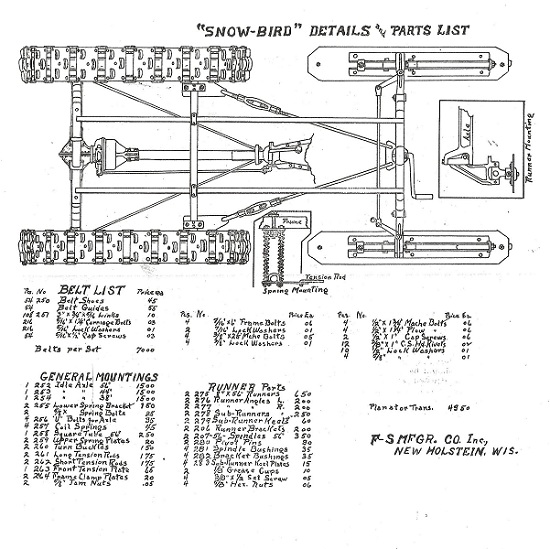
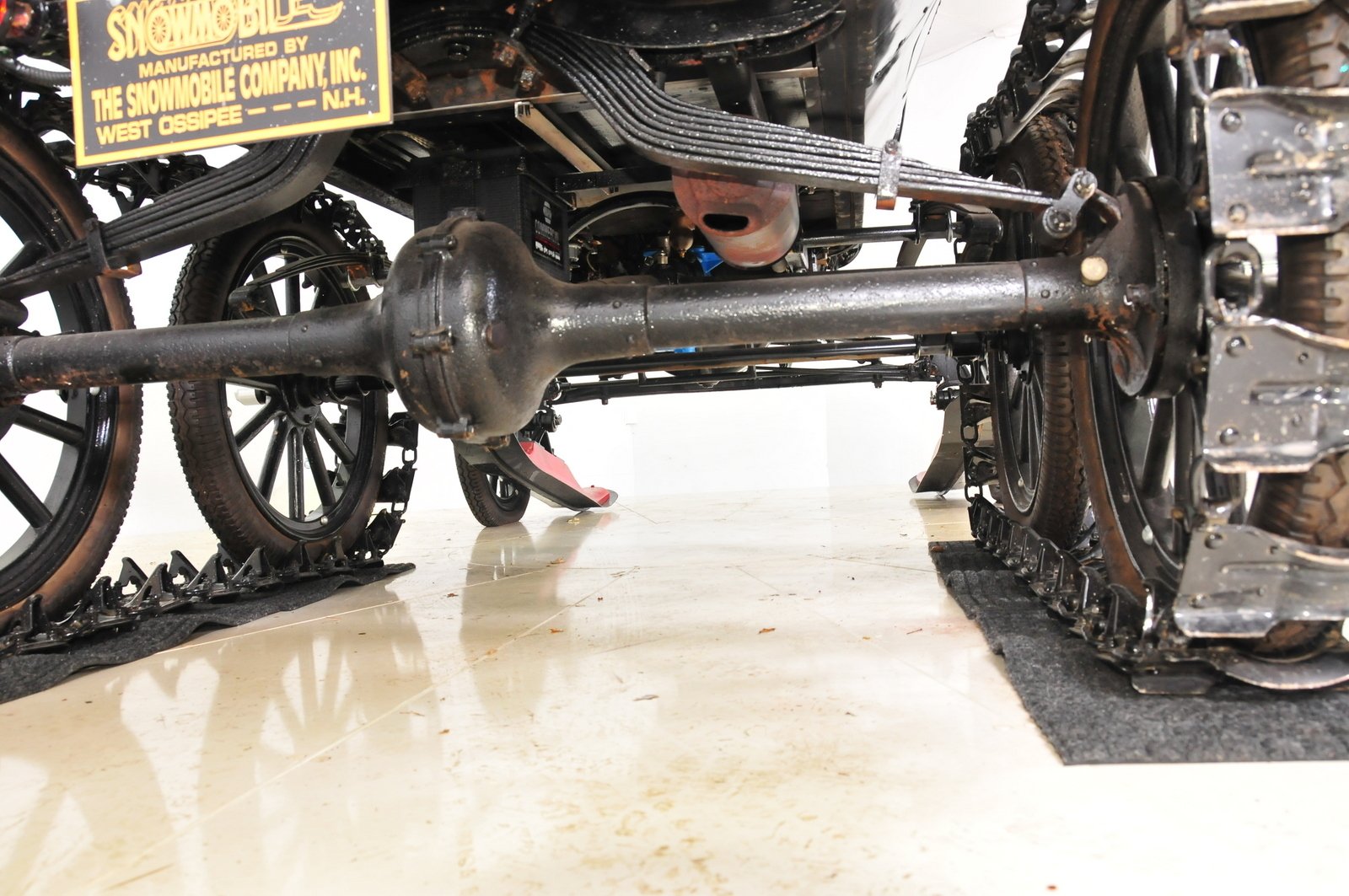
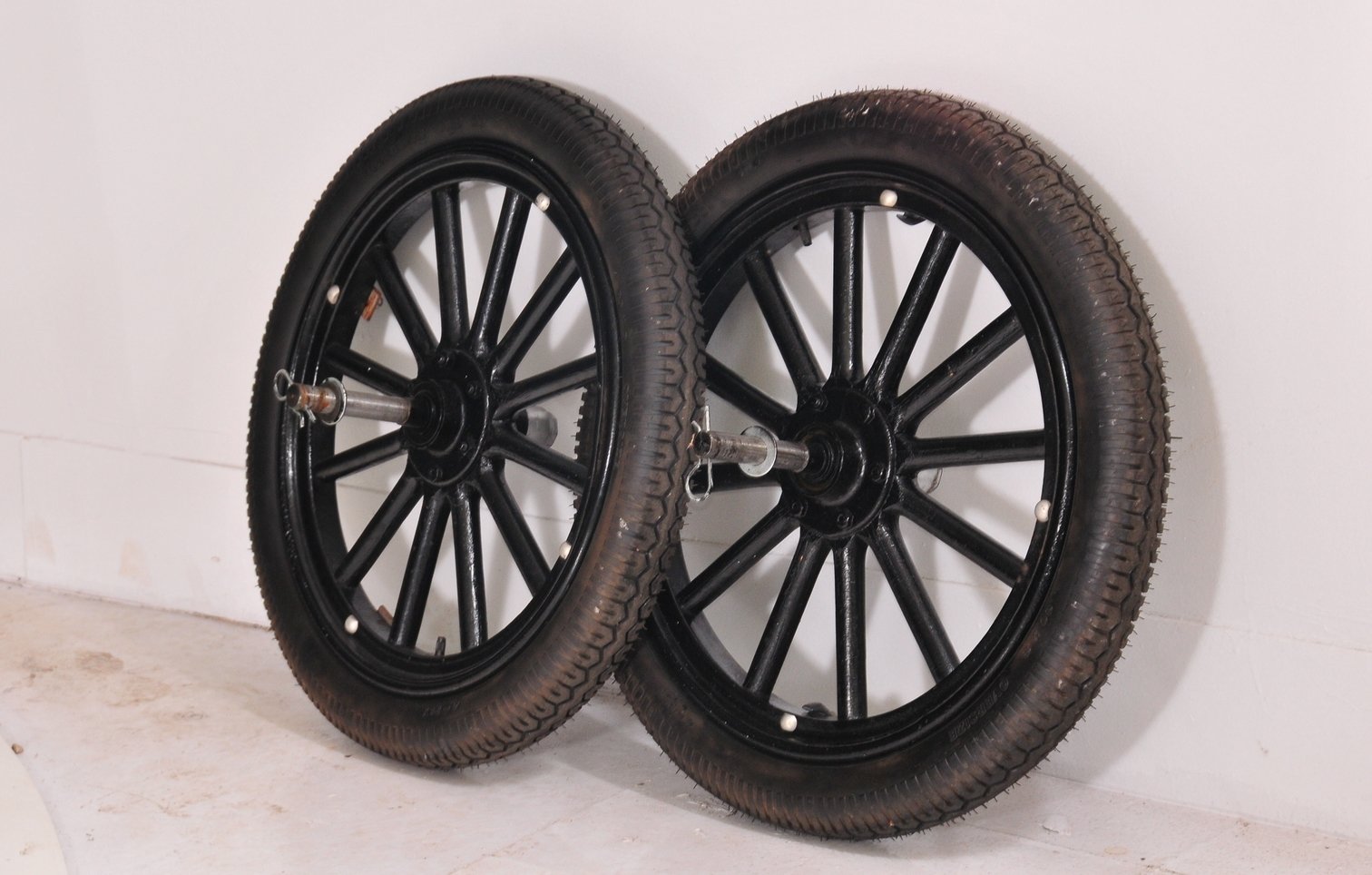
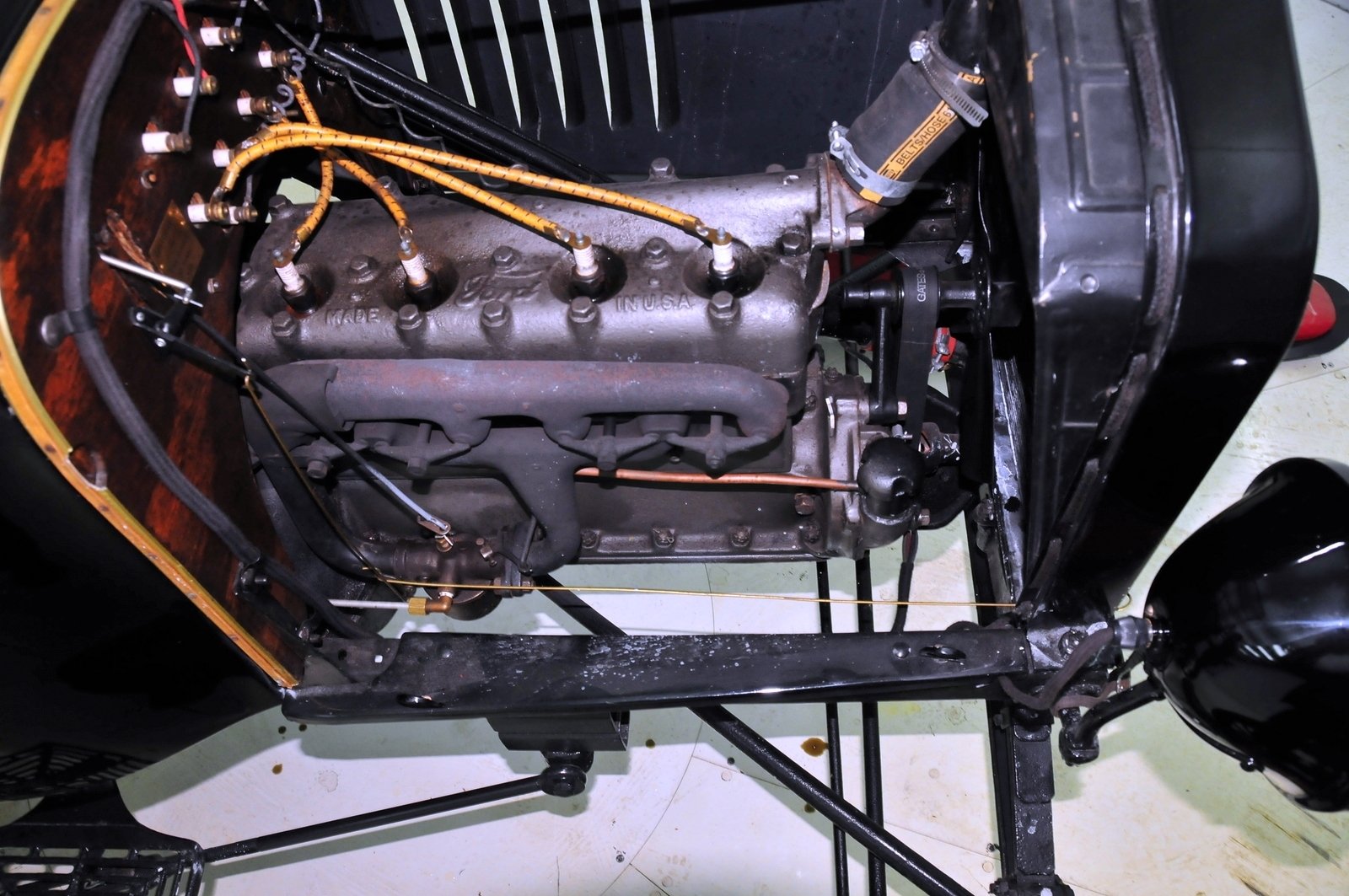
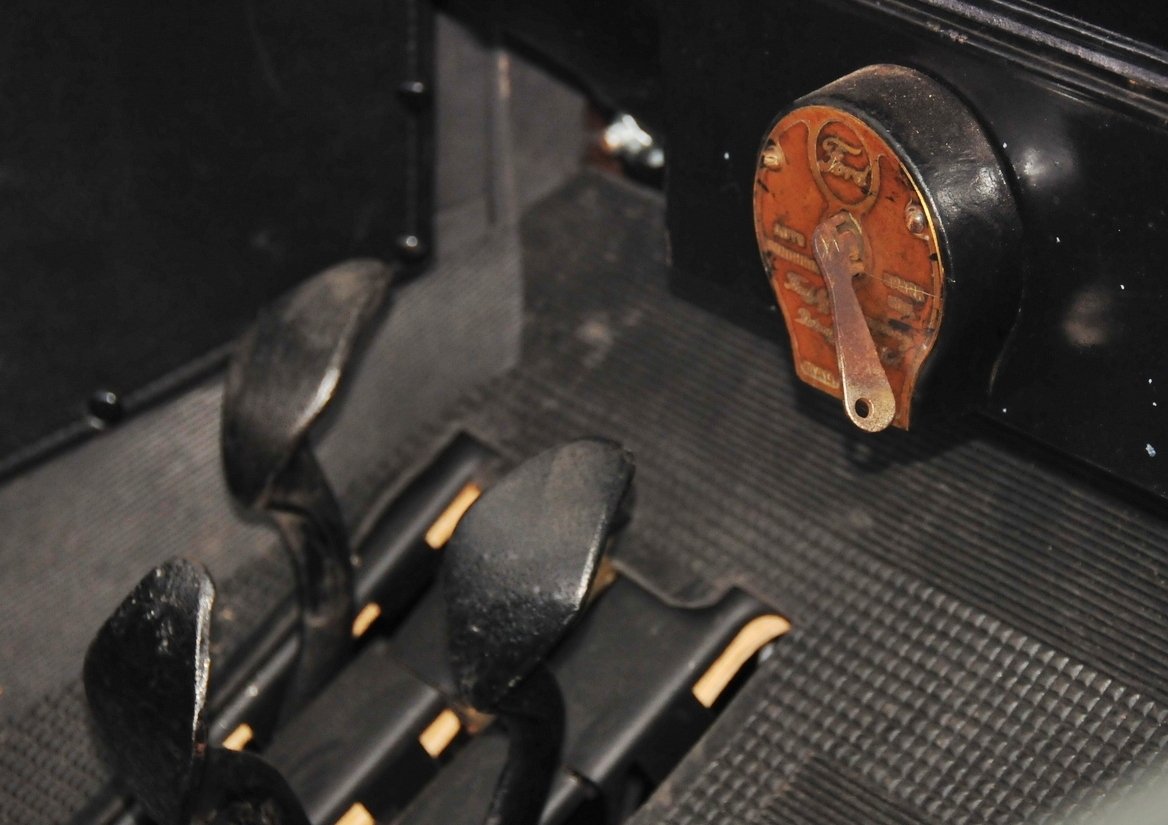
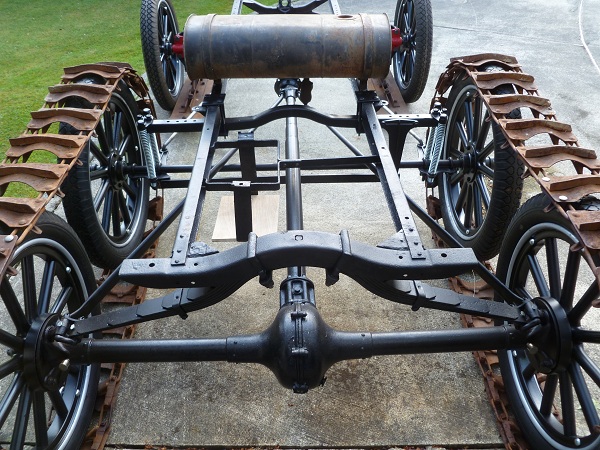
The standard passenger car rear axle and driveshaft, rear spring, and radius rods were removed and replaced with a 7 to 1 Ford truck worm gear drive line attached to the frame by a pair of cantilevered semi-elliptical springs. Special heavy-duty wheels to fit the TT rear axle were provided along with anti-skip chains.
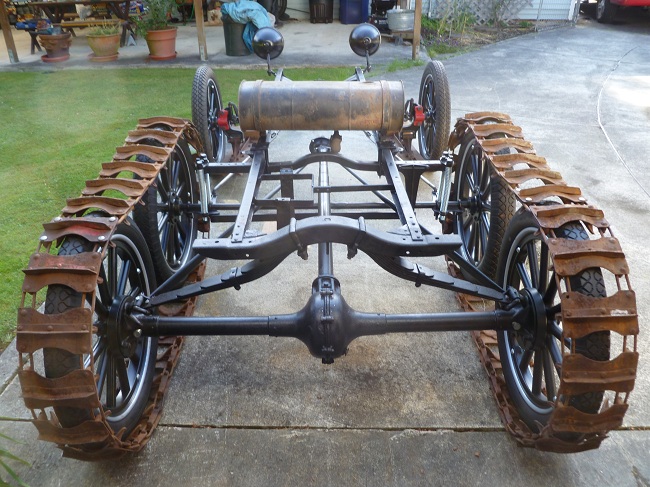
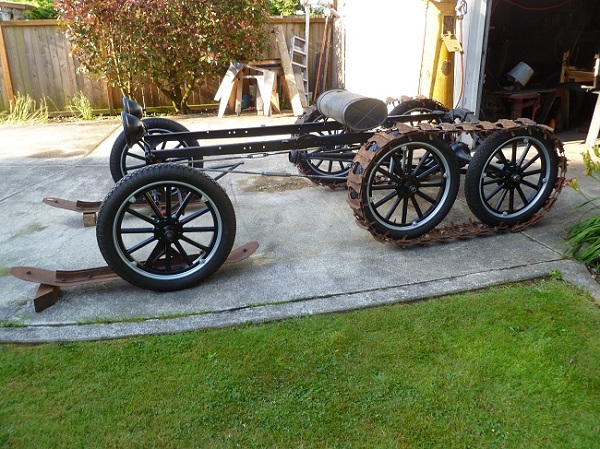
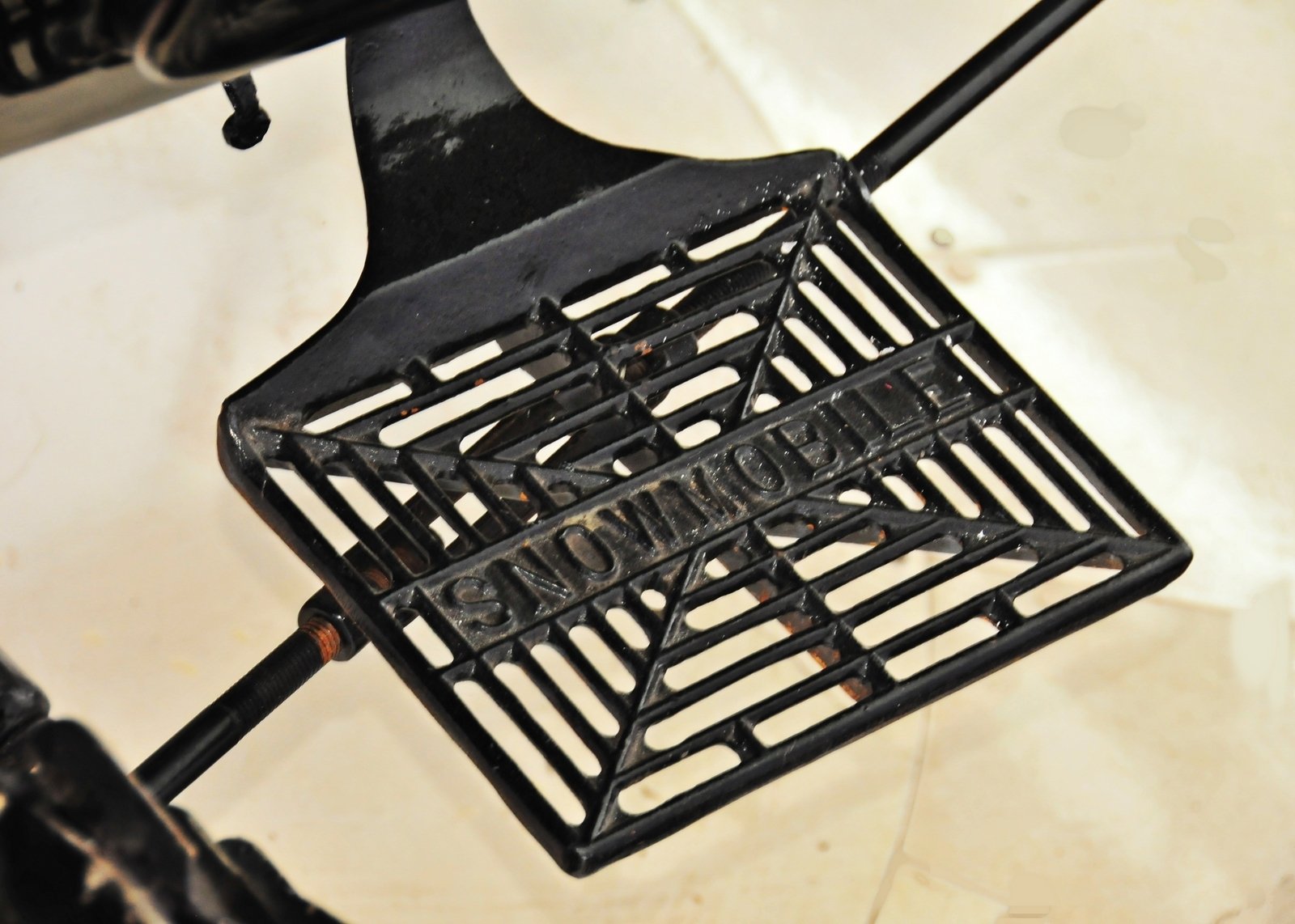
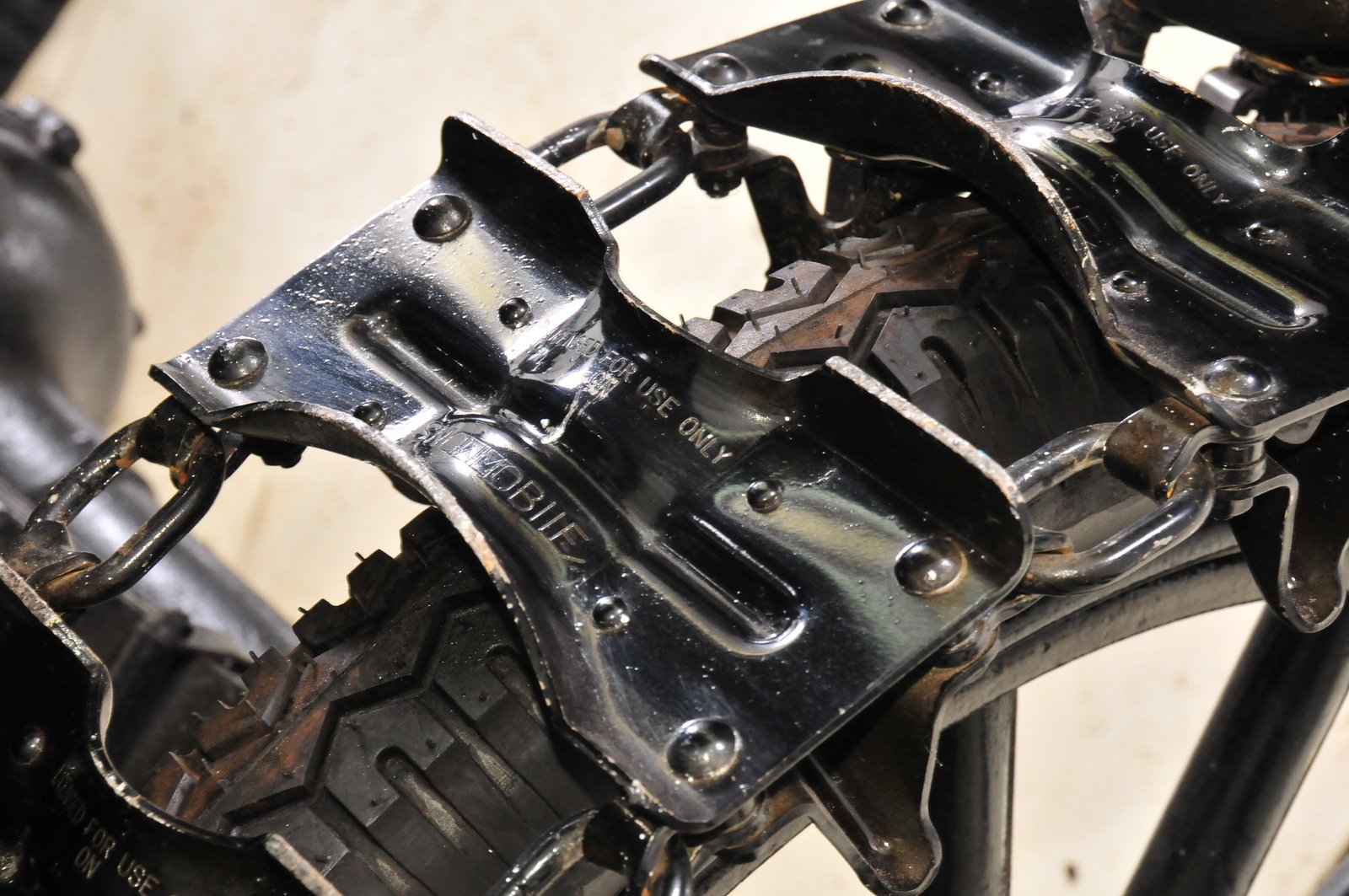
The earliest units sold by White included tracks made of metal cleats joined by a heavy fabric. White later switched to all metal tracks consisting of stamped steel shoes connected by chain links. Additions to the Snowmobile attachment in later years included a special box attached to the left frame for the battery displaced by the idler axle. A cast iron step sporting the Snowmobile insignia took the place of running boards, which were removed to allow room for the track system.
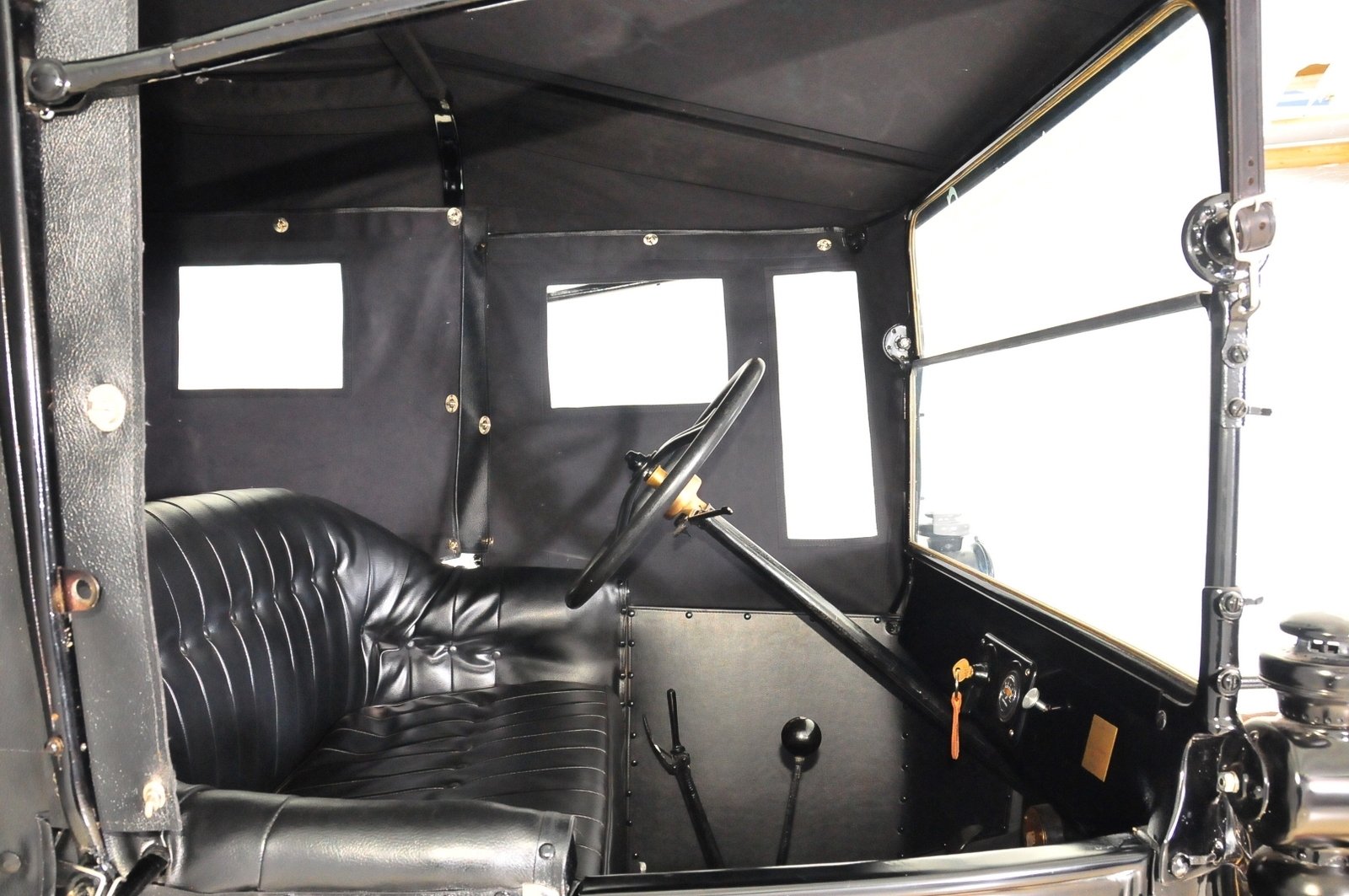
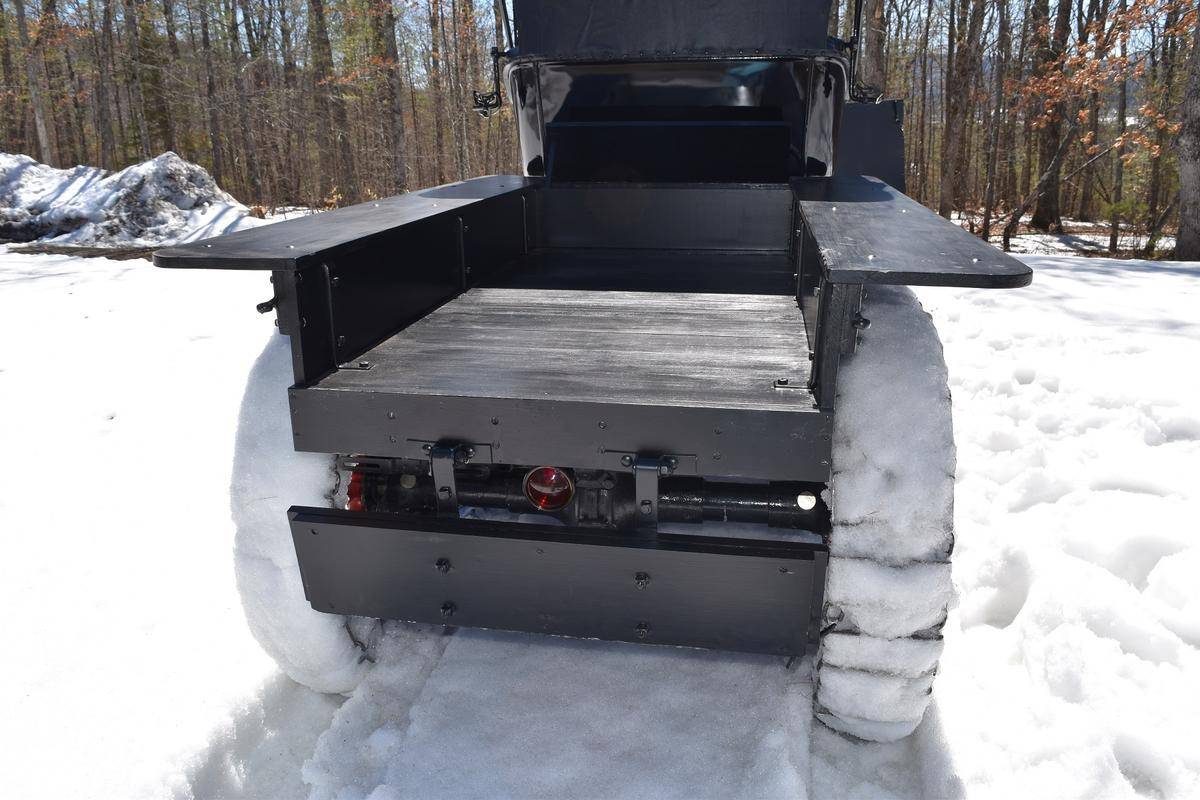
The “Ford on Snowshoes,” was offered in three different gauges. For those living where automobiles were standard 56-inch gauge was recommended. A narrower 44-inch gauge allowed driving the Ford in the tracks of horse-drawn bobsleds. Thirty-eight-inch gauge was offered for Ford owners where narrower sleigh tracks were standard, such as in parts of Canada. A special slip-on body of hard maple with four coats of paint was included as part of the narrow-gauge packages.
The Snowmobile became an indispensable convenience for the person requiring rapid, dependable transport in all kinds of weather. Country doctors and rural mail carriers were the largest users of this type of vehicle. Other customers of the manufactured Snowmobile included public utility companies, lumber companies, traveling salesmen, fire departments, school bus and taxi drivers, undertakers, grocers, milkmen, truckers and cranberry growers. When the father of President Calvin Coolidge died on March 18, 1926, a Model T Snowmobile led the Coolidge funeral procession over the snow-covered hills of Vermont.
Makers of the attachment claimed the ability to travel over two and a half feet of unbroken snow at an average speed of 18 miles per hour. Those who had a Snowmobile certainly used it with great satisfaction. The conversion kits were quite expensive. The attachment in 44 inch or 38-inch gauge for mounting on a roadster, or the 56-inch gauge for all body styles prior to 1926, listed at $395.00 F.O.B., West Ossipee, New Hampshire. A 56-inch gauge attachment for the one-ton truck was less expensive at $250.00 because no special driveline and suspension were needed. Heavy duty 30 x 30-1/2-inch – wheels were still provided to mount on the rear axle, however.
With skis removed and front wheels installed; the Snowmobile became a Sandmobile, useful for transport through deep mud and heavy sand. A number of units sold as Sandmobiles were used in South Africa, Algeria, Egypt, and the Florida Everglades.
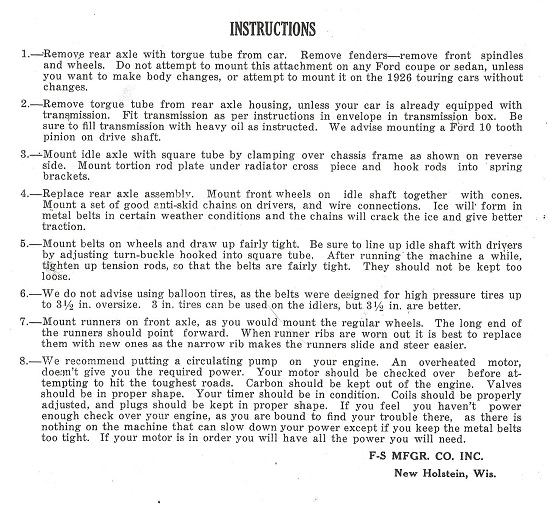
In 1923, White produced only about 70 units. By 1925, manufacturing rights to produce snow automobile attachments were sold to Farm Specialty Manufacturing Company of New Holstein, Wisconsin, which began to market its version of the product in 1926.
Farm Specialty Manufacturing Company later bought the patents of the Snowmobile Company and sent its managers to run the factory in West Ossipee. From 1924 to 1929, the Snowmobile Company manufactured about 3,300 units per year in its plant at West Ossipee and had a branch warehouse at St. Paul, Minnesota. The Snowmobile Company closed in 1929, and the factory mysteriously burned down shortly thereafter.
Video
Photos
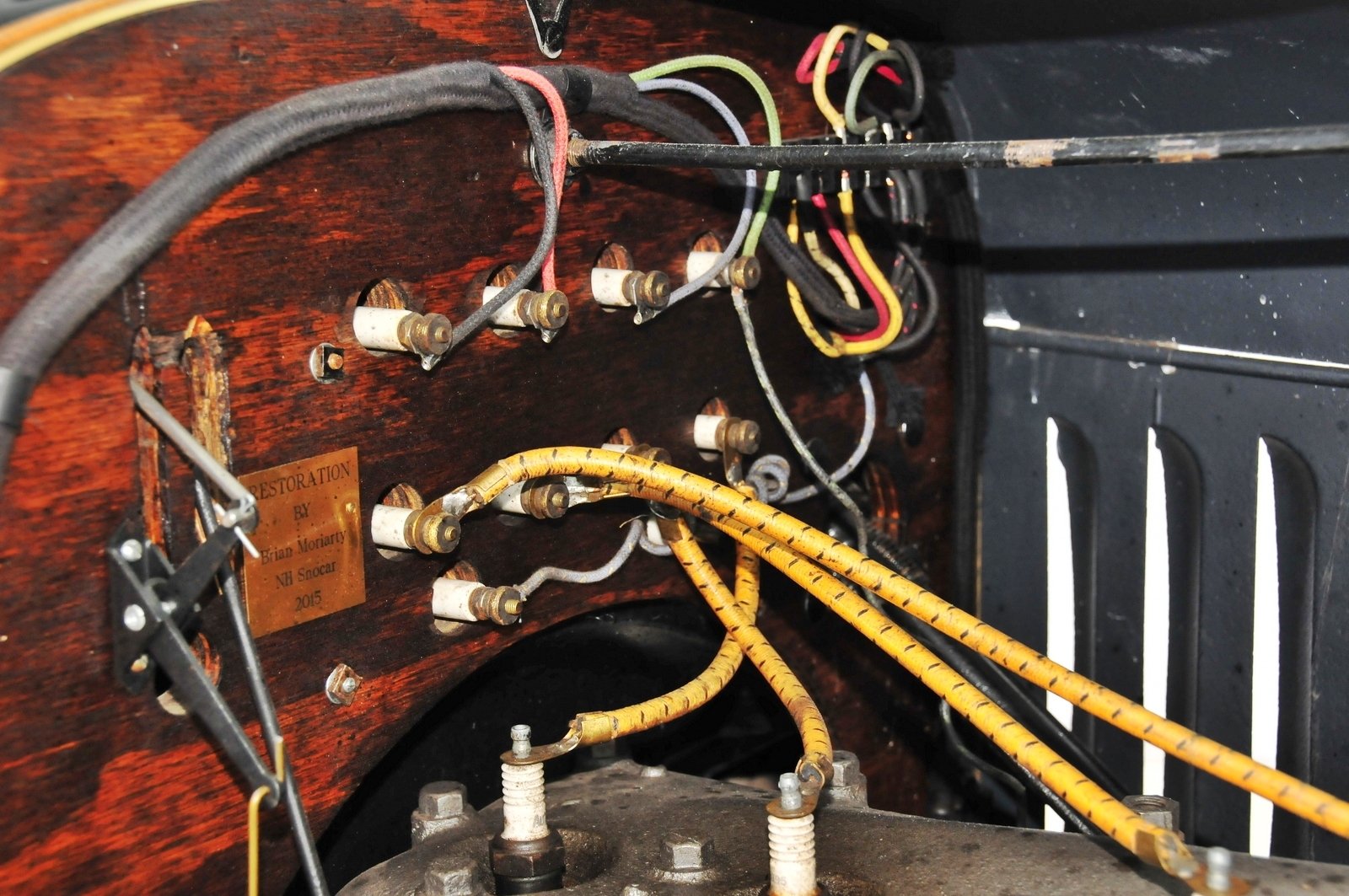
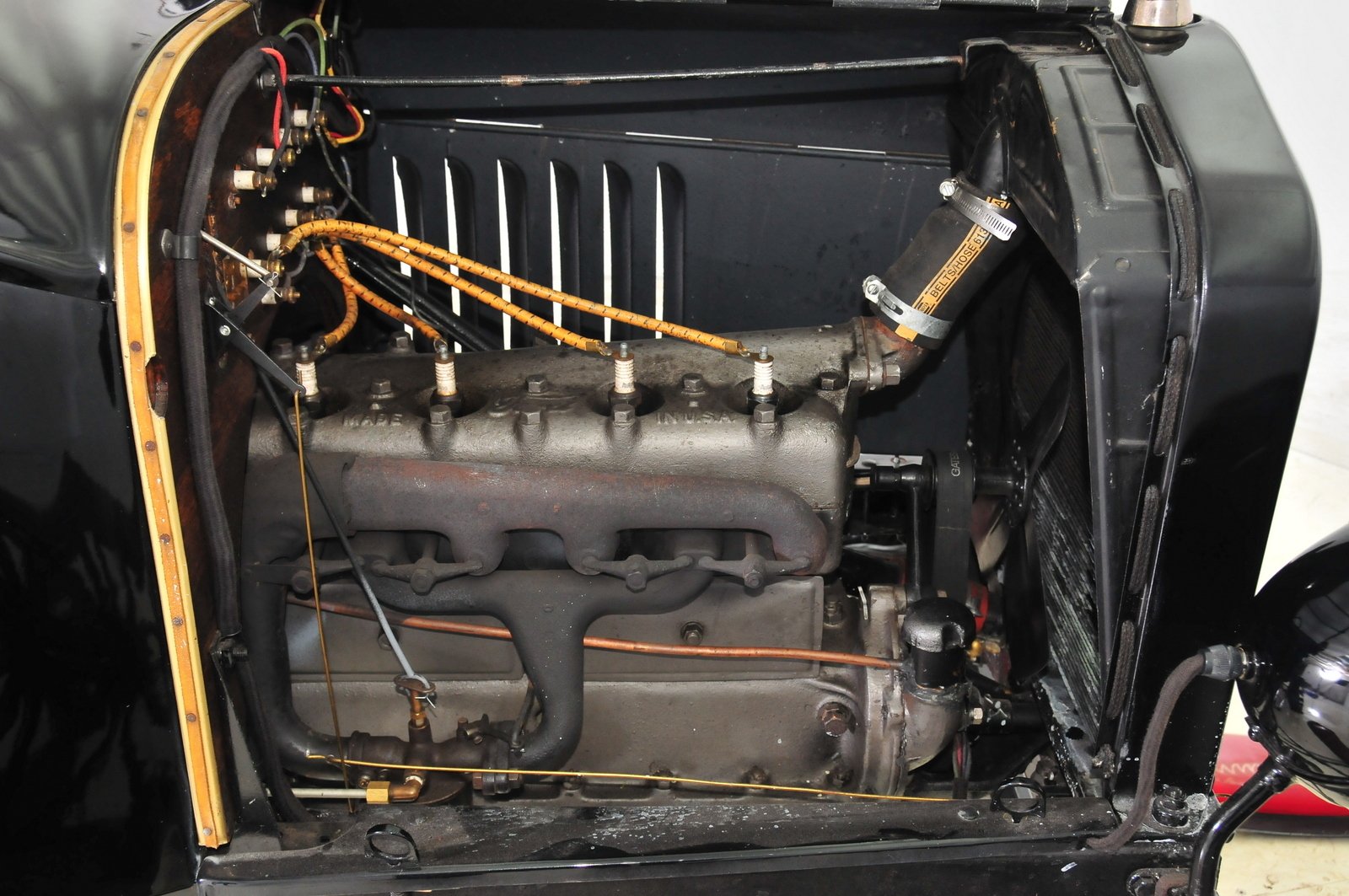
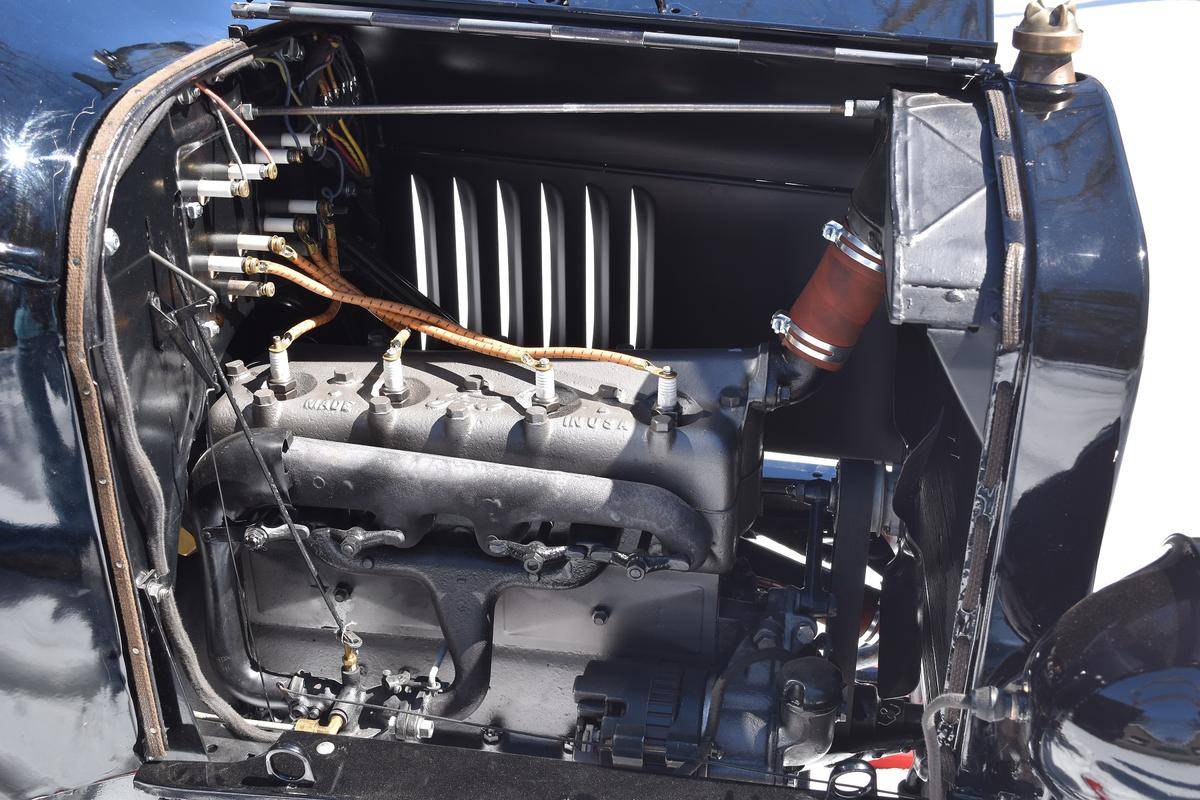
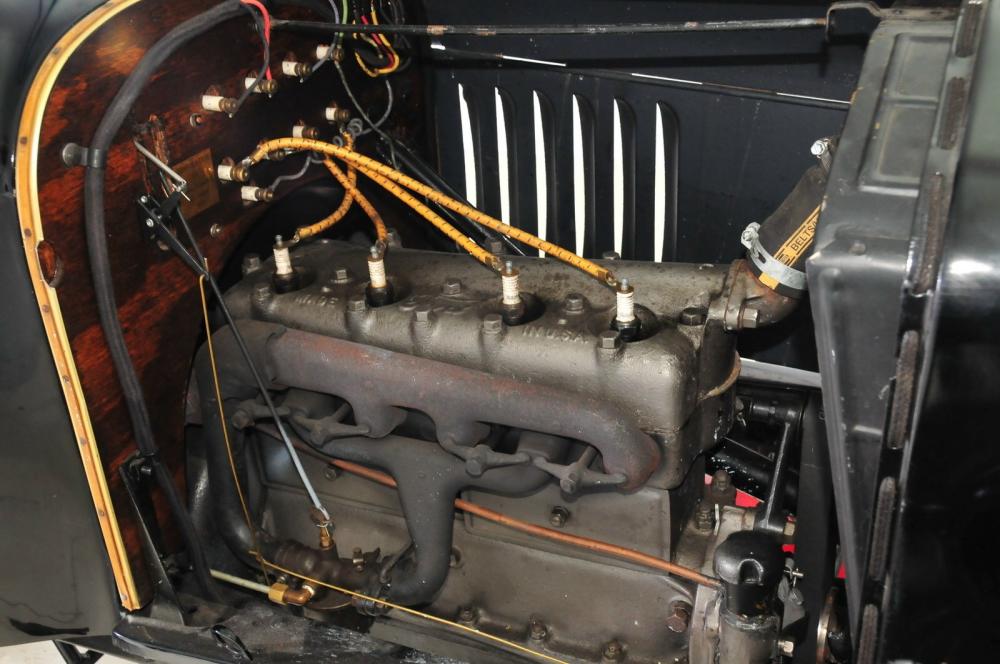
Click the photos to enlarge.

About The Author

Growing up, my father always believed that every family needed a truck—there’s just something about having a vehicle capable of hauling anything at a moment’s notice. That philosophy stuck with me, and it’s been the foundation of my lifelong passion for Ford trucks.
While I’m best known for my work with Ford Rangers, I’ve owned a wide variety of Ford trucks over the years—including F-150s, F-250s, F-350s, and even larger rigs like the Ford Excursion, Ford Expedition, and a 1982 Ford Econoline Sportsmobile camper van. I’ve used these vehicles for everything from family transportation to towing car trailers and campers, and each one has fueled my love for Ford’s versatility and durability.
I especially enjoy the styling of 1970s and 1980s Ford trucks—the bold designs, rugged presence, and classic charm are timeless. Sharing my passion for Ford trucks, vans, and SUVs with other enthusiasts online brings me a great deal of joy, and it’s why I created Blue Oval Trucks.
This website is dedicated to helping Ford truck enthusiasts explore, learn about, and celebrate these incredible vehicles. While I share my expertise and experiences here, Blue Oval Trucks is an independent enthusiast site and is not affiliated with Ford Motor Company.